Rotten meat seized again in Kashmir: Mirwaiz raises alarm over Delhi cargo
Synopsis
Rotten meat has re-entered Kashmir through railway cargo from Delhi — just over a year after a 12-tonne adulteration scandal that prompted official assurances of stringent checks. Mirwaiz Umar Farooq's public challenge on X is not just about one consignment; it is a direct demand to know why an organised supply chain of rejected meat continues to operate despite government pledges to dismantle it.
Key Takeaways
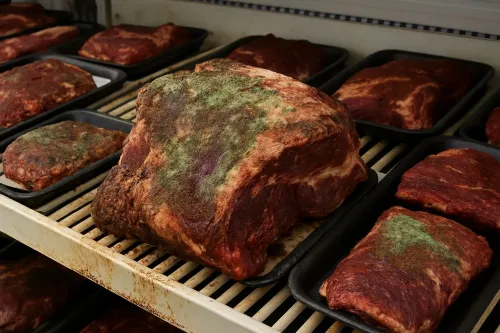
1,600 kg of rotten meat in 44 boxes was seized at Budgam railway station on 14 November 2026 , arriving via railway cargo from Delhi .
The consignment, found unfit for human consumption, was verified by a veterinary doctor and subsequently destroyed; an FIR has been filed under the Bharatiya Nyaya Sanhita (BNS) .
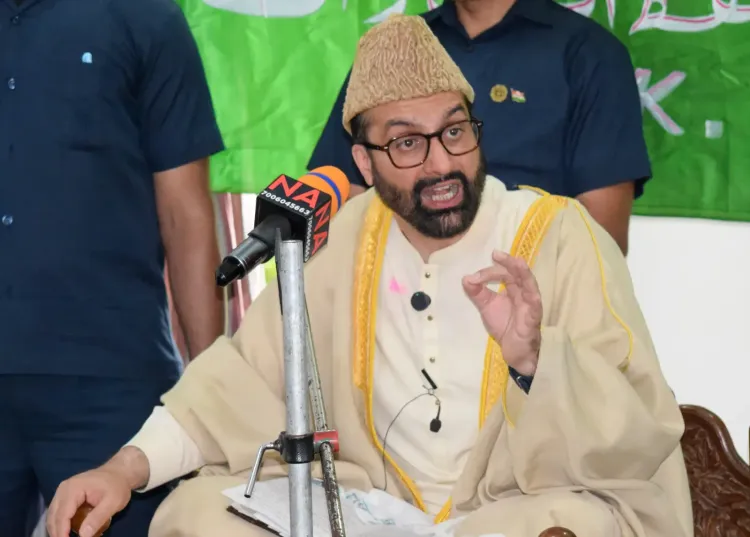
Chief cleric Mirwaiz Umar Farooq posted on X demanding the government fix accountability and expose those behind the supply chain.
In July–August 2025 , authorities had already seized and destroyed roughly 12,000 kg of rotten, unlabelled, and chemically treated meat across Jammu and Kashmir .
Authorities have yet to publicly name those responsible or detail prosecutions from either the latest seizure or the 2025 crackdown.
Senior religious leader and chief cleric Mirwaiz Umar Farooq on Sunday, 15 November 2026, raised fresh alarm over the resurfacing of rotten meat entering the Kashmir Valley, just over a year after a major food safety scandal shook the region. The latest seizure — 1,600 kg of meat deemed unfit for human consumption — was intercepted at Budgam railway station in a joint crackdown, reigniting public anxiety over food safety standards.
What Was Seized and How
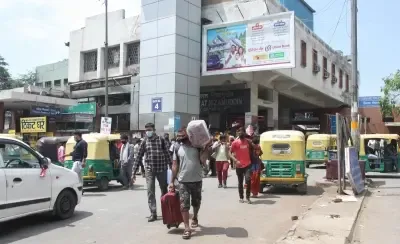
Authorities recovered 1,600 kg of rotten meat packed across 44 boxes that had arrived via railway cargo from Delhi. The consignment failed to meet prescribed cold-chain storage conditions and emitted a severe foul smell, according to officials. A joint operation involving the Jammu and Kashmir Food and Drug Administration (FDA), Railway Police, railway authorities, and the Budgam district administration carried out the interception on Saturday, 14 November 2026. A veterinary doctor verified the findings, after which the entire consignment was destroyed. An FIR has been registered under relevant sections of the Bharatiya Nyaya Sanhita (BNS).
Mirwaiz Demands Accountability
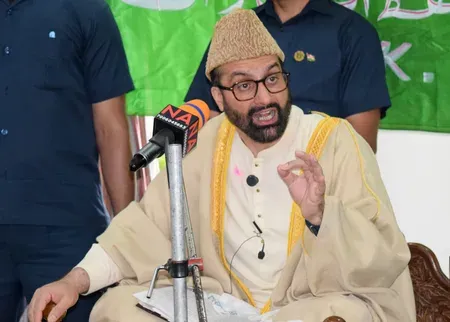
Reacting to the seizure in a post on X, Mirwaiz Umar Farooq said the discovery had "shocked people and raised serious concerns." He commended the police officers involved but pressed for a fuller reckoning, asking: "Despite last year's public outrage and assurances from the authorities of stringent safeguards and action against those involved, how does it continue unchecked? Why are those behind these practices not being exposed and strictly punished?"
He further demanded that "the government must come clean on it and place all facts in the public domain. It must fix accountability and take strict action against the perpetrators of this heinous crime to restore people's trust in the food they consume."
Pattern of Violations: A Recurring Crisis
This latest seizure is not an isolated incident. In July and August 2025, a large-scale food safety crackdown across Jammu and Kashmir led to the seizure and destruction of roughly 12,000 kg — approximately 12 tonnes — of rotten, unlabelled, and chemically treated meat. That investigation exposed an organised supply chain funnelling cheap, rejected meat from outside the Union Territory into local eateries, bypassing cold-chain protocols entirely. More recently, authorities also seized unpermitted food colours found in kebabs and meatballs at outlets in Srinagar, pointing to a broader pattern of adulteration.
What This Means for Public Trust
The recurrence of such seizures despite official assurances after the 2025 scandal raises pointed questions about enforcement gaps. Critics argue that while seizures and destruction of contraband meat are necessary, they address symptoms rather than the organised supply chain that continues to operate. The absence of publicly disclosed prosecutions from last year's crackdown has deepened scepticism among residents and civil society over whether deterrence is working. With the Mirwaiz — one of Kashmir's most prominent religious voices — now publicly questioning the government's follow-through, pressure for transparent accountability is likely to intensify.
What Happens Next
Authorities have yet to publicly name those behind the consignment or detail how far the supply chain extends. The registered FIR under the BNS marks a formal legal step, but observers note that swift judicial follow-through — not just seizures — will be the true test of the state's commitment to food safety. The J&K FDA and law enforcement agencies are expected to face renewed scrutiny in the coming days.
Point of View
Made public assurances, and yet an organised supply chain has demonstrably continued to operate. That the Mirwaiz, not an opposition politician, is now demanding answers on X signals how deep public distrust runs. The real accountability test is not how quickly the meat is destroyed but whether a single prosecution from either the 2025 or 2026 seizures results in a conviction. Without that, periodic crackdowns function more as optics than deterrence, and Kashmir's food safety apparatus risks being seen as reactive rather than preventive.
NationPress
15 Nov 2026
Frequently Asked Questions
What was seized at Budgam railway station in Kashmir?
Authorities seized 1,600 kg of rotten meat packed in 44 boxes that arrived via railway cargo from Delhi at Budgam railway station on 14 November 2026. The meat was found unfit for human consumption due to a severe foul smell and failure to maintain cold-chain conditions, and was subsequently destroyed.
Who is Mirwaiz Umar Farooq and why is he speaking out?
Mirwaiz Umar Farooq is a senior religious leader and chief cleric of Kashmir, one of the valley's most prominent public voices. He posted on X demanding that the government fix accountability and expose those behind the rotten meat supply chain, calling the recurring incidents a 'heinous crime' that erodes public trust in food safety.
Has this happened before in Kashmir?
Yes. In July and August 2025, authorities seized and destroyed roughly 12,000 kg of rotten, unlabelled, and chemically treated meat across Jammu and Kashmir. That crackdown revealed an organised supply chain bringing rejected meat from outside the Union Territory into local eateries without proper cold-chain storage.
What action has been taken after the latest seizure?
An FIR has been registered under relevant sections of the Bharatiya Nyaya Sanhita (BNS). The consignment was verified by a veterinary doctor and destroyed. However, authorities have yet to publicly name those responsible for the consignment or detail any arrests.
What agencies were involved in the Budgam seizure?
The seizure was a joint operation by the Jammu and Kashmir Food and Drug Administration (FDA), Railway Police, railway authorities, and the Budgam district administration. A veterinary doctor was also involved to certify the condition of the seized meat.