Should J&K MLAs Push for Property Attachment in Rotten Meat Trade?
Synopsis
In a bold move, J&K MLAs are calling for strict measures against the rotten meat trade, urging for property seizures and better enforcement to protect public health. With alarming health risks linked to rotten food, the urgency for action is clear. Can these demands lead to significant change in food safety standards?
Key Takeaways
MLAs Call for Action: Stronger measures against the rotten meat trade are being demanded.
Health Risks: Growing concerns over health issues linked to spoiled food consumption.
Property Attachment: Proposals to seize properties of those involved in illegal trades.
Inspections Conducted: Over 1,600 inspections have been carried out, revealing unsafe products.
Staff Shortages: Food Testing Laboratories are facing significant personnel shortages.
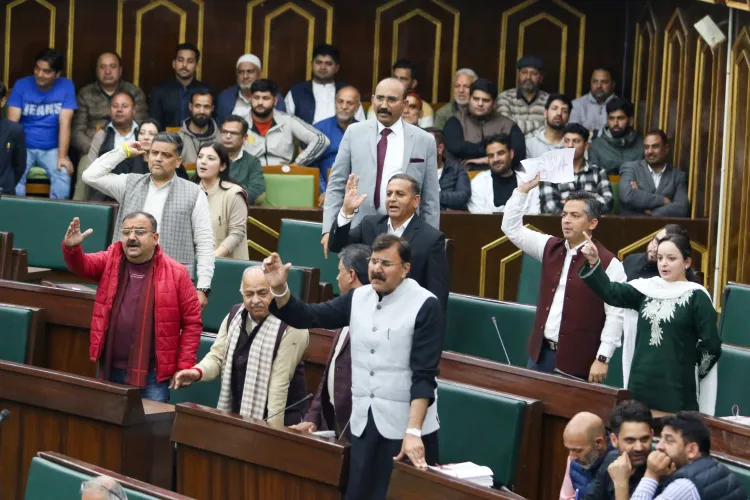
Jammu, Feb 13 (NationPress) A group of MLAs has called for more stringent measures, including the attachment of properties, against individuals involved in the rotten meat trade in Jammu and Kashmir.
Members from the National Conference (NC), such as Mubarak Gul, Mir Saifullah, Pirzada Farooq Ahmad Shah, and Hasnain Masoodi, urged for robust enforcement and preventive strategies, as well as property seizures for those caught in the illegal meat trade. They addressed the alarming issue of food adulteration and the sale of spoiled meat.
The legislators voiced their deep concern regarding the escalating health risks and raised alarms that consuming spoiled food might be linked to a rise in cancer cases and recurrent disease outbreaks.
Gul insisted that authorities should identify those involved in this illicit trade and confiscate their assets to deliver a decisive message.
Shah advocated for establishing slaughterhouses in every Municipal Committee and requested a dedicated half-hour discussion on the subject during the House session.
Other representatives emphasized the necessity to enhance staffing, tighten enforcement, and ensure rigorous monitoring to avoid similar incidents in the future.
Health Minister Sakina Itoo acknowledged staff shortages within the department, affirming that the lack of personnel is undeniable.
She informed the assembly that the recruitment process is underway to fill these vacancies, stressing that public health is a serious issue that cannot be overlooked. However, she clarified that under the Food Safety and Standards Act, 2006, Food Safety Officers lack the authority to make arrests.
Food Safety Officers are permitted to inspect locations, collect food samples, issue notices for improvements, suspend or revoke licenses, initiate prosecutions, and file complaints in court, but only police can execute arrests under the Criminal Procedure Code, she added.
At this point, Speaker Abdul Rahim Rather interjected, questioning why the government does not propose a bill to amend the Act to incorporate more robust provisions.
NC's Tanvir Sadiq also suggested that the government should contemplate making amendments and create a dedicated task force to address these matters, emphasizing that the police operate independently of the House.
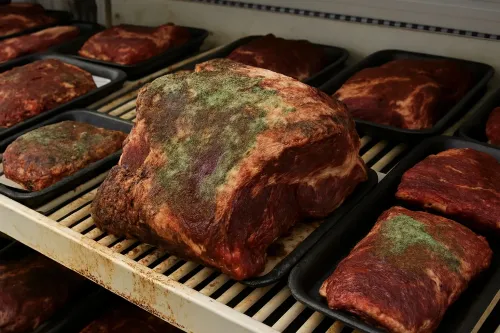
Previously, the government reported to the House that 12,183.5 kilograms of unsafe or rotten meat and chicken, valued at Rs 29,19,060, were confiscated across the Union Territory and disposed of as of December 2025.
It revealed that 1,676 inspections were performed and 144 samples of meat and meat products were collected. Out of these, 18 samples did not meet the standard quality (NSQ).
A total of 2,139 kg of meat worth Rs 3,90,137 was seized, along with 12,183.5 kg of rotten meat valued at Rs 29,19,060 destroyed. The district-wise seizure of rotten meat and chicken included: Anantnag – 700 kg (Rs 3,57,000), Budgam – 234 kg (Rs 32,500), Bandipora – 162 kg (Rs 8,500), Baramulla – 125 kg (Rs 7,500), Ganderbal – 770 kg (Rs 2,31,000), Kupwara – 1,520.5 kg (Rs 5,10,000), Pulwama – 450 kg (Rs 70,200), Shopian – 121 kg (Rs 18,000), Srinagar – 4,220 kg (Rs 7,59,600), Jammu – 3,881 kg (Rs 9,24,760); totaling 12,183.5 kg worth Rs 29,19,060.
Additionally, the government disclosed that 173 samples of paneer were collected, with 157 reports returned. Among these, 47 were found to be sub-standard, and one was deemed unsafe. The seized and destroyed paneer totaled 7,665 kg, with 6,465 kg in Jammu worth Rs 13,92,150 and 1,200 kg in Samba worth Rs 2,40,000.
Samples were tested in both J&K and external accredited laboratories, including those in Kashmir, Ghaziabad, New Delhi, and Hyderabad.
Moreover, the government mentioned that two NABL-accredited Food Testing Laboratories are operational in Jammu and Srinagar, alongside 12 Mobile Food Testing Laboratories.
However, both Food Testing Laboratories are experiencing staff shortages. Out of 19 sanctioned positions, each laboratory has 11 vacancies. These open positions will be referred to the board for selection.
Point of View
It is imperative to recognize the urgent call from J&K MLAs for stringent actions against the rotten meat trade. The health of the public is paramount, and the rising cases of health issues linked to food adulteration cannot be overlooked. The demand for property attachment serves as a strong deterrent and highlights the need for robust enforcement mechanisms.
NationPress
7 Oct 2026
Frequently Asked Questions
What actions are the J&K MLAs demanding against the rotten meat trade?
The J&K MLAs are demanding stronger enforcement measures, including the attachment of properties belonging to those involved in the rotten meat trade.
Why is the rotten meat trade a concern for public health?
The consumption of rotten meat can lead to serious health issues, including increased cancer cases and frequent disease outbreaks.
What has the government done regarding the rotten meat trade?
The government has conducted inspections, seized significant quantities of unsafe meat, and is addressing the shortage of Food Safety Officers.
What is the status of food testing laboratories in J&K?
There are two NABL-accredited Food Testing Laboratories in Jammu and Srinagar, but they are experiencing staff shortages.
What steps are being taken to recruit more Food Safety Officers?
The Health Minister has confirmed that the recruitment process has begun to fill vacant posts within the Food Safety Department.