Lakhpati Didi scheme hits 3.76 crore beneficiaries, targets 6 crore by 2029

Synopsis
India's Lakhpati Didi scheme has quietly become one of the government's most ambitious rural welfare bets — 3.76 crore beneficiaries in under three years, a 61% reported income jump backed by an IIM Ahmedabad study, and a pipeline of 5.70 crore potential enrollees ahead of a six-crore target by March 2029. The scale of the ask — and how income sustainability is verified — will define whether this becomes a landmark policy or another headline number.
Key Takeaways
The Lakhpati Didi scheme has reached 3.76 crore beneficiaries as of June 2026 , per a government factsheet.
The Centre targets six crore rural women entrepreneurs under the programme by March 2029 .
An IIM Ahmedabad study of 6,531 respondents across 17 states found a 61% rise in average monthly household income and 61.7% rise in monthly savings.
5.70 crore women have been identified as potential Lakhpati Didis, forming the conversion pipeline.
DAY-NRLM has mobilised 10.13 crore SHG members into 94.40 lakh groups as of 12 November 2026 .
A Lakhpati Didi is defined as an SHG member whose household earns at least ₹1 lakh annually from sustainable farm or non-farm income.
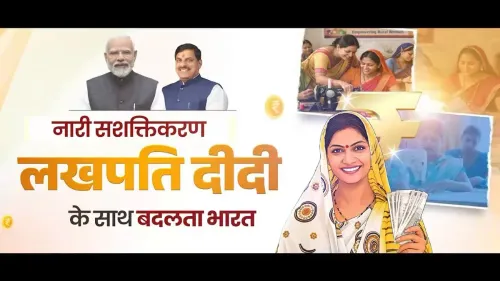
India's Lakhpati Didi initiative has reached 3.76 crore beneficiaries as of June 2026, according to a government factsheet released on Sunday, 15 November 2026. The Centre has set a target to create six crore rural women entrepreneurs under the programme by March 2029, nearly doubling the current count. The scheme is implemented under the Deendayal Antyodaya Yojana–National Rural Livelihoods Mission (DAY-NRLM).
What the IIM Ahmedabad Study Found
An independent assessment by the Indian Institute of Management (IIM) Ahmedabad, covering 6,531 respondents across 17 states and union territories, documented significant income gains among programme participants. The study reported a 61% rise in average monthly household income and a 61.7% increase in average monthly savings within Lakhpati Didi households. These findings lend external credibility to the government's impact claims, though analysts note that survey-based income metrics can be difficult to verify at scale.
How the Programme Has Evolved
The initiative was launched on 15 August 2023 with an initial target of two crore beneficiaries drawn from self-help group (SHG) households. That target was revised upward to three crore in February 2024, and has since been raised further to six crore by March 2029. Official data shows that 5.70 crore women have been identified as potential Lakhpati Didis across the country, suggesting a substantial pipeline ahead of the deadline.
Who Qualifies as a Lakhpati Didi
Under the programme framework, a Lakhpati Didi is defined as a self-help group member whose household earns at least ₹1 lakh annually. This threshold is calculated on total household earnings — not individual income alone — and covers net revenue from both farm and non-farm activities after expenses. Crucially, the income must remain sustainable across agricultural seasons and business cycles, setting a higher bar than a one-time earnings milestone.
The DAY-NRLM Backbone
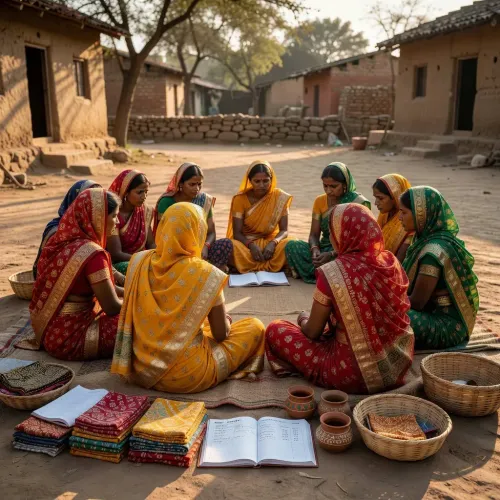
DAY-NRLM, originally launched in June 2011 to organise poor rural women into self-help groups, provides the institutional infrastructure for the scheme. As of 12 November 2026, the mission has mobilised approximately 10.13 crore SHG members into 94.40 lakh groups nationwide. These groups are further supported by Village Organisations and Cluster-Level Federations, allowing the Lakhpati Didi initiative to operate through existing community networks rather than a parallel delivery architecture.
What Comes Next
With 3.76 crore beneficiaries confirmed and 5.70 crore women already identified as potential participants, the government's pathway to the six crore target by March 2029 rests on converting that pipeline into verified, sustainable income earners. The pace of enrolment and third-party income verification will be closely watched as the programme enters its most ambitious phase.
Point of View
But the harder question is what 'sustainable income' actually looks like on the ground. An IIM Ahmedabad survey across 17 states is a credible data point, yet survey-reported income gains in self-help group programmes have historically been difficult to replicate in independent audits. The jump from 3.76 crore to six crore by March 2029 demands converting a pipeline — not just counting existing SHG members — which is a structurally different and tougher task. The government's decision to run this through the established DAY-NRLM architecture is smart operationally, but the absence of a disclosed third-party verification mechanism for the ₹1 lakh income threshold leaves the headline figure open to scrutiny.
NationPress
15 Nov 2026
Frequently Asked Questions
What is the Lakhpati Didi scheme?
The Lakhpati Didi scheme is a central government initiative under DAY-NRLM that aims to create rural women entrepreneurs by helping self-help group households earn at least ₹1 lakh annually from sustainable farm and non-farm activities. It was launched on 15 August 2023 and has since reached 3.76 crore beneficiaries as of June 2026.
What is the government's target for Lakhpati Didi by 2029?
The Centre has set a target of six crore Lakhpati Didis by March 2029. The target has been revised upward twice — from two crore at launch in August 2023, to three crore in February 2024, and now to six crore.
What did the IIM Ahmedabad study find about the scheme's impact?
An independent study by IIM Ahmedabad, surveying 6,531 respondents across 17 states and union territories, found a 61% increase in average monthly household income and a 61.7% rise in average monthly savings among Lakhpati Didi households.
Who qualifies as a Lakhpati Didi?
A Lakhpati Didi is an SHG member whose household earns at least ₹1 lakh per year from eligible farm and non-farm activities, calculated as net income after expenses. The income must be sustainable across agricultural seasons and business cycles, not just a one-time earning.
What is DAY-NRLM and how does it support the scheme?
The Deendayal Antyodaya Yojana–National Rural Livelihoods Mission (DAY-NRLM), launched in June 2011, organises poor rural women into self-help groups that access savings, credit, training, and markets. As of 12 November 2026, it has mobilised 10.13 crore members across 94.40 lakh groups, providing the existing community infrastructure through which the Lakhpati Didi initiative is delivered.