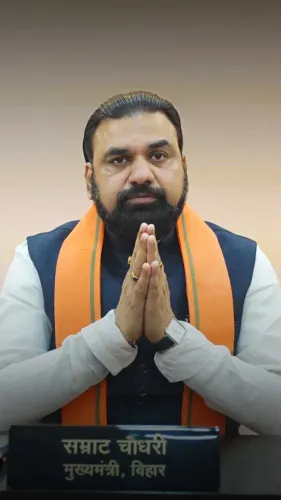
CM Samrat Choudhary greets Bihar on Chhath Sandhya Arghya
Synopsis
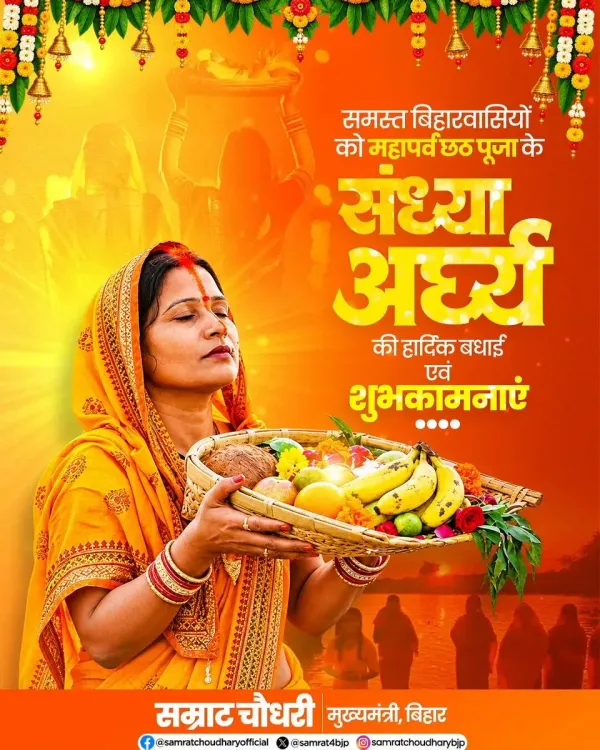
Bihar Chief Minister Samrat Choudhary extended greetings to devotees on Sandhya Arghya, the third ritual of Chhath Puja, praying that Suryadev and Chhathi Maiya bless everyone with happiness, peace, and prosperity.
Key Takeaways
Bihar CM Samrat Choudhary posted Chhath Puja greetings on 15 November 2026 , marking the Sandhya Arghya ritual.
Sandhya Arghya is the third of four Chhath Puja rituals, performed at sunset with offerings to the setting sun.
Chhath Puja is distinguished by outdoor, priest-free worship centred on the Sun God and Chhathi Maiya .
The festival is observed not just across Bihar but by Bihari communities in Delhi , Mumbai , and abroad.
The final ritual, Usha Arghya , follows at dawn the next morning when devotees salute the rising sun.
As millions of devotees across Bihar waded into rivers and ponds at dusk to offer prayers to the setting sun, Bihar Chief Minister Samrat Choudhary extended warm greetings on the occasion of Sandhya Arghya — the third and most visually striking ritual of the four-day Chhath Puja festival — on Sunday, 15 November 2026.
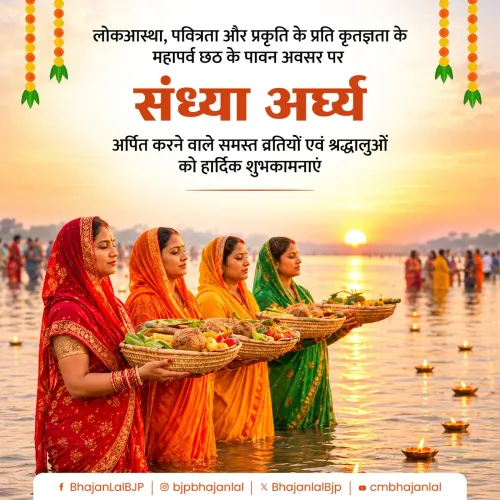
Posting on X in Hindi, the Chief Minister wrote: 'लोक आस्था के महापर्व छठ पूजा के तीसरे अनुष्ठान 'संध्या अर्घ्य' के पावन अवसर पर आप सभी को हार्दिक बधाई एवं शुभकामनाएँ।' ('Heartfelt congratulations and best wishes to all on the auspicious occasion of 'Sandhya Arghya', the third ritual of Chhath Puja, the grand festival of folk faith.') He added a prayer that Suryadev (the Sun God) and Chhathi Maiya bless everyone's lives with happiness, peace, prosperity, and well-being.
What Sandhya Arghya means to Bihar's devotees
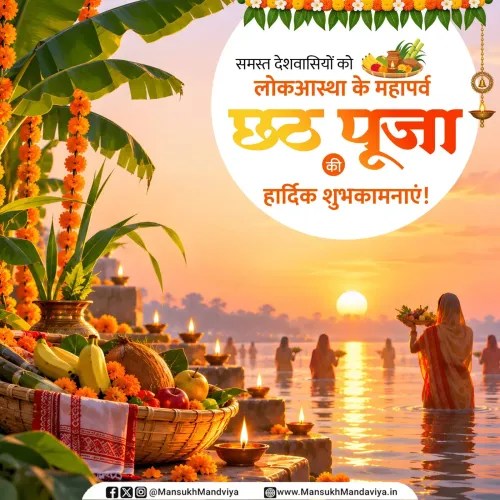
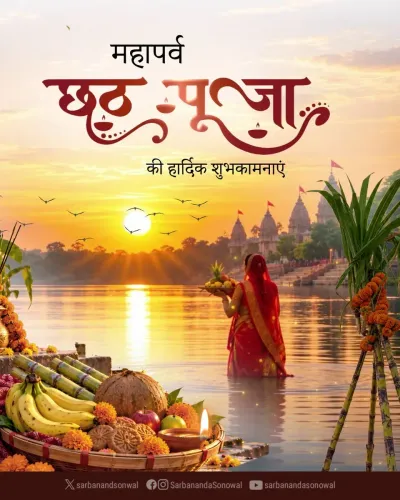
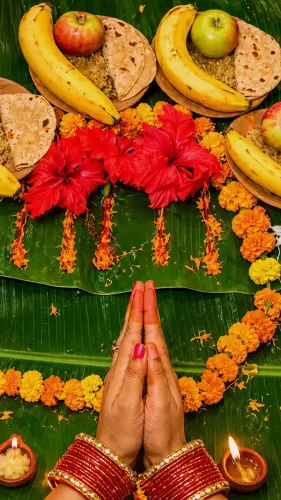
Chhath Puja is no ordinary festival. Unlike temple-centric Hindu observances, it unfolds entirely in the open — on riverbanks, lakesides, and makeshift ghats — governed by strict fasting, bare feet, and prolonged immersion in water. Sandhya Arghya, offered to the setting sun on the third evening, is the moment the entire four-day arc builds toward: thousands of vratis (fasting devotees), predominantly women, standing waist-deep in water, holding bamboo baskets laden with fruit and earthen lamps aloft as the sun dips below the horizon.
It is a spectacle of mass austerity — no priests, no intermediaries — that sets Chhath apart in India's vast festival calendar. The final ritual, Usha Arghya, follows at dawn the next morning, when devotees return to salute the rising sun and break their fast.
Bihar's Chief Minister and the state's cultural calendar
For CM Samrat Choudhary, the greeting is part of a wider pattern: state leaders in Bihar treat Chhath Puja as a defining cultural moment, one that cuts across caste and class and commands near-universal participation across the state's population. The festival's reach has also grown well beyond Bihar and Jharkhand — large Bihari diaspora communities observe Chhath in Delhi, Mumbai, Uttar Pradesh, and even abroad, making a Chief Minister's public greeting simultaneously local and national in resonance.
The simplicity of the message — no policy announcement, no political edge — reflects exactly that: Chhath transcends the political moment. When a state's highest office pauses to say 'Jai Chhathi Maiya', it is the cultural calendar, not the legislative one, that is running Bihar for the day.
Point of View
A strategy that has proved electorally significant in Bihar. The festival's priest-free, egalitarian character also gives it a cross-caste appeal that makes such public acknowledgements particularly high-value for any ruling administration. With Usha Arghya imminent, the state's management of public ghat facilities will be the next measure of the government's engagement with this mass observance.
NationPress
15 Nov 2026
Frequently Asked Questions
What is Sandhya Arghya in Chhath Puja?
Sandhya Arghya is the third ritual of Chhath Puja, performed at sunset on the third day, when fasting devotees stand in water and offer prayers with fruits and lamps to the setting sun.
What did Bihar CM Samrat Choudhary say on Chhath Puja 2026?
CM Samrat Choudhary extended heartfelt greetings on Sandhya Arghya and prayed that Suryadev and Chhathi Maiya bless all devotees with happiness, peace, prosperity, and well-being.
Why is Chhath Puja important in Bihar?
Chhath Puja is Bihar's most prominent folk festival, dedicated to the Sun God and Chhathi Maiya, observed with strict fasting and riverbank rituals without priests — making it a mass, egalitarian celebration.
What comes after Sandhya Arghya in Chhath Puja?
After Sandhya Arghya, the final ritual is Usha Arghya, performed at dawn the next morning when devotees return to salute the rising sun and break their multi-day fast.
Is Chhath Puja only celebrated in Bihar?
While Bihar is the heartland of Chhath Puja, the festival is widely observed by Bihari communities across Delhi, Mumbai, Uttar Pradesh, Jharkhand, and among diaspora communities internationally.