CM Samrat Choudhary Greets Chhath Vratis on Sandhya Arghya Day
Synopsis
Bihar Chief Minister Samrat Choudhary greeted lakhs of Chhath vratis offering the evening Sandhya Arghya on Patna's Ganga ghats on the festival's third day, calling the scene a symbol of Bihar's rich cultural heritage and folk devotion.
Key Takeaways
Bihar CM Samrat Choudhary posted Chhath greetings on 15 November 2026 , the third day of Chhath Mahaparv .
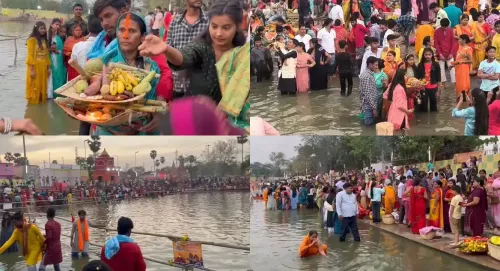
Millions of vratis offered Sandhya Arghya — evening water offerings to the setting sun — on Patna's Ganga ghats .
The CM shared nine images from the riverbank celebrations and called the event a symbol of Bihar's 'folk faith, penance, and devotion.' The fourth and final day , Usha Arghya (offering to the rising sun), is expected on the morning of 16 November 2026 .
Chhath is notable for its absence of caste hierarchy and priestly intermediaries, making it one of Bihar's most inclusive public festivals.
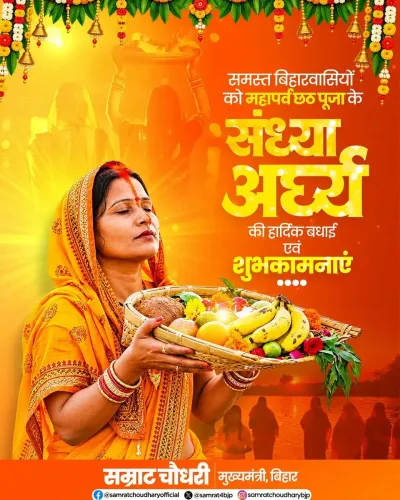
Millions stood at the edge of the Ganga as the sun dipped below the horizon — and Bihar Chief Minister Samrat Choudhary was watching with reverence. On Sunday, 15 November 2026, the third and most visually striking day of Chhath Mahaparv, the CM extended heartfelt greetings to lakhs of vratis offering the evening arghya (water offering to the setting sun) on the sacred ghats of Patna.
Posting nine images from the riverbank celebrations, CM Choudhary wrote: 'A salute to the setting sun! On the auspicious banks of Mother Ganga in Patna, on the third day of Chhath Mahaparv, heartfelt greetings and countless salutations to the millions of Chhath vratis offering arghya to the westward-bound sun.' He called the sight 'a symbol of the divinity of our rich culture — an extraordinary scene of folk faith, penance, and devotion.'
What makes the third-day arghya the festival's centrepiece
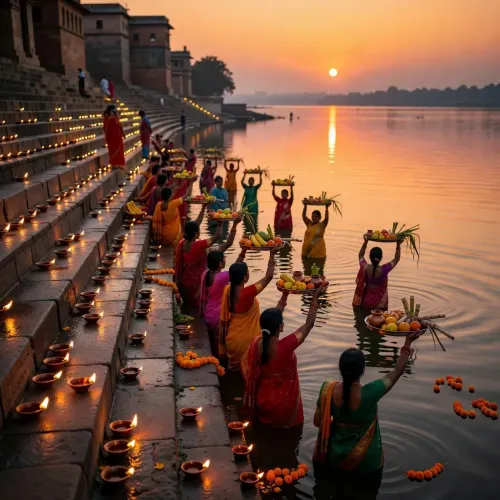
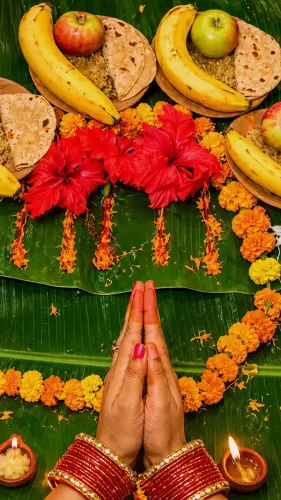
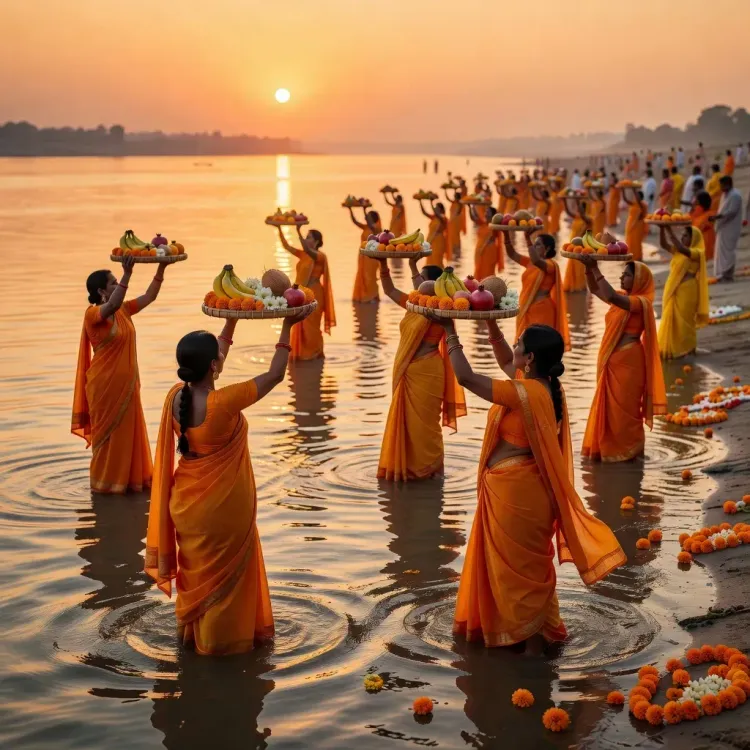
Chhath Puja is a four-day festival dedicated to the Sun God and Chhathi Maiya, observed with strict fasting, ritual bathing, and offerings made directly from riverbanks — no temple intermediary, no priest required. The third evening, Sandhya Arghya, is when vratis — predominantly women who have fasted without water — wade into the river at sunset and offer soop (bamboo winnowing trays) filled with seasonal fruits and sweets to the descending sun. The imagery is arresting: thousands of saffron-clad figures silhouetted against a burning sky, the Ganga catching the last light.
The fourth morning, Usha Arghya, will complete the cycle with offerings to the rising sun before the fast is broken — the ritual's final act, expected at dawn on Monday, 16 November 2026.
Patna's ghats and Bihar's proudest festival
Patna's Ganga ghats — from Gandhi Ghat to Collectorate Ghat — transform every year into one of India's largest open-air worship spaces during Chhath. The festival carries no caste hierarchy and no priestly class; its democratic, nature-centric character has made it a defining emblem of Bihar's cultural identity, expressed in CM Choudhary's hashtag #BiharKaGarv_ChhathMahaparv — 'Bihar's Pride, Chhath Mahaparv.'
State leaders across the political spectrum have long used Chhath greetings as a moment of unambiguous public solidarity with Bihar's majority faith culture. For CM Choudhary, the post is both a tribute to the vratis and a reaffirmation of the festival's place at the heart of the state's civic identity. Jai Chhathi Maiya!
Point of View
Amplified with nine riverbank images and the hashtag 'Bihar's Pride,' signals a deliberate effort to anchor his leadership identity to the state's most visible cultural moment. For a BJP chief minister in a state where cultural nationalism and regional pride must work in tandem, Chhath greetings are not ceremonial — they are a reaffirmation of governing legitimacy through shared heritage. The festival's annual return also gives the state government a natural opportunity to showcase ghat infrastructure and crowd management, though no specific announcements accompanied this post.
NationPress
15 Nov 2026
Frequently Asked Questions
What is Sandhya Arghya in Chhath Puja?
Sandhya Arghya is the evening offering of water and fruits to the setting sun, performed on the third day of Chhath Puja by fasting vratis standing in the river — it is considered the festival's most iconic ritual moment.
What did Bihar CM Samrat Choudhary say on Chhath 2026?
CM Samrat Choudhary greeted millions of Chhath vratis offering Sandhya Arghya on Patna's Ganga ghats, calling the scene an extraordinary symbol of Bihar's folk faith, penance, devotion, and rich cultural heritage.
Where is Chhath Puja celebrated in Patna?
Patna's Ganga ghats — including Gandhi Ghat and Collectorate Ghat — are the primary sites for large-scale Chhath celebrations, drawing lakhs of vratis each year.
What happens on the fourth day of Chhath Mahaparv?
The fourth and final day features Usha Arghya, an offering to the rising sun at dawn, after which the vratis break their multi-day fast — completing the Chhath cycle.
Why is Chhath Puja considered Bihar's pride?
Chhath is unique for its democratic, nature-centric character — it requires no temple, no priest, and observes no caste hierarchy — making it a unifying symbol of Bihari cultural identity celebrated across communities.