CM Samrat Choudhary Honours Birsa Munda on Janjatiya Gaurav Diwas
Synopsis
Bihar Chief Minister Samrat Choudhary marked Janjatiya Gaurav Diwas on 15 November 2026 by honouring tribal icon Birsa Munda and crediting PM Modi's Pradhan Mantri Janman Abhiyan and Dharti Aaba Abhiyan with accelerating tribal welfare and development across India.
Key Takeaways
Janjatiya Gaurav Diwas is observed every 15 November , the birth anniversary of tribal freedom fighter Birsa Munda , declared a national observance in 2021 .
Bihar CM Samrat Choudhary credited the Pradhan Mantri Janman Abhiyan and Dharti Aaba Abhiyan with giving 'new momentum' to tribal development under PM Narendra Modi .
PM JANMAN , launched in November 2023 , targets Particularly Vulnerable Tribal Groups (PVTGs) with a three-year plan to saturate habitations with housing, health, education and connectivity.
Birsa Munda led the Ulgulan rebellion against British colonial rule in the Chota Nagpur region and died in 1900 , aged 25.
Tribal communities constitute roughly 8.6 per cent of India's population and have historically faced gaps in basic welfare delivery.
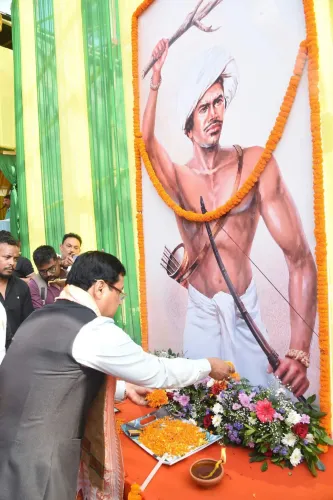
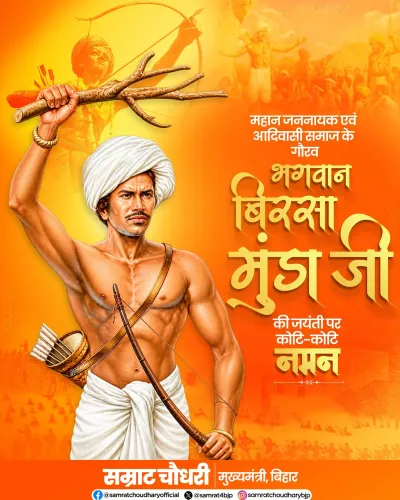
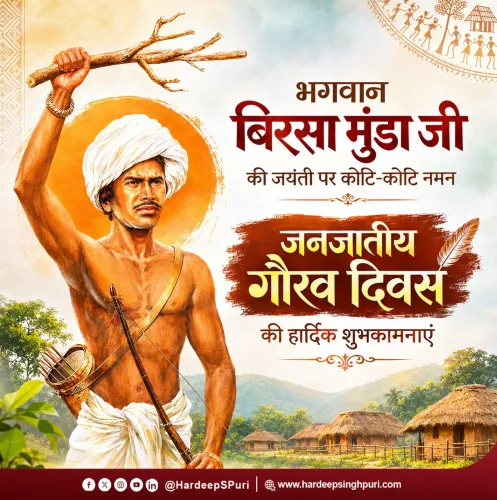
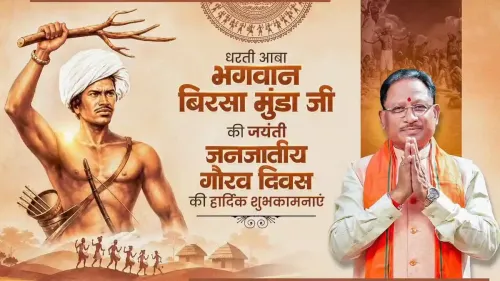
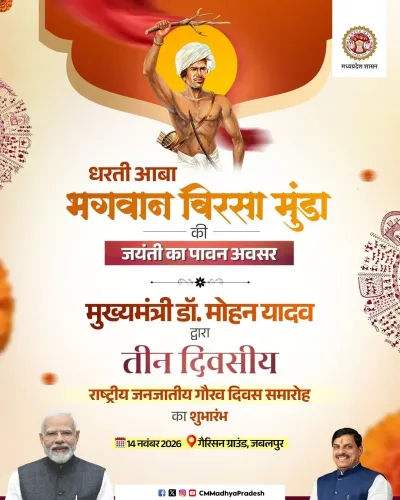
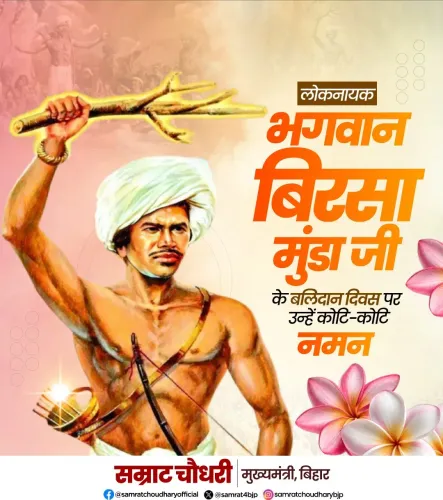
On the birth anniversary of Birsa Munda — the 19th-century tribal icon who defied British colonial power in the Chota Nagpur region — Bihar Chief Minister Samrat Choudhary marked Janjatiya Gaurav Diwas on Sunday, 15 November 2026 by hailing central government schemes as a fulfilment of Munda's unfinished vision for tribal dignity and development.
Posting on X in Hindi, CM Choudhary wrote: 'जनजातीय गौरव, राष्ट्र का स्वाभिमान!' — 'Tribal pride, the nation's self-respect!' — before invoking Birsa Munda's 'struggle and sacrifice' and crediting Prime Minister Narendra Modi's leadership for giving 'new momentum to tribal development' through the Pradhan Mantri Janman Abhiyan and the Dharti Aaba Abhiyan.
Birsa Munda and the Weight of 15 November
Birsa Munda, born on 15 November 1875, led the Ulgulan — the Great Tumult — a rebellion of the Munda community against colonial land dispossession in present-day Jharkhand. He died in British custody in 1900, aged just 25, but left a legacy so foundational that the Indian Constitution's fifth schedule on tribal rights carries his imprint in spirit. The Union government declared 15 November as Janjatiya Gaurav Diwas in 2021, institutionalising annual observance of his birth anniversary as a moment to honour all tribal freedom fighters.
The date has since grown into a national occasion where state governments, tribal welfare ministries and political leaders collectively reaffirm commitments to Scheduled Tribe communities — communities that make up roughly 8.6 per cent of India's population yet have historically ranked lowest on health, education and infrastructure indices.
PM JANMAN: Saturation Over Three Years
At the centre of CM Choudhary's tribute is the Pradhan Mantri Janman Abhiyan, launched in November 2023 to target India's most marginalised tribal populations: the Particularly Vulnerable Tribal Groups (PVTGs). The scheme set a three-year clock to saturate PVTG habitations with housing, safe drinking water, electricity, roads, mobile connectivity and educational access — a convergence model that channels multiple line ministries into a single delivery pipeline for communities that earlier fell through every scheme's gaps.
Bihar has pockets of PVTG population, and state-level implementation of PM JANMAN is a live variable — progress in tribal districts will determine whether the scheme's ambitions translate into measurable household-level change before its saturation deadline.
Symbolic Recognition Meeting Policy Delivery
CM Choudhary's post reflects a broader pattern in the BJP-led government's tribal outreach since 2014: pairing the symbolic — a national observance, a renaming, a portrait in Parliament — with targeted welfare architecture. Janjatiya Gaurav Diwas itself is part of that strategy: elevate Birsa Munda to the stature of a founding-era hero, then anchor welfare programmes to that moral legitimacy.
Bihar's Chief Minister, as a senior BJP leader in a state that shares cultural and historical ties to the tribal belt stretching into Jharkhand, is well-positioned to amplify this message — particularly ahead of budget cycles where expansion of Dharti Aaba components could benefit tribal constituencies in both states.
The question now is whether the cadence of annual observance keeps pace with the cadence of actual delivery — a gap that tribal rights groups watch closely every 15 November.
Point of View
Where tribal constituencies border the politically sensitive Jharkhand belt, this alignment carries strategic weight beyond ceremonial tribute. The real test, however, will come in state-level delivery data — symbolic fidelity without measurable PVTG outcomes risks being read as performance rather than policy.
NationPress
15 Nov 2026
Frequently Asked Questions
What is Janjatiya Gaurav Diwas and why is it celebrated on 15 November?
Janjatiya Gaurav Diwas is an annual national observance held on 15 November , the birth anniversary of tribal leader Birsa Munda . The Union government declared the day in 2021 to honour tribal freedom fighters and their contributions to India's independence struggle.
Who was Birsa Munda?
Birsa Munda was a 19th-century leader of the Munda community in the Chota Nagpur region who led the Ulgulan rebellion against British colonial land dispossession. Born on 15 November 1875 , he died in British custody in 1900 at the age of 25.
What is the Pradhan Mantri Janman Abhiyan?
The Pradhan Mantri Janman Abhiyan is a central government scheme launched in November 2023 to deliver housing, health, education, roads and connectivity to Particularly Vulnerable Tribal Groups (PVTGs) over a three-year saturation period.
What did Bihar CM Samrat Choudhary say on Janjatiya Gaurav Diwas 2026?
CM Samrat Choudhary posted on X on 15 November 2026 , saluting Birsa Munda's sacrifice and stating that the PM Janman Abhiyan and Dharti Aaba Abhiyan under PM Modi's leadership are bringing 'new momentum' to tribal development and realising Munda's dreams.
What are PVTGs and how many states have them?
Particularly Vulnerable Tribal Groups (PVTGs) are the most marginalised sub-category within India's Scheduled Tribe populations, identified by the government on the basis of declining or stagnant population, pre-agricultural technology, and extreme poverty. They are found across multiple states including Bihar , Jharkhand, Odisha and others.