CM Samrat Choudhary Pays Tribute to Birsa Munda on Martyrdom Day
Synopsis
Bihar Chief Minister Samrat Choudhary on 9 June 2026 offered tribute to Bhagwan Birsa Munda on his martyrdom anniversary, calling the tribal leader's message of justice and sacrifice an enduring inspiration for protecting Adivasi rights and uplifting marginalised communities.
Key Takeaways
Bihar CM Samrat Choudhary paid homage to Bhagwan Birsa Munda on 9 June 2026 , the tribal freedom fighter's martyrdom anniversary.
Birsa Munda led the Ulgulan rebellion in the Chotanagpur region, fighting British land policies and championing jal-jungle-zameen rights for tribal communities.
Munda died in British custody at Ranchi Jail in 1900 at approximately 25 years of age.
The central government designated 15 November as Janjatiya Gaurav Divas in 2021 to honour tribal freedom fighters, with Birsa Munda 's birth anniversary as the anchor date.
Annual tributes on 9 June carry political and cultural significance across Bihar , Jharkhand , and Odisha , where tribal communities remain key electoral and policy stakeholders.
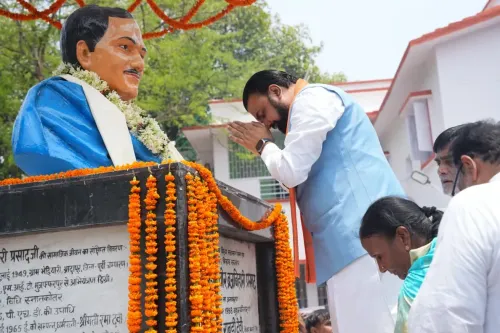
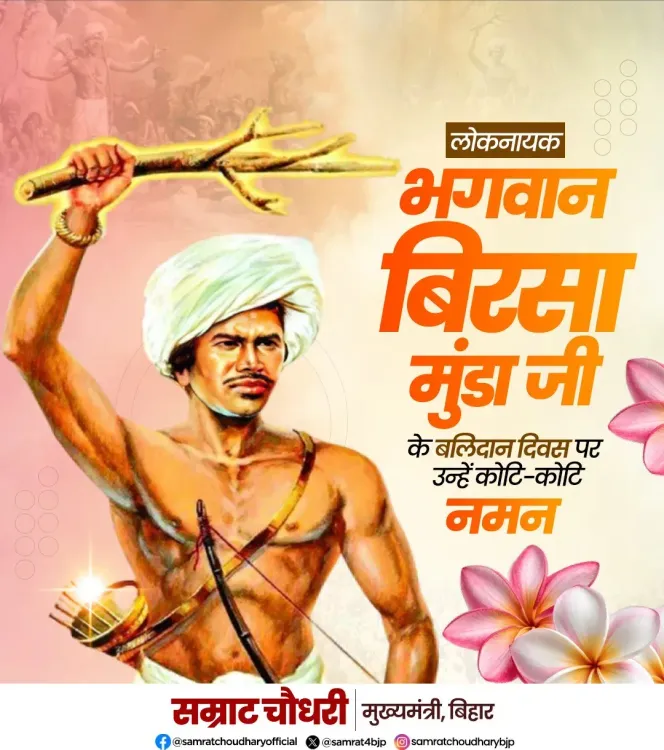
Bihar Chief Minister Samrat Choudhary on Tuesday, 9 June 2026 paid homage to tribal freedom fighter Bhagwan Birsa Munda on his martyrdom anniversary, hailing him as a symbol of Adivasi pride and an enduring inspiration for justice and social uplift.
Context
Posting in Hindi on X, CM Choudhary offered 'koti-koti naman' (innumerable salutations) to Birsa Munda, describing him as a 'loknayak' (people's hero) who dedicated everything to protecting 'jal-jungle-zameen' (water, forest, and land) and the self-respect of tribal communities. He wrote that Munda's message of struggle, sacrifice, and patriotism 'continues to inspire us to stand against injustice and work for the upliftment of the last person in society.'
Every year on 9 June, the anniversary of Birsa Munda's death in 1900, political leaders across India mark what is widely observed as Balidan Diwas (Martyrdom Day), paying tribute to the tribal icon who died in British custody at Ranchi Jail at the age of approximately 25.
Policy Backdrop
Bhagwan Birsa Munda led the Ulgulan (Great Tumult) rebellion in the Chotanagpur plateau in the late 19th century, mobilising the Munda community against British land-grabbing policies and exploitative moneylenders. His demand for the protection of tribal land rights — encapsulated in the phrase 'jal-jungle-zameen' — remains a touchstone for Adivasi rights movements across Jharkhand, Bihar, Odisha, and neighbouring states.
In 2021, the central government instituted Janjatiya Gaurav Divas on 15 November — Birsa Munda's birth anniversary — as a national observance to honour tribal freedom fighters and foster pride among Scheduled Tribe communities. The BJP has consistently integrated Munda's legacy into its Janjatiya Gaurav outreach, framing his struggle as central to the broader Indian freedom movement.
Stakeholders and Impact
Tribal communities across Bihar, Jharkhand, and the wider Chotanagpur belt regard Birsa Munda as a revered ancestral figure. Annual commemorations on 9 June carry both cultural and political weight, reinforcing the government's stated commitment to Adivasi welfare, land rights, and forest-based livelihoods.
Successive administrations — at the state and central level — have linked such tributes to active policy discussions on land protections under the Scheduled Tribes and Other Traditional Forest Dwellers (Recognition of Forest Rights) Act and development programmes targeting Scheduled Tribe populations. For CM Choudhary, the tribute also signals Bihar's engagement with a constituency that spans several districts in the state's south and east.
What's Next
Attention will turn to 15 November 2026, when the central government and state administrations are expected to mark Janjatiya Gaurav Divas with larger commemorative events and potential policy announcements targeting tribal welfare. Any Bihar-specific land-rights or forest-policy measures in the intervening months will be watched closely by Adivasi rights groups and political observers alike.
The annual cycle of tributes to Birsa Munda underscores how his legacy continues to shape the political language around tribal identity, land sovereignty, and social justice in eastern India — a discourse that is unlikely to recede ahead of state and national electoral cycles.
Point of View
The competitive tribute landscape around Birsa Munda reflects how central Adivasi identity politics has become to eastern India's political arithmetic.
NationPress
16 Sept 2026
Frequently Asked Questions
Why is 9 June observed as Birsa Munda Balidan Diwas?
9 June is observed as Birsa Munda's martyrdom anniversary because the tribal freedom fighter died in British custody at Ranchi Jail on this date in 1900. It is marked annually as Balidan Diwas across India, especially in tribal-majority states.
Who was Bhagwan Birsa Munda?
Bhagwan Birsa Munda was a late 19th-century Munda tribal leader from the Chotanagpur plateau who led the Ulgulan rebellion against British land policies and moneylenders. He became a symbol of Adivasi resistance and his demand for jal-jungle-zameen rights remains influential today.
What is Janjatiya Gaurav Divas and when is it celebrated?
Janjatiya Gaurav Divas is a national observance instituted by the central government in 2021 and celebrated on 15 November, the birth anniversary of Bhagwan Birsa Munda. It honours tribal freedom fighters and promotes pride among Scheduled Tribe communities.
What did Bihar CM Samrat Choudhary say about Birsa Munda?
Bihar CM Samrat Choudhary described Birsa Munda as a loknayak who dedicated everything to protecting jal-jungle-zameen and tribal self-respect. He said Munda's message of struggle and patriotism continues to inspire action against injustice and for the upliftment of the marginalised.
Why do political leaders pay tribute to Birsa Munda every year?
Leaders across parties pay annual tribute to Birsa Munda because he is a revered symbol of Adivasi identity, land rights, and anti-colonial resistance. Commemorations also carry political significance given the large tribal electorate in states like Bihar, Jharkhand, and Odisha.