CM Sai Launches Chhattisgarh Paddy Procurement Drive from Dharamjaigarh
Synopsis
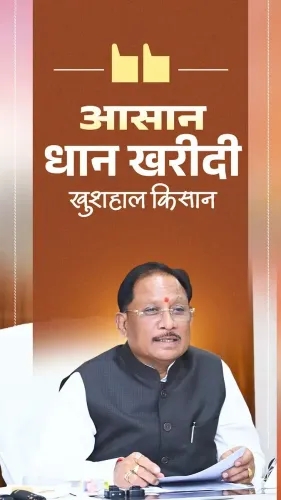
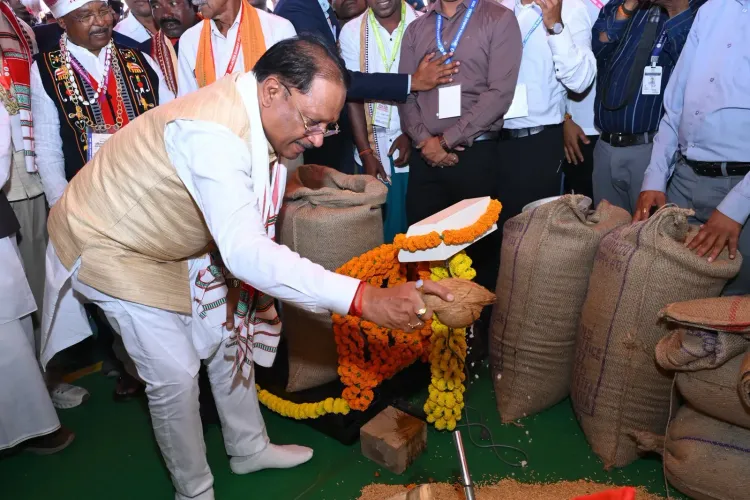
Chhattisgarh CM Vishnu Deo Sai inaugurated the statewide Dhan Kharidi Tihar on Janjatiya Gaurav Diwas from Dharamjaigarh in Raigarh district, expanding paddy procurement to 3,100 centres with online token systems for Kharif Marketing Year 2026-27.
Key Takeaways
Vishnu Deo Sai launched the Chhattisgarh Dhan Kharidi Tihar on 15 November 2026 from Dharamjaigarh, Raigarh district .
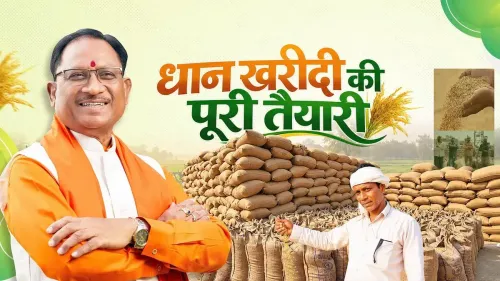
A total of 3,100 paddy procurement centres have been activated across the state for Kharif Marketing Year 2026-27 .
All centres feature an online token system for orderly, transparent transactions, with mandatory basic infrastructure in place.
The launch coincides with Janjatiya Gaurav Diwas (Birsa Munda's birth anniversary), linking agricultural policy to tribal welfare outreach.
Chhattisgarh has conducted annual MSP-based paddy procurement for over a decade, with digital systems added in recent cycles.
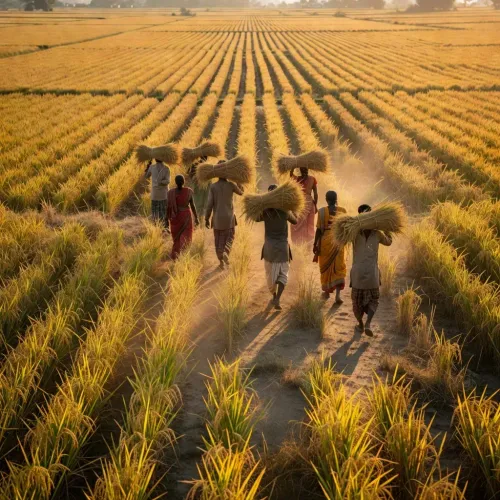
On the morning of Janjatiya Gaurav Diwas, Chhattisgarh Chief Minister Vishnu Deo Sai chose Dharamjaigarh in Raigarh district to fire the starting gun on the state's annual paddy procurement festival — a signal that this season's drive would carry both agricultural weight and symbolic resonance with the state's tribal heartland.
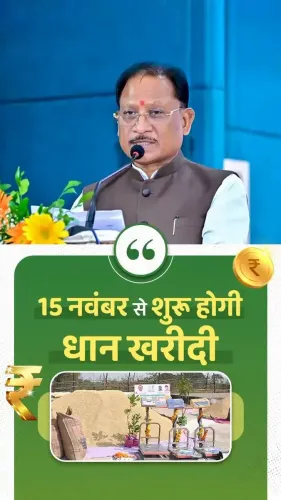
Posting on 15 November 2026, CM Sai declared: 'Annadata ka samman, kisan ka kalyan aur unki upaj ka uchit mulya sunischit karna hamari sarvochch prathamikta hai' — 'Honouring the farmer, ensuring their welfare and a fair price for their produce is our highest priority.' With that, the statewide Dhan Kharidi Tihar (Paddy Procurement Festival) for Kharif Marketing Year 2026-27 was officially underway.
3,100 Procurement Centres Across Chhattisgarh
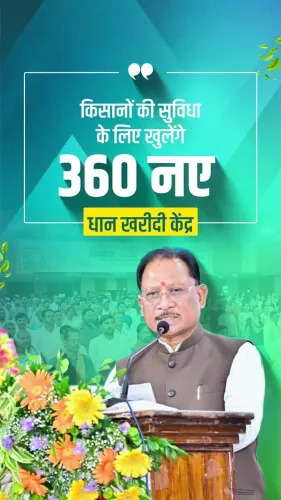
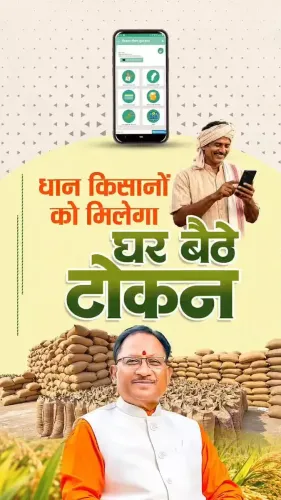
The headline number this season is 3,100 — the total procurement centres now activated across Chhattisgarh, an expansion over previous years designed to bring the market closer to farmers and cut the distance they must travel to sell their crop. Each centre, the CM said, would operate with an online token system, ensuring orderly queues and transparent transactions rather than the chaotic scramble that has historically plagued procurement windows at peak harvest.
Mandatory infrastructure — weighing facilities, shade, payment systems — has been mandated at every site. The intent is straightforward: a farmer who has spent months growing paddy should not spend equal effort just getting paid for it.
Janjatiya Gaurav Diwas and the Politics of Timing
Janjatiya Gaurav Diwas falls on 15 November every year, the birth anniversary of tribal icon Birsa Munda. Instituted by the central government in 2021, it has since become a platform for announcing welfare measures aimed at India's tribal communities. Launching the paddy drive on this date — and in Dharamjaigarh, a town within a predominantly tribal belt — threads agricultural policy directly through tribal identity and outreach.
Chhattisgarh has one of India's largest proportions of Scheduled Tribe population, and the overlap between paddy farmers and tribal households in districts like Raigarh is substantial. That overlap is not incidental to the choice of venue — it is the point.
A Season-Long Procurement Machine Kicks Into Gear
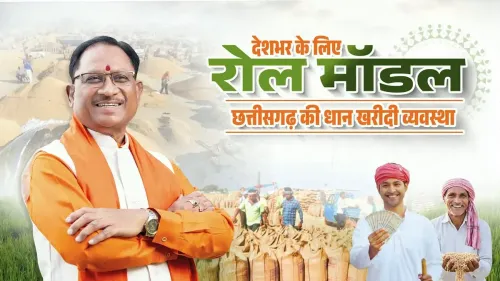
Chhattisgarh has run state-supported Minimum Support Price (MSP) paddy procurement through state agencies for over a decade, making it one of the more robust procurement ecosystems among rice-growing states. The digital shift — online tokens, transparent weighing, real-time centre-level data — represents the latest layer added to that architecture.
What follows the launch will matter as much as the launch itself: whether all 3,100 centres become operational on schedule, what volumes flow through the system in the season's first weeks, and whether the digital tools hold up under the pressure of simultaneous, state-wide activity. Those numbers will tell the story of whether the festival's promise translates into farmer income on the ground.
Chhattisgarh's paddy bowl has spoken — now comes the harvest of accountability.
Point of View
CM Sai signals that the BJP's agricultural and tribal outreach strategies in Chhattisgarh are increasingly integrated rather than parallel. Expanding to 3,100 centres with digital token systems is a direct response to longstanding farmer grievances about queue chaos and centre access — but the proof will be in procurement volumes. For the BJP, delivering visible agricultural results in Chhattisgarh ahead of any future electoral cycle is essential, given the state's reputation as a bellwether for rural sentiment in central India.
NationPress
15 Nov 2026
Frequently Asked Questions
What is Dhan Kharidi Tihar in Chhattisgarh?
Dhan Kharidi Tihar is Chhattisgarh's annual paddy procurement festival, during which the state government purchases paddy from farmers at Minimum Support Price through a network of government-run procurement centres across the state.
How many paddy procurement centres are there in Chhattisgarh in 2026-27?
For Kharif Marketing Year 2026-27, Chhattisgarh has set up 3,100 paddy procurement centres statewide, an increase over previous years, with online token systems at each.
Why was the Chhattisgarh paddy procurement launched from Dharamjaigarh?
CM Vishnu Deo Sai chose Dharamjaigarh in Raigarh district for the launch on Janjatiya Gaurav Diwas, linking agricultural support directly to tribal welfare in a predominantly tribal region of the state.
What is Janjatiya Gaurav Diwas and why does it matter for farmers?
Janjatiya Gaurav Diwas is observed on 15 November every year to honour tribal icon Birsa Munda and was instituted by the central government in 2021. In Chhattisgarh, where tribal and farming communities significantly overlap, it has become a platform for announcing agricultural and welfare measures.
What is the online token system at Chhattisgarh paddy centres?
The online token system allows farmers to book a slot digitally to sell their paddy at a procurement centre, reducing physical queues, ensuring transparency, and helping farmers plan their visits without long waiting periods.