CM Sai Opens 360 New Paddy Procurement Centres in Chhattisgarh

Synopsis
Chief Minister Vishnu Deo Sai's government has opened 360 new paddy procurement centres across Chhattisgarh, aiming to reduce travel distances for farmers, ease MSP sales, and strengthen the state's kharif procurement infrastructure ahead of the 2026 harvest season.
Key Takeaways
360 new paddy procurement centres have been opened across Chhattisgarh under the CM Vishnu Deo Sai-led BJP government.
The expansion is designed to give farmers access to nearby selling points , reducing the distance barrier that pushes many toward below-MSP distress sales.
Paddy procurement in Chhattisgarh operates under the central Minimum Support Price (MSP) framework, making these state-run centres a critical price-protection tool for rural households.
CM Vishnu Deo Sai has been in office since December 2023 ; this expansion continues the state's long-standing practice of periodically widening procurement infrastructure.
Actual impact will be measured through utilisation rates and farmer participation data during the upcoming kharif 2026 procurement season.
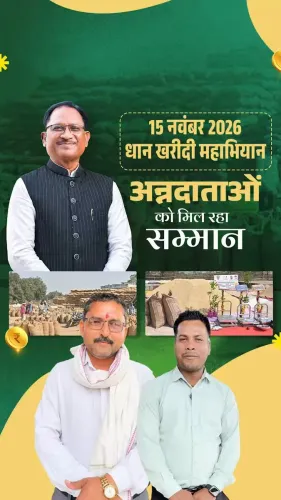
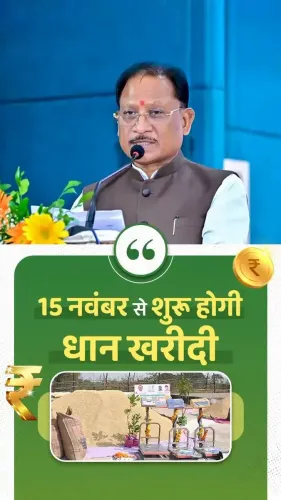
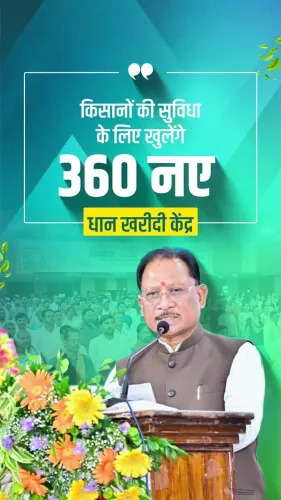
Three hundred and sixty new paddy procurement centres — opened at once, spread across an entire state. That is the scale of the infrastructure push Chief Minister Vishnu Deo Sai's government announced on Sunday, 15 November 2026, as Chhattisgarh moves to bring its kharif paddy buying machinery closer to the farm gate.
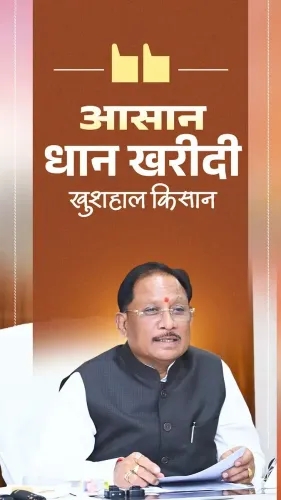
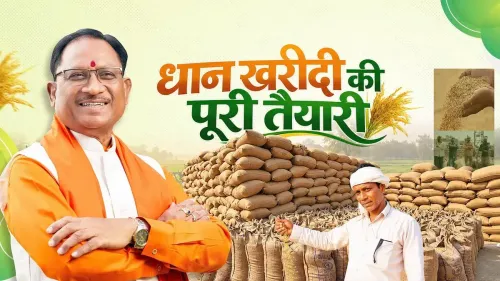
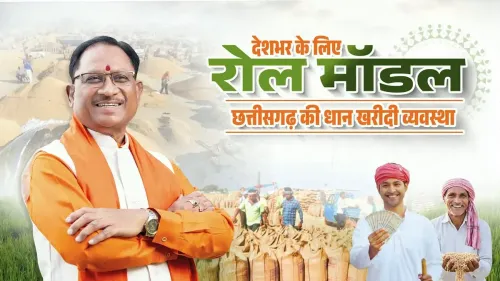
The Chief Minister's Office of Chhattisgarh posted on X that the new centres have been opened 'to strengthen farmer convenience and the paddy procurement system' — किसानों की सुविधा और धान खरीदी व्यवस्था को सुदृढ़ बनाने की दिशा में — under what it described as CM Sai's 'good-governance administration.' The stated aim: ensure farmers find a nearby centre to sell their crop and make the entire procurement process smoother.
Why proximity to a procurement centre matters for a paddy farmer
Chhattisgarh is one of India's major paddy-producing states, and agriculture remains the economic backbone for a large share of its rural households. Under the central Minimum Support Price framework, state-run procurement centres are the primary legal route through which a farmer can sell paddy at a guaranteed price — bypassing exploitative intermediaries or distress sales in private mandis.
The problem has historically been distance. A farmer who must travel long distances to reach the nearest centre often ends up selling locally at below-MSP rates simply to avoid the cost and time of the journey. By adding 360 centres to the existing network, the government is directly attacking that last-mile gap.
A pattern repeated across rice-belt states
Chhattisgarh has maintained an extensive paddy procurement infrastructure for over a decade. Successive governments — both Congress and BJP — have periodically expanded the number of procurement points as a core rural-welfare lever. The post-December 2023 BJP administration under CM Vishnu Deo Sai is continuing that administrative tradition, with this latest expansion representing one of its more visible signals ahead of the kharif procurement season.
Similar decentralisation of purchase points has been a recurring tool in other major rice-producing states, reflecting a shared recognition that procurement infrastructure density directly determines how much of the MSP benefit actually reaches the farmer rather than the trader.
What the kharif season will reveal
The real test arrives in the coming weeks, as the kharif 2026 harvest moves from field to procurement counter. Utilisation rates at the new centres — how many farmers register, how quickly payment cycles run, whether queues at older centres actually thin out — will determine whether the expansion translates into the tangible convenience the announcement promises. Those ground-level numbers will be the truest scorecard for CM Sai's farm-outreach agenda.
Three hundred and sixty new doors are open. Now the harvest must walk through them.
Point of View
Relatively low cost, and directly legible to rural voters as a concrete benefit. For the Sai government, which came to power in late 2023 partly on promises of farmer-friendly governance, widening the procurement network is both a policy necessity and a political signal. The broader pattern — seen across rice-producing states — suggests that decentralisation of MSP access points has become a standard tool for state governments trying to demonstrate that central price-support policy actually reaches the last mile. The unanswered question is operational depth: expanding the number of centres means little if payment timelines lag or centre-level staff and storage capacity don't scale in proportion.
NationPress
15 Nov 2026
Frequently Asked Questions
How many new paddy procurement centres has Chhattisgarh opened in 2026?
360 new paddy procurement centres have been opened across Chhattisgarh under Chief Minister Vishnu Deo Sai's government, as announced on 15 November 2026.
What is the purpose of paddy procurement centres in Chhattisgarh?
These are state-run facilities where farmers can sell their paddy at the central government's Minimum Support Price (MSP) , protecting them from distress sales to private traders at lower rates.
Who is the Chief Minister of Chhattisgarh in 2026?
Vishnu Deo Sai is the Chief Minister of Chhattisgarh. He has led the BJP state government since December 2023 .
How does opening more procurement centres help Chhattisgarh farmers?
More centres mean shorter travel distances for farmers, which reduces transport costs and time — a barrier that often pushes farmers to sell locally at below-MSP prices rather than reach the official government centre.
When is the paddy procurement season in Chhattisgarh?
Paddy procurement in Chhattisgarh typically takes place during the kharif season harvest window, generally from November onward, which is why this infrastructure expansion was announced in mid-November.