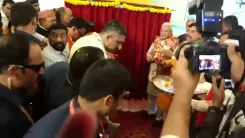
CM Bhupendra Patel Drives New Era of Tribal Welfare in Gujarat

Synopsis
The Chief Minister's Office of Gujarat spotlighted CM Bhupendra Patel's tribal welfare push on 15 November 2026, framing new Adivasi development schemes as a defining chapter in the state's 'always ahead' growth story.
Key Takeaways
CM Bhupendra Patel is leading a renewed push for tribal welfare through multiple development schemes in Gujarat.
The announcement was made by the Chief Minister's Office of Gujarat on 15 November 2026 .
Gujarat's tribal populations are concentrated in the state's eastern and central districts, historically underserved compared to coastal zones.
The Vanbandhu Kalyan Yojana framework, initiated in the mid-2000s, forms the institutional backbone for tribal sub-plan spending in Gujarat.
The state frames this push under the 'Sadaa Agressor Gujarat' ('always ahead') identity, signalling continuity and momentum in inclusive governance.
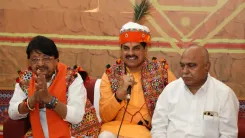
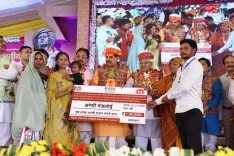
Gujarat's tribal heartland is at the centre of a fresh push for inclusive growth, as the Chief Minister's Office of Gujarat on Sunday, 15 November 2026 highlighted a range of development schemes under Chief Minister Bhupendra Patel aimed at ushering in what the state calls a 'new era of Adivasi welfare.'
The post, shared under the banner સદા અગ્રેસર ગુજરાત ('Gujarat, always ahead'), invites citizens to learn about the latest welfare initiatives being rolled out for tribal communities across the state under Patel's leadership.
Gujarat's Tribal Belt and Why It Matters
Gujarat is home to one of India's largest scheduled tribe populations, concentrated in the eastern and central districts — a region that has historically lagged behind the state's coastal and industrial prosperity. Bridging that gap has been a declared political and policy priority for successive administrations in Gandhinagar.
The institutional backbone for this effort dates to the Vanbandhu Kalyan Yojana framework, launched in the mid-2000s, which sought to funnel dedicated resources into tribal areas through a Gujarat Tribal Sub-Plan. That architecture has since been expanded and periodically refreshed with new scheme additions aligned with central government mandates on Adivasi welfare.
Bhupendra Patel's Stewardship Since 2021
Bhupendra Patel, who assumed office as Chief Minister in September 2021, has repeatedly positioned tribal welfare as a flagship plank of his administration's development agenda. The Agressor Gujarat — 'always advancing Gujarat' — framing used in today's post is a recurring signature of the CMO's public communication, projecting the state as a model of inclusive, forward-moving governance.
State budget allocations for scheduled tribe sub-plans and progress updates on ground-level delivery are expected to come into sharper focus during the next legislative session, which will serve as a real-time audit of how far these commitments have translated into measurable change for Adivasi households.
Point of View
The cadence of such announcements has intensified, reflecting both genuine policy continuity and the electoral calculus of consolidating Adivasi support in eastern Gujarat's tribal belt. The 'always ahead' branding is deliberate — it positions Gujarat as a self-sufficient model, subtly distancing the state narrative from central-scheme dependency while remaining aligned with New Delhi's tribal welfare mandates. The real test will be whether next session's budget figures and third-party assessments of on-ground delivery match the confidence of the messaging.
NationPress
15 Nov 2026
Frequently Asked Questions
What is the Vanbandhu Kalyan Yojana in Gujarat?
The Vanbandhu Kalyan Yojana is a Gujarat government framework launched in the mid-2000s to channel dedicated resources into tribal areas through a state-level Tribal Sub-Plan, covering infrastructure, education, health, and livelihood programmes for scheduled tribe communities.
Who is Bhupendra Patel and when did he become Gujarat's Chief Minister?
Bhupendra Patel is the Chief Minister of Gujarat, having assumed office in September 2021. He has prioritised tribal welfare and inclusive development as central planks of his administration.
Where do most of Gujarat's tribal communities live?
Gujarat's scheduled tribe populations are concentrated primarily in the state's eastern and central districts, regions that have historically received less of the economic growth seen in coastal and industrial zones.
What does 'Agressor Gujarat' or 'Sadaa Agressor Gujarat' mean?
It is a Gujarati phrase meaning 'Gujarat, always ahead' — a recurring branding motif used by the Chief Minister's Office to project the state as a forward-moving, progressive model of governance and development.
What tribal welfare schemes is the Gujarat government currently promoting?
The Gujarat government has referenced multiple development schemes for Adivasi communities under CM Bhupendra Patel's leadership, though the specific details and launch dates of the schemes referenced in the 15 November 2026 announcement are yet to be formally published in verifiable official documents.