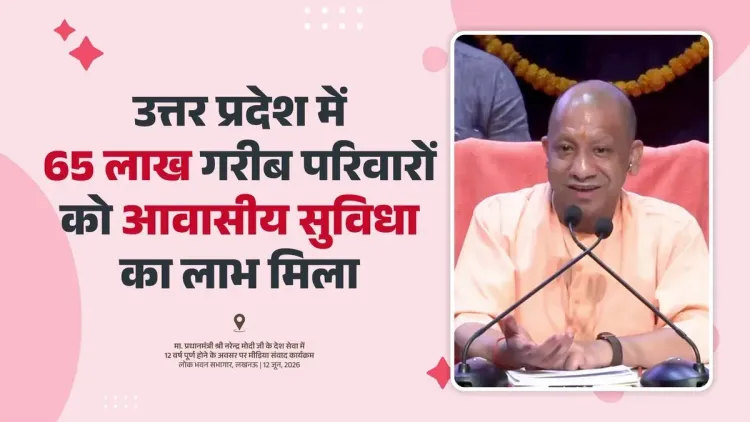
CM Yogi: 65 Lakh Poor Families Housed in Uttar Pradesh
Synopsis
The Chief Minister's Office of Uttar Pradesh announced on June 12, 2026 that 65 lakh poor families have received individual housing units under state and central welfare schemes, with CM Yogi Adityanath citing the milestone as evidence of the government's housing delivery drive.
Key Takeaways
65 lakh poor families in Uttar Pradesh have received individual housing units, according to the Chief Minister's Office.
The announcement was made on June 12, 2026 and attributed directly to Chief Minister Yogi Adityanath .
Housing delivery in UP is anchored in the Pradhan Mantri Awas Yojana (PMAY) , launched nationally in June 2015 , with both rural and urban components.
The state has run complementary programmes including Lohia Awas Yojana to cover beneficiaries outside PMAY's ambit.
Beneficiary identification has been linked to SECC-2011 data and state-level surveys since 2017 .
Updated PMAY completion figures and new targets for 2026-27 are expected in the forthcoming state budget session.
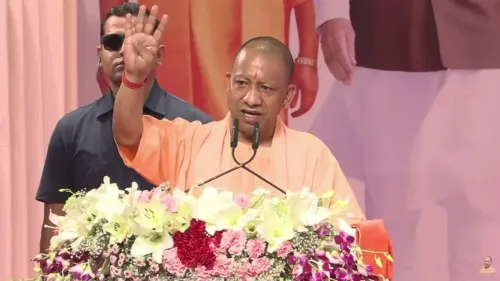
The Chief Minister's Office of Uttar Pradesh announced on Friday, June 12, 2026 that 65 lakh poor families across the state have benefited from individual housing units under government welfare schemes. The statement, attributed to Chief Minister Yogi Adityanath, underscores the state's sustained push to achieve saturation-level coverage of housing entitlements for economically weaker sections.
Context
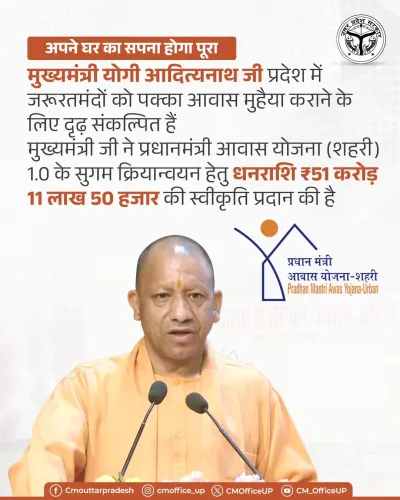
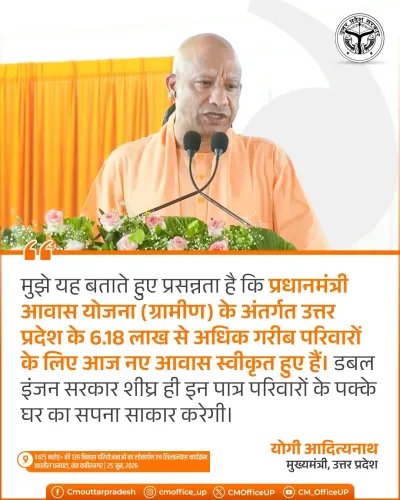
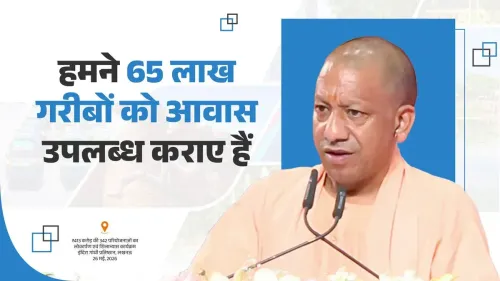
The Chief Minister's Office posted on X, quoting CM Yogi Adityanath: 'उत्तर प्रदेश में 65 लाख गरीब परिवारों को एक-एक आवास की सुविधा का लाभ प्राप्त हुआ है' ['In Uttar Pradesh, 65 lakh poor families have benefited from individual housing facilities']. The announcement was accompanied by a video, reinforcing the state government's practice of presenting welfare milestones through multimedia communication. Uttar Pradesh, India's most populous state, has long been at the centre of national housing programme delivery given the sheer scale of its eligible beneficiary base.
Policy Backdrop
The figure cited aligns with the state's implementation of the Pradhan Mantri Awas Yojana (PMAY), the central government's flagship housing programme launched in June 2015 with the goal of 'Housing for All.' The scheme operates through two streams — PMAY-Gramin for rural beneficiaries and PMAY-Urban for city dwellers — with states bearing significant responsibility for beneficiary identification, construction oversight, and fund disbursal. Uttar Pradesh began intensifying its PMAY delivery from 2017 onward, linking eligible households to SECC-2011 data and state-level surveys to build verified beneficiary lists.
Alongside the central scheme, the state has also run its own Lohia Awas Yojana, targeting segments not fully covered under PMAY. Together, these programmes form the backbone of the state's housing welfare architecture. The Yogi Adityanath government has periodically reported cumulative beneficiary figures as part of its governance outreach, framing housing access as a core deliverable of its tenure.
Stakeholders and Impact
The primary beneficiaries are Below Poverty Line (BPL) and economically weaker section households across Uttar Pradesh's rural and urban geographies. For these families, a pucca (permanent) house represents not just shelter but access to linked entitlements such as sanitation facilities, cooking gas connections, and electricity — all bundled under converging central welfare schemes. The scale of 65 lakh families translates to tens of millions of individuals whose living conditions are directly affected by the programme's execution quality and speed.
State officials and district administrations are key operational stakeholders, responsible for on-ground verification, construction monitoring, and release of instalments to beneficiaries. The announcement also carries political weight, as housing delivery has been a visible metric of governance performance in the run-up to state budget sessions and electoral cycles.
What's Next
Attention will now turn to updated PMAY completion figures expected in the next Uttar Pradesh state budget session, as well as any fresh housing targets set for the 2026-27 financial year. The government is likely to face scrutiny on the quality of constructed units, pending completions, and whether the most marginalised households — including those in remote rural pockets — have been reached. As the national housing programme enters a new phase, Uttar Pradesh's ability to sustain and deepen coverage will be a key indicator of whether India's largest state can convert welfare announcements into durable improvements in living standards for its poorest citizens.
Point of View
Housing has served as one of the most tangible and communicable welfare metrics — accessible to voters across both rural and urban constituencies. The 65 lakh figure, if borne out by independent audits, would represent a substantial share of UP's eligible poor households and lend credibility to the state's saturation-drive approach. The timing ahead of a new budget cycle suggests the government is also laying the groundwork for fresh housing targets, using past delivery as a political and administrative baseline.
NationPress
24 Sept 2026
Frequently Asked Questions
How many families have received housing in Uttar Pradesh under government schemes?
The Chief Minister's Office of Uttar Pradesh stated on June 12, 2026 that 65 lakh poor families have received individual housing units under government welfare schemes in the state.
What is Pradhan Mantri Awas Yojana and how does it work in UP?
Pradhan Mantri Awas Yojana (PMAY) is a central government scheme launched in June 2015 to provide permanent houses to rural and urban poor. In Uttar Pradesh, the state government coordinates beneficiary identification using SECC-2011 data and manages fund disbursal and construction oversight.
What housing schemes does the Uttar Pradesh government run for the poor?
Uttar Pradesh implements both the centrally sponsored Pradhan Mantri Awas Yojana — with separate rural and urban components — and its own state scheme, Lohia Awas Yojana, to extend coverage to households not fully captured under PMAY.
Who are the beneficiaries of UP's housing welfare programmes?
The primary beneficiaries are Below Poverty Line (BPL) and economically weaker section households across rural and urban Uttar Pradesh, identified through SECC-2011 data and state surveys.
What are the next steps for housing delivery in Uttar Pradesh?
Updated PMAY completion figures and new housing targets for the 2026-27 financial year are expected to be announced in the upcoming Uttar Pradesh state budget session.