India hits 56 critical mineral block auctions, 7th tranche opens Gujarat, Uttarakhand, Telangana
Synopsis
India has crossed 56 successfully auctioned critical and strategic mineral blocks, with the seventh tranche alone breaking new ground in Gujarat, Uttarakhand, and Telangana. The 63-per-cent success rate and the simultaneous expansion of the Exploration Licence framework signal that India's push to build a domestic critical mineral supply chain — vital for EVs, defence, and clean energy — is moving from policy intent to operational reality.
Key Takeaways
56 critical and strategic mineral blocks have been successfully auctioned by the Central Government to date, out of 88 unique blocks taken up — a success rate of over 63 per cent .
The seventh tranche auctioned 10 blocks from a pool of 19 offered , and for the first time included blocks in Gujarat , Uttarakhand , and Telangana .
Minerals auctioned include Graphite , Rare Earth Elements , Vanadium , Titanium , Glauconite , and Rock Phosphate .
The Second Tranche of Exploration Licence auctions has been completed, taking cumulative EL blocks auctioned to 11 .
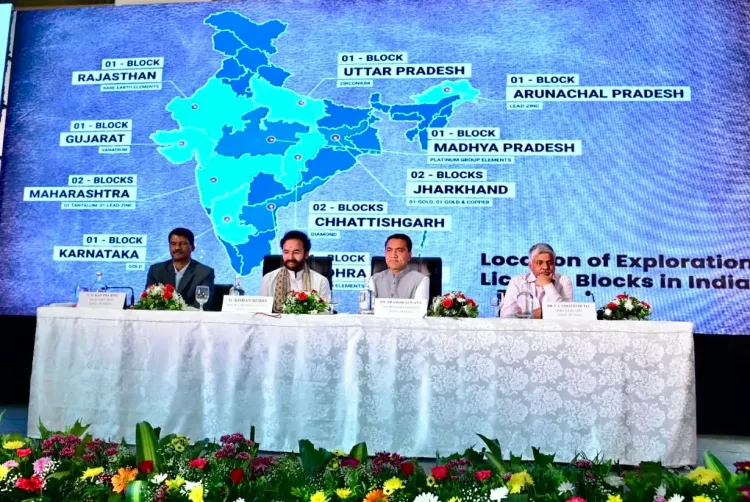
The EL framework has been extended to Arunachal Pradesh , Uttar Pradesh , and Odisha for the first time by the Central Government.
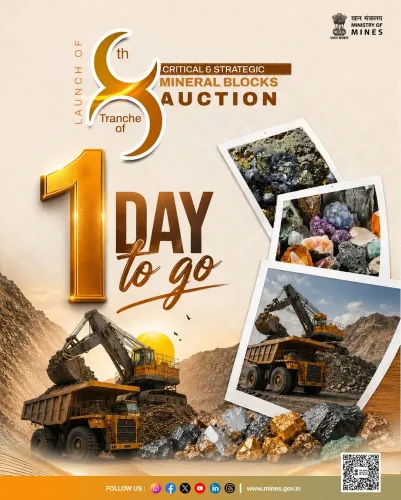
India has successfully auctioned 56 critical and strategic mineral blocks to date, the Ministry of Mines announced on Tuesday, 23 June, marking a decisive advance in the country's push to secure domestic mineral supply chains and fulfil its critical mineral mission. The milestone follows the completion of the seventh tranche of Central Government auctions, which alone added 10 blocks to the tally.
Key Developments in the Seventh Tranche
The seventh tranche offered 19 mineral blocks comprising critical and strategic minerals, of which 10 were successfully auctioned. Conducted under the Mines and Minerals (Development and Regulation) Act, 1957 and the Mineral (Auction) Rules, 2015, the tranche brought three new states — Gujarat, Uttarakhand, and Telangana — into the Central Government's critical mineral auction fold for the first time.
Minerals covered in this tranche include Graphite, Rare Earth Elements (REE), Vanadium, Titanium, Glauconite, Rock Phosphate, and associated minerals, widening the geographical and material scope of India's critical mineral exploration programme.
Overall Auction Progress and What the Numbers Mean
Cumulatively, the Central Government has taken up 88 unique mineral blocks for auction since the programme's inception, of which 56 have been successfully auctioned — a success rate of over 63 per cent. This trajectory reflects accelerating momentum: earlier tranches laid the groundwork, while recent rounds have expanded into previously untapped states and mineral categories.
Notably, critical minerals such as REE and Vanadium are essential inputs for electric vehicles, defence electronics, and renewable energy infrastructure — sectors at the heart of India's industrial ambitions. Securing domestic sources reduces dependence on imports, particularly from geopolitically sensitive supply chains.
Exploration Licence Framework Expands
Alongside the block auctions, the Ministry also completed the Second Tranche of Exploration Licence (EL) auctions, bringing the cumulative number of EL blocks auctioned by the Central Government to 11 since the EL auction regime was introduced. The second tranche extended the framework to Arunachal Pradesh, Uttar Pradesh, and Odisha for the first time, opening new corridors for exploration of critical and deep-seated minerals.
The Exploration Licence mechanism enables both private and public sector entities to participate in systematic mineral exploration, creating a pipeline of blocks that could feed future auction tranches.
Strategic Significance and What Comes Next
India's critical mineral mission is increasingly central to its industrial and energy transition strategy. The expansion into states like Gujarat and Arunachal Pradesh signals a deliberate effort to diversify the geographic base of mineral extraction beyond traditional mining belts. With 32 blocks from the original 88 still to be successfully auctioned, the Ministry is expected to press ahead with further tranches to close the gap. Industry observers will watch whether the pace of successful auctions holds as the programme moves into more complex geological terrain and newer states.
Point of View
The 63-per-cent success rate is respectable but not exceptional — and the harder blocks, in newer states and more complex geology, are likely still ahead. The real test of India's critical mineral mission is not how many blocks get auctioned but how quickly they move from licence to active extraction. REE and Vanadium deposits, in particular, have long lead times from discovery to production. If the pipeline from Exploration Licence to operational mine does not accelerate, the auction numbers will outpace actual supply security — which is the metric that matters for India's EV and defence manufacturing ambitions.
NationPress
22 Sept 2026
Frequently Asked Questions
How many critical mineral blocks has India auctioned so far?
India has successfully auctioned 56 critical and strategic mineral blocks as of 23 June 2025, out of 88 unique blocks taken up for auction by the Central Government — a success rate of over 63 per cent.
What is the significance of the seventh tranche of critical mineral auctions?
The seventh tranche auctioned 10 blocks and, for the first time, brought Gujarat, Uttarakhand, and Telangana into the Central Government's critical mineral auction programme. It also covered a broad range of minerals including Rare Earth Elements, Vanadium, and Graphite, widening both the geographic and material scope of India's exploration drive.
What minerals were covered in the seventh tranche?
The seventh tranche included Graphite, Rare Earth Elements (REE), Vanadium, Titanium, Glauconite, Rock Phosphate, and associated minerals — all classified as critical or strategic for India's industrial and energy transition needs.
What is the Exploration Licence framework and why does it matter?
The Exploration Licence (EL) framework allows private and public sector entities to systematically explore for critical and deep-seated minerals before formal mining begins. The second EL tranche has now extended this framework to Arunachal Pradesh, Uttar Pradesh, and Odisha, bringing the total EL blocks auctioned to 11 and creating a pipeline for future mining auctions.
Why are critical minerals strategically important for India?
Critical minerals such as Rare Earth Elements, Vanadium, and Graphite are essential inputs for electric vehicles, defence electronics, and renewable energy systems. Securing domestic sources reduces India's dependence on imports from geopolitically sensitive supply chains and supports its broader industrial and clean energy ambitions.