Nadda visits ARSH Institute in Srinagar, hails youth as Viksit Bharat foundation
Synopsis
Union Health Minister J. P. Nadda visited the ARSH Institute of Health Sciences and Technology in Srinagar on November 5, 2026, interacting with medical students and urging them to see their work as central to PM Modi's Viksit Bharat 2047 mission, calling a healthy India the foundation of a developed one.
Key Takeaways
Nadda visited the ARSH Institute of Health Sciences and Technology in Srinagar on November 5, 2026 , meeting medical students and future healthcare professionals.
Nadda linked the students' work directly to PM Modi's Viksit Bharat 2047 vision, stating a healthy India is 'the foundation of a Developed India.' He congratulated the ARSH Institute for equipping students with the skills to contribute to national health goals.
The visit reflects the Health Ministry's ongoing outreach to align regional medical education institutions in Jammu and Kashmir with central policy.
India's National Health Policy 2017 and Ayushman Bharat 2018 form the policy backbone for expanding medical training infrastructure across regions including J&K.
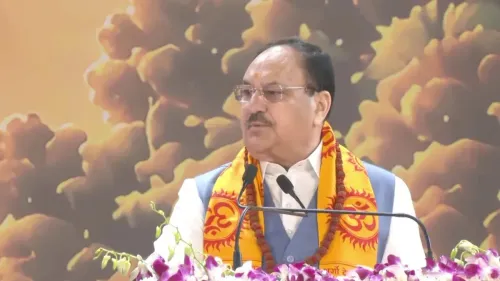
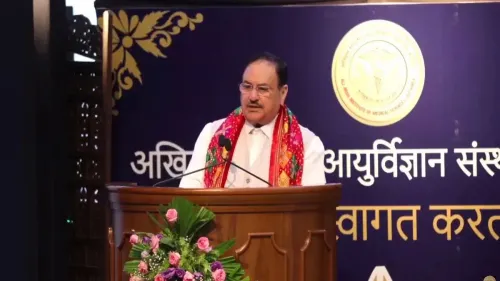
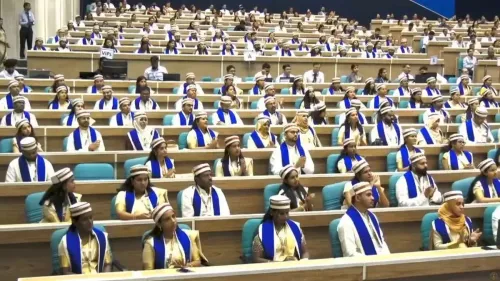
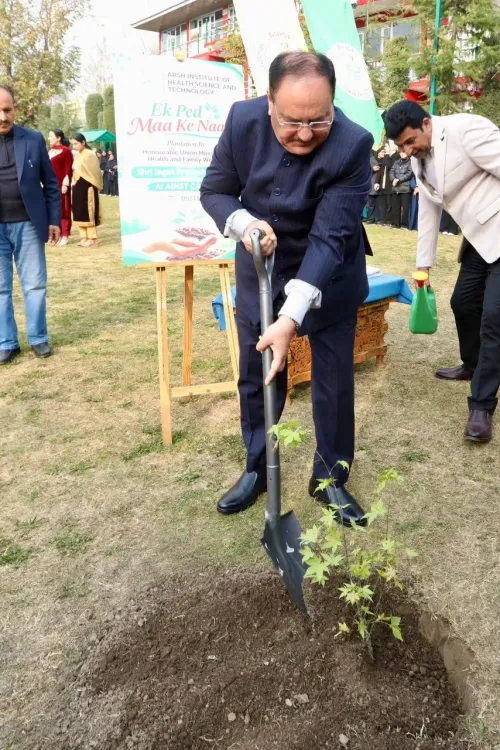
A health minister walking the corridors of a medical college in Srinagar — not for a ribbon-cutting, but for a conversation — carries a message of its own. Union Health Minister J. P. Nadda visited the ARSH Institute of Health Sciences and Technology in Srinagar on Thursday, November 5, 2026, meeting students and future healthcare professionals and framing their commitment as central to Prime Minister Narendra Modi's long-term vision for India.
What Nadda told Srinagar's medical students
Nadda tied the visit directly to the Viksit Bharat 2047 framework — the government's blueprint to transform India into a fully developed nation by the centenary of its independence. 'This vision can only be realised when India becomes a healthy nation,' he said, calling a healthy India 'the foundation of a Developed India.' The message to the room was clear: stethoscopes and scalpels are as much instruments of nation-building as infrastructure or investment.
He singled out the youth of Srinagar specifically, noting their 'meaningful contribution towards the national mission of building a healthier and stronger nation.' The acknowledgement carries weight in a region where central government engagement with educational institutions has deepened significantly in recent years following the reorganisation of Jammu and Kashmir into a Union Territory in 2019.
ARSH Institute and the medical education push in J&K
Nadda extended 'heartiest congratulations' to the ARSH Institute for 'equipping young minds with the skills and opportunities to excel.' The visit reflects a broader Health Ministry pattern of aligning regional institutions with national health goals — an effort that stretches back to the National Health Policy 2017, which explicitly prioritised expansion of medical education and preventive care infrastructure across India.
That policy lineage runs through the Ayushman Bharat programme launched in 2018, which coupled India's largest health insurance scheme with a grassroots network of health and wellness centres and support for medical training. For Jammu and Kashmir, strengthening health education capacity has been part of the region's post-reorganisation development agenda — Srinagar sits at the centre of that effort as the summer capital.
Youth as the long game in Viksit Bharat
The minister's framing — that the dedication of medical students 'will play a vital role in shaping India's future' — is not merely rhetorical. India's demographic dividend is narrowing, and the country faces a persistent doctor-to-population gap, particularly acute in Tier-2 cities and Union Territories. Training healthcare professionals in regions like Kashmir serves a dual purpose: plugging local shortages and anchoring talent within the region rather than losing it to metros.
Nadda's visit, brief as it may appear on the schedule, positions the Health Ministry's outreach as part of a human-capital argument for Viksit Bharat — not just hospitals and schemes, but the people who will run them.
Point of View
The minister reinforces a recurring BJP messaging strategy that links individual professional ambition to the government's 2047 development arc. The outreach also underscores New Delhi's sustained institutional engagement with J&K since its 2019 reorganisation, extending well beyond administrative changes into the softer terrain of education and youth aspiration. Whether the visit translates into concrete policy announcements — new seats, new colleges, or expanded Ayushman Bharat infrastructure — will be the real metric to watch.
NationPress
6 Nov 2026
Frequently Asked Questions
Why did JP Nadda visit Srinagar in November 2026?
Union Health Minister J. P. Nadda visited the ARSH Institute of Health Sciences and Technology in Srinagar on November 5, 2026, to interact with medical students and future healthcare professionals as part of the Health Ministry's outreach to align regional institutions with the Viksit Bharat 2047 vision.
What is the ARSH Institute of Health Sciences and Technology in Srinagar?
The ARSH Institute of Health Sciences and Technology is a health sciences institution based in Srinagar, Jammu and Kashmir, that trains medical and healthcare students. Nadda praised it for equipping young professionals with skills to contribute to national health goals.
What is Viksit Bharat 2047 and how does health connect to it?
Viksit Bharat 2047 is PM Narendra Modi's vision for India to become a fully developed nation by the centenary of its independence. Nadda has argued that a healthy population is the foundation of this vision, making healthcare professionals central actors in achieving it.
What is India's policy history on medical education expansion?
India's National Health Policy 2017 prioritised expanding medical education and preventive care, while the Ayushman Bharat programme launched in 2018 supported health and wellness centre networks and medical training infrastructure, particularly in underserved regions including Jammu and Kashmir.
What is the significance of the Health Ministry visiting Jammu and Kashmir institutions?
Central ministerial visits to J&K's health and education institutions have increased since the region became a Union Territory in 2019. These visits signal a policy intent to integrate J&K's institutions into national health and development frameworks, addressing both talent retention and healthcare access gaps.