India launches NFI 7th Edition, Biovigilance Programme to strengthen medicine safety
Synopsis
India has jumped from 123rd to 8th globally in WHO patient safety database contributions — and the Centre is doubling down. The simultaneous launch of the NFI 7th Edition, Biovigilance Programme, and ADR-PvPI 2.0 app marks the most comprehensive single-day expansion of India's medicine safety infrastructure in recent years.
Key Takeaways
The Central government launched the 7th Edition of the National Formulary of India (NFI) on 21 September 2026 at the 6th National Pharmacovigilance Week in New Delhi.
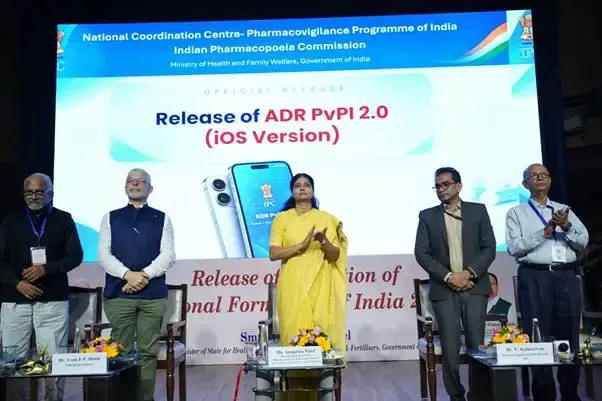
The ADR-PvPI 2.0 Mobile App for iOS users was released, expanding digital adverse-event reporting access.
The Biovigilance Programme of India was formally approved, covering adverse events in organ and tissue transplantation .
India has risen from 123rd position (2009–2014) to 8th globally in contributions to the WHO patient safety database .
Minister Anupriya Patel released a guidance document for hospitals on Safety Monitoring and Reporting of Medical Device-Related Adverse Events .
The NFI is now available digitally via NFI Online , alongside existing tools including IP Online and ADRMS .
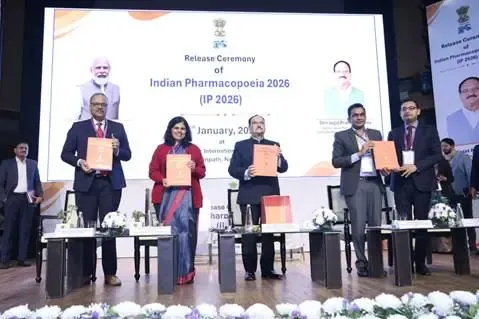
The Central government on Monday, 21 September 2026, launched the 7th Edition of the National Formulary of India (NFI) and the ADR-PvPI 2.0 Mobile App for iOS users at the 6th National Pharmacovigilance Week programme in New Delhi, organised by the Indian Pharmacopoeia Commission (IPC). The event marked a significant step in India's push to modernise medicine safety infrastructure and patient protection frameworks.
Key Launches and Announcements
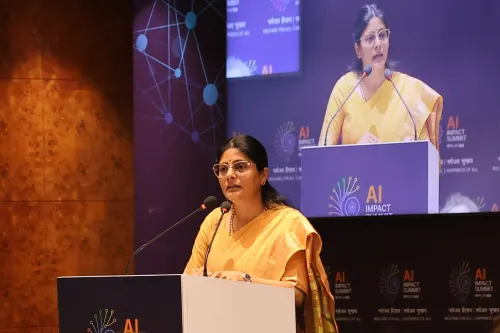
Union Minister of State for Health & Family Welfare and Chemicals & Fertilisers Anupriya Patel unveiled a series of new initiatives at the event. These included a guidance document for hospitals on 'Safety Monitoring and Reporting of Medical Device-Related Adverse Events' and the formal approval of the Biovigilance Programme of India. Under the Biovigilance Programme, the IPC will strengthen reporting, assessment, monitoring, and prevention of adverse events linked to medicines and biological products used in organ and tissue transplantation, covering products administered to both donors and recipients.
The 7th Edition of the NFI has also been made available digitally through NFI Online, the Ministry of Health and Family Welfare confirmed, making standardised prescribing guidance accessible to healthcare professionals nationwide.
India's Rise in Global Pharmacovigilance
Minister Patel highlighted a striking shift in India's global standing on medicine safety. The country has moved from the 123rd position during the 2009–2014 period to 8th globally in contributions to the WHO patient safety database. She described this transformation as a reflection of significantly strengthened national capacity — a transition from relying on safety data generated abroad to producing and contributing India's own pharmacovigilance evidence.
Patel framed this capacity as a critical dimension of Atmanirbhar Bharat in healthcare, noting that India has built a robust indigenous ecosystem capable of generating, collecting, processing, and analysing medicine-safety data from across the country.
Rational Medicine Use and Digital Access
The minister underscored that rational use of medicines and continuous safety monitoring are integral to public health. She stated that every patient must receive the right medicine of assured quality. Digital tools including NFI Online, IP Online, the ADR-PvPI 2.0 Mobile App, and the Adverse Drug Reaction Monitoring System (ADRMS) are being deployed to make medicine-related information and adverse-event reporting more accessible, transparent, and responsive.
About the National Pharmacovigilance Week
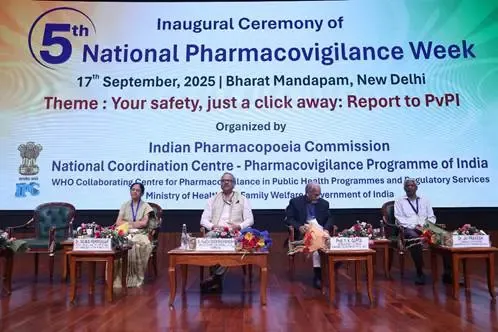
The 6th National Pharmacovigilance Week, observed from 17 to 23 September 2026, brought together senior government officials, regulators, healthcare professionals, academicians, researchers, and stakeholders working to reinforce medicine safety and patient care standards across India. The combined pharmacovigilance, materiovigilance, and biovigilance initiatives are intended to extend safety monitoring across medicines, medical devices, and transplant procedures.
With the rollout of these programmes, India's medicine safety architecture is expected to become more comprehensive, data-driven, and globally competitive in the months ahead.
Point of View
Not necessarily the quality of pharmacovigilance outcomes for patients. The Biovigilance Programme is overdue given that transplant-related adverse events have historically been under-monitored. The real test is whether the new digital tools — NFI Online, ADR-PvPI 2.0, ADRMS — drive ground-level reporting by frontline clinicians and district hospitals, not just tier-1 medical centres. Atmanirbhar Bharat framing for pharmacovigilance is politically resonant, but independent audits of data quality and reporting completeness will be necessary before India can claim genuine global leadership in medicine safety.
NationPress
21 Sept 2026
Frequently Asked Questions
What is the 7th Edition of the National Formulary of India (NFI)?
The 7th Edition of the NFI is an updated standardised prescribing reference for healthcare professionals in India, launched on 21 September 2026 by the Ministry of Health and Family Welfare. It is now available digitally through the NFI Online platform, making it accessible to clinicians across the country.
What is the Biovigilance Programme of India?
The Biovigilance Programme of India, approved at the 6th National Pharmacovigilance Week, tasks the Indian Pharmacopoeia Commission with strengthening the reporting, monitoring, and prevention of adverse events related to biological products used in organ and tissue transplantation. It covers products administered to both donors and recipients.
What is the ADR-PvPI 2.0 Mobile App and who can use it?
The ADR-PvPI 2.0 Mobile App is a digital tool launched for iOS users to enable easier reporting of adverse drug reactions as part of India's pharmacovigilance framework. It is part of a broader set of digital initiatives including NFI Online and the Adverse Drug Reaction Monitoring System (ADRMS).
Where does India rank globally in pharmacovigilance contributions?
India currently ranks 8th globally in contributions to the WHO patient safety database, up from 123rd during the 2009–2014 period. Minister Anupriya Patel cited this as evidence of significantly strengthened national capacity in medicine safety data generation.
What is the National Pharmacovigilance Week and when is it held?
The National Pharmacovigilance Week is an annual event organised by the Indian Pharmacopoeia Commission to strengthen medicine safety, patient care, and adverse-event reporting across India. The 6th edition ran from 17 to 23 September 2026 and brought together government officials, regulators, healthcare professionals, and researchers.