Nadda Chairs 3rd NIPER Council Meet, Reviews Pharma Research Push
Synopsis
Union Health Minister J. P. Nadda chaired the 3rd NIPER Council meeting on June 15, 2026, reviewing the BIO-SHAKTI initiative, Centres of Excellence, industry-academia collaboration, governance reforms, and capacity expansion across India's seven NIPERs, reaffirming the government's push for a globally competitive pharmaceutical sector.
Key Takeaways
Nadda chaired the 3rd Meeting of the NIPER Council on June 15, 2026 .
The council reviewed the BIO-SHAKTI initiative , Centres of Excellence , and industry-academia collaboration frameworks.
Governance reforms and capacity expansion across the network of seven NIPERs were also on the agenda.
The meeting reaffirmed commitment to the Atmanirbhar Bharat vision for a globally competitive pharmaceutical sector.
The NIPER Act, 1998 established the first institute at Mohali ; the network expanded to seven institutes via Cabinet approvals between 2007 and 2012 .
Roll-out timelines and budgets for the announced initiatives are yet to be formally notified.
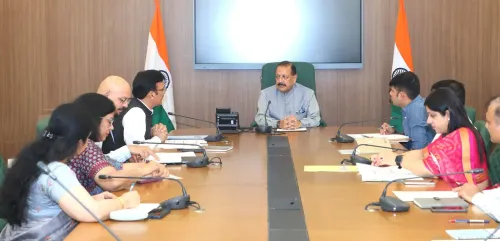
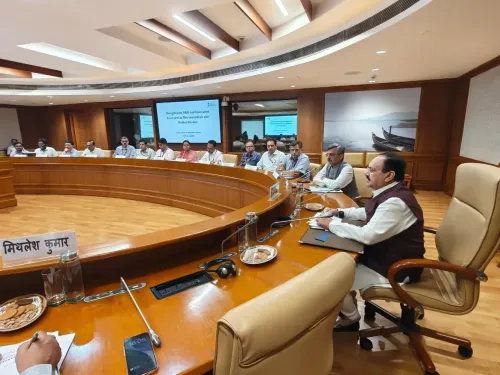
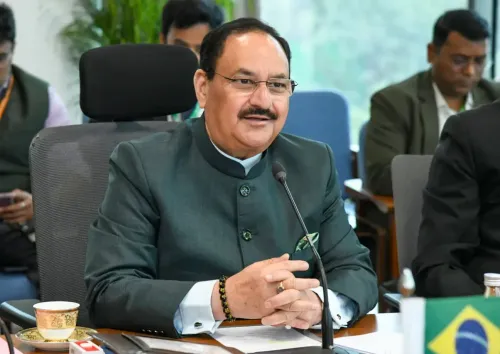
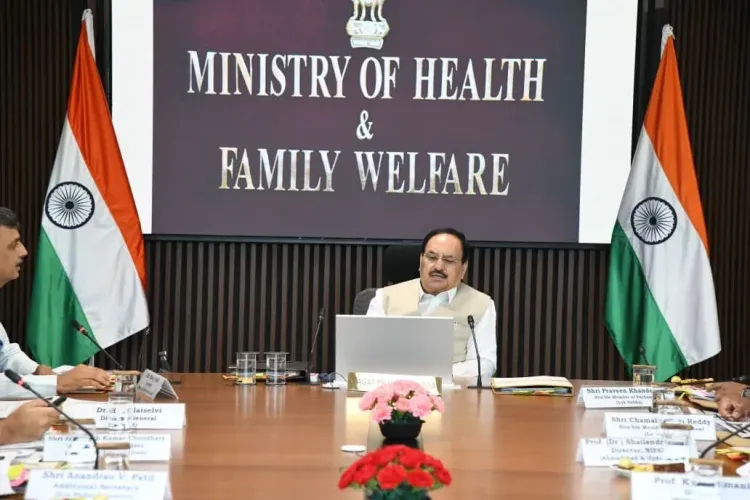
Union Health Minister and Minister of Chemicals and Fertilizers J. P. Nadda chaired the 3rd Meeting of the NIPER Council on Monday, June 15, 2026, reviewing a range of initiatives designed to strengthen India's pharmaceutical education, research, and innovation ecosystem. The meeting brought together stakeholders from across the network of National Institutes of Pharmaceutical Education and Research (NIPERs) to assess progress and chart a forward course for the sector.
Context
Nadda, posting on X, said the council reviewed key initiatives including the BIO-SHAKTI initiative, Centres of Excellence, industry-academia collaboration, governance reforms, and capacity expansion across NIPERs. He added that the meeting 'reaffirmed our commitment to building world-class institutions, fostering cutting-edge research, and developing a future-ready skilled workforce to support the vision of an Atmanirbhar and globally competitive pharmaceutical sector.'
The NIPER Council is the apex statutory body responsible for coordinating governance and policy across the NIPER network. Its meetings set the direction for how these institutes are funded, governed, and academically positioned within India's broader pharmaceutical landscape.
Policy Backdrop
The NIPER network traces its origins to the NIPER Act, 1998, which established the first institute at Mohali and created a statutory framework for advanced pharmaceutical education and research. A series of Cabinet approvals between 2007 and 2012 expanded the network to its current strength of seven institutes, spread across different states to ensure regional representation in pharmaceutical capacity-building.
The government's push to upgrade NIPERs aligns squarely with the Atmanirbhar Bharat programme, launched in 2020, which emphasises domestic manufacturing, indigenous research, and reduced import dependence across strategic sectors. Pharmaceuticals have been a particular focus given India's standing as the world's largest supplier of generic medicines and its ambition to move up the value chain into originator-drug development.
The BIO-SHAKTI initiative and proposed Centres of Excellence reviewed at Monday's meeting represent the latest layer of this multi-year policy effort to transform NIPERs from primarily teaching institutions into globally benchmarked research hubs.
Stakeholders and Impact
The decisions taken at NIPER Council meetings directly affect pharma researchers, NIPER students, and the wider pharmaceutical industry, which relies on the institutes as a pipeline for skilled scientific manpower. Industry-academia collaboration — one of the agenda items explicitly flagged by Nadda — is seen as critical to closing the gap between laboratory research and commercial drug development.
Governance reforms discussed at the meeting could affect how NIPERs are administered, how funds are allocated, and how performance is benchmarked against international peers. Capacity expansion, if followed through with concrete budgetary commitments, would increase the number of researchers the network can train annually.
What's Next
Attention will now turn to the roll-out timelines and budgetary allocations for the announced Centres of Excellence and the BIO-SHAKTI initiative, both of which were reviewed but whose specific parameters remain to be formally notified. Any legislative or regulatory amendments arising from the governance-reform proposals discussed at the council will also be closely watched by the pharma education sector.
As India seeks to position itself as a global hub not just for generic manufacturing but for pharmaceutical innovation, the trajectory of the NIPER network will serve as a key indicator of whether policy intent is translating into institutional capacity on the ground.
Point of View
Even as the sector awaits concrete budgetary follow-through on announced initiatives. The explicit mention of BIO-SHAKTI and Centres of Excellence alongside governance reforms suggests a dual focus: upgrading research output while tightening administrative accountability across the seven-institute network. This fits a broader pattern in which the Ministry of Chemicals and Fertilizers has sought to reposition NIPERs as innovation anchors rather than mere teaching bodies, directly supporting India's ambition to move beyond generic exports. The real test will be whether the reform proposals translate into notified policy and funded programmes within the current fiscal cycle.
NationPress
14 Sept 2026
Frequently Asked Questions
What is the NIPER Council and what does it do?
The NIPER Council is the apex statutory body that coordinates governance and policy for India's network of National Institutes of Pharmaceutical Education and Research. It sets direction on funding, academic priorities, and institutional performance across the seven NIPERs established under the NIPER Act, 1998.
What is the BIO-SHAKTI initiative?
BIO-SHAKTI is a pharmaceutical research and innovation initiative reviewed at the 3rd NIPER Council meeting chaired by J. P. Nadda on June 15, 2026. Specific details of its scope and budget have not yet been formally notified.
How many NIPERs are there in India?
There are currently seven NIPERs in India. The first was established at Mohali under the NIPER Act, 1998, and the network expanded through Cabinet approvals between 2007 and 2012.
What is the Atmanirbhar Bharat connection to pharmaceutical education?
Atmanirbhar Bharat, launched in 2020, emphasises domestic manufacturing and indigenous research to reduce import dependence. The NIPER network is a key instrument of this policy in the pharmaceutical sector, with the government seeking to evolve these institutes into globally benchmarked research hubs.
What were the key agenda items at the 3rd NIPER Council meeting?
The meeting reviewed the BIO-SHAKTI initiative, Centres of Excellence, industry-academia collaboration, governance reforms, and capacity expansion across NIPERs, according to Union Health Minister J. P. Nadda's post on June 15, 2026.