Nadda Chairs Pharma & MedTech Innovation Committee Meet
Synopsis
Union Health Minister J. P. Nadda chaired a Consultative Committee Meeting on June 16, 2026, deliberating on India's pharmaceutical and MedTech innovation ecosystem, with a focus on R&D, biologics, clinical research, and positioning India as a globally competitive healthcare hub.
Key Takeaways
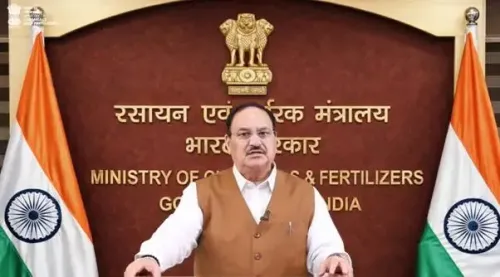
Nadda chaired the Consultative Committee Meeting of the Ministry of Chemicals and Fertilizers on June 16, 2026 .
The meeting focused on innovation in pharmaceuticals, biologics, and medical devices , and on enhancing clinical research capacity.
Nadda stated India is 'well-positioned to emerge as a global hub for Pharma and MedTech innovation.' The discussions align with the Production Linked Incentive (PLI) Scheme launched in 2020-21 to boost domestic pharma manufacturing.
The policy push seeks to balance innovation and affordability , maintaining India's role as a leading supplier of accessible medicines globally.
Upcoming Union Budget allocations and amendments to the New Drugs and Clinical Trials Rules are key policy signals to watch.
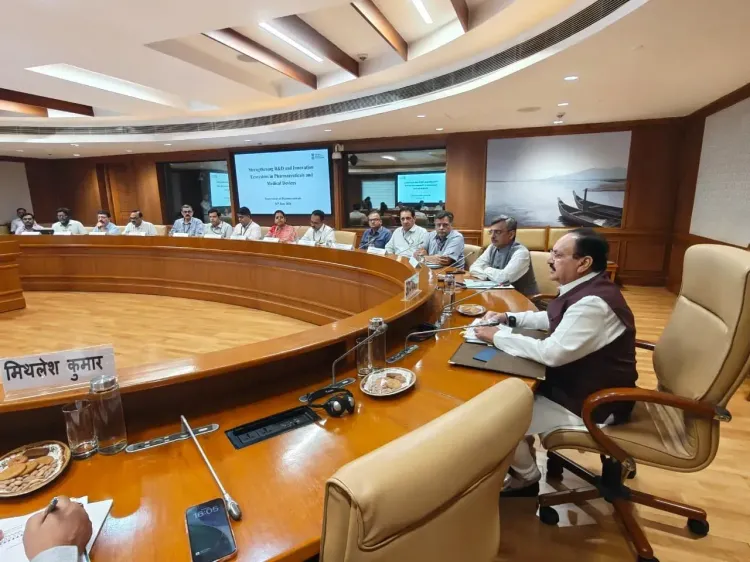
Union Health Minister J. P. Nadda on Tuesday, June 16, 2026, chaired the Consultative Committee Meeting of the Ministry of Chemicals and Fertilizers, focused on driving innovation across India's pharmaceutical and medical technology sectors. The meeting deliberated on strengthening the country's research and development ecosystem, promoting advances in pharmaceuticals, biologics, and medical devices, and building a globally competitive healthcare industry.
Context
The Consultative Committee is a parliamentary mechanism that brings together Members of Parliament and ministry officials to deliberate on sector-specific policy priorities. In his post, Nadda stated that the meeting examined 'strengthening India's R&D and innovation ecosystem, promoting innovation in pharmaceuticals, biologics, and medical devices, enhancing clinical research, and building a globally competitive healthcare industry.'
He added that 'India is well-positioned to emerge as a global hub for Pharma and MedTech innovation while ensuring affordable, accessible, and quality healthcare for all' — framing domestic ambition within a public-health equity mandate.
Policy Backdrop
The meeting sits within a broader policy arc stretching back to the National Health Policy 2017, which called for increased R&D expenditure and indigenous manufacturing capacity in medical devices and biologics. The Production Linked Incentive (PLI) Scheme, approved in 2020-21, provided fresh fiscal momentum by attracting investment into bulk drugs and formulations manufacturing.
India has long been the world's leading supplier of generic medicines, but successive administrations have sought to move the sector up the value chain — into complex generics, biosimilars, and innovative medical devices — under the broader Atmanirbhar Bharat framework. The Consultative Committee forum serves as a structured channel for translating those ambitions into actionable policy direction.
Stakeholders and Impact
The sectors under discussion — pharmaceuticals, biologics, and medical devices — collectively involve thousands of domestic manufacturers, clinical research organisations, and a global export network. A sharper innovation focus would affect pharma companies seeking regulatory pathways for new molecules, MedTech manufacturers developing indigenous devices, and clinical research organisations that anchor trial ecosystems in India.
For patients, the dual emphasis on innovation and affordability signals an intent to ensure that any technological upshift does not come at the cost of access. India's generic medicines already serve a significant share of global demand, and maintaining that price discipline while scaling innovation remains the central policy tension.
What's Next
Observers will watch the forthcoming Union Budget for any fresh PLI outlays directed at higher-value pharmaceutical segments, and the next parliamentary session for proposed amendments to the New Drugs and Clinical Trials Rules. Both would be concrete downstream signals of the direction set in consultative meetings such as this one. With Nadda holding dual charge of Health and Chemicals and Fertilizers, the ministry is positioned to coordinate regulatory and industrial policy under a single leadership mandate.
Point of View
But the real test will be whether fresh PLI tranches and regulatory reform follow the consultative rhetoric. The meeting also signals that biologics and medical devices — not just generics — are now firmly on the government's innovation priority list.
NationPress
15 Sept 2026
Frequently Asked Questions
What was discussed at the Consultative Committee Meeting chaired by J. P. Nadda on June 16 2026?
The meeting deliberated on strengthening India's R&D and innovation ecosystem, promoting innovation in pharmaceuticals, biologics, and medical devices, enhancing clinical research, and building a globally competitive healthcare industry.
What is the Consultative Committee of the Ministry of Chemicals and Fertilizers?
It is a parliamentary consultative mechanism that brings together Members of Parliament and senior ministry officials to discuss and advise on policy priorities within the ministry's areas of responsibility, including pharmaceuticals and medical devices.
What is the PLI scheme for pharmaceuticals in India?
The Production Linked Incentive scheme for pharmaceuticals was approved in 2020-21 to attract investment and promote domestic manufacturing of bulk drugs and formulations, forming a key pillar of India's Atmanirbhar Bharat industrial strategy.
Is India becoming a global hub for pharma and MedTech?
India is already the world's leading supplier of generic medicines and is actively pursuing a move into higher-value segments such as biologics, biosimilars, and innovative medical devices through fiscal incentives and regulatory reforms.
What policy changes should we watch after this pharma innovation meeting?
Key developments to watch include fresh PLI allocations in the forthcoming Union Budget and proposed amendments to the New Drugs and Clinical Trials Rules in the next parliamentary session.