India med-tech market hits $15-16 bn, Modi backs domestic manufacturing push
Synopsis
India's med-tech sector — valued at $15–16 billion and growing at 12% a year — is being positioned as a future global supply-chain anchor. With 50-plus high-end devices now made domestically under PLI and a $250 billion projection for 2047, the government is betting that regulatory reform and innovation in AI and robotics can convert pharmaceutical-era credibility into med-tech dominance.
Key Takeaways
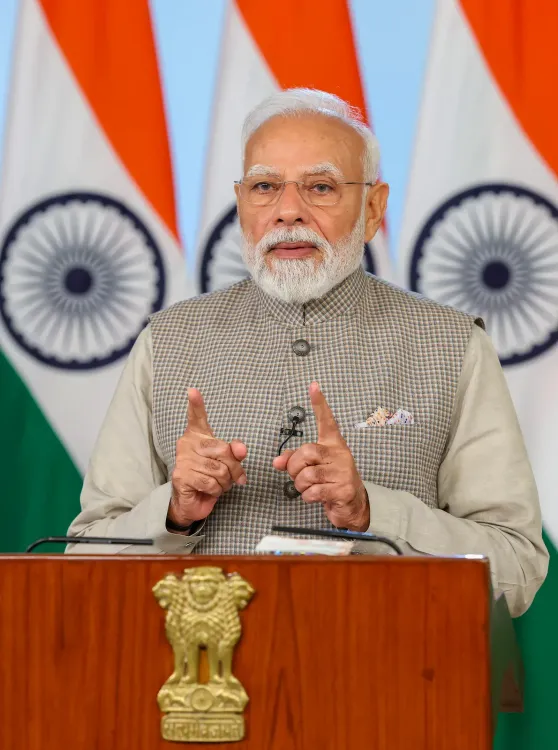
PM Modi on 8 August highlighted India's self-reliant med-tech push, sharing Health Minister JP Nadda's article on the sector's progress.
India's med-tech market is valued at $15–16 billion and growing at nearly 12% annually — the fourth-largest in Asia and top 20 globally.
More than 50 high-end medical devices are now being manufactured domestically under the PLI scheme .
The sector is projected to reach $30–50 billion this decade and $250 billion by 2047 , according to an industry report.
Growth areas flagged include AI , robotics, connected devices, and remote diagnostics.
Government focus includes strengthening regulatory systems , testing infrastructure, and clinical evidence generation.
Prime Minister Narendra Modi on Saturday, 8 August spotlighted India's expanding self-reliant medical technology sector, crediting domestic manufacturing growth, reduced import dependence, and targeted government schemes for positioning the country as a credible global med-tech partner. Modi's remarks came as he shared an article authored by Union Health and Family Welfare Minister Jagat Prakash Nadda on India's progress in building a homegrown medical devices ecosystem.
What Modi Said
'Union Health Minister JP Nadda highlights India's growing self-reliant med-tech ecosystem, driven by domestic manufacturing, reduced import dependence and schemes such as PLI and Medical Device Parks,' Modi wrote. He added that India was steadily emerging as a trusted global med-tech partner focused on affordable and accessible healthcare.
Key Policy Levers Driving Growth
In his article, Nadda outlined the government's strategy to strengthen domestic manufacturing through three flagship initiatives: the Production Linked Incentive (PLI) scheme, Medical Device Parks, and the Promotion of Research and Innovation in Pharma-MedTech (PRIP) scheme. More than 50 high-end medical devices have begun domestic production under the PLI scheme, according to Nadda, while sustained foreign investment signals growing investor confidence in the sector.
Nadda argued that cutting reliance on imported devices could reinforce supply chains, unlock cost efficiencies, and widen patient access to advanced diagnostics, imaging systems, implants, and intensive-care equipment.
Market Size and Global Standing
India's med-tech market is currently valued at $15–16 billion and is growing at nearly 12 per cent annually, according to Nadda. The sector ranks as the fourth-largest medical technology market in Asia and among the top 20 globally. A separate industry report released earlier in the week projected the domestic medical device industry — currently valued at around $14 billion — could reach $30–50 billion within this decade and an estimated $250 billion by 2047.
Emerging Frontiers
Nadda also flagged high-potential growth areas including artificial intelligence, software as a medical device, connected medical devices, robotics, and remote diagnostics. The government's parallel focus on strengthening regulatory frameworks, testing infrastructure, and clinical evidence generation is aimed at aligning Indian products with international standards and improving patient safety.
Broader Economic Impact
A stronger medical devices sector, Nadda said, could generate meaningful contributions across manufacturing, employment, exports, and technological development, while making healthcare more affordable and resilient. This comes amid a broader national push to reduce dependence on imported medical equipment — a vulnerability exposed sharply during the COVID-19 pandemic. The med-tech push is increasingly viewed as a complement to India's established pharmaceutical export strength. With sectoral targets ambitious and policy scaffolding in place, execution — particularly on regulatory alignment and clinical infrastructure — will determine how quickly India converts market potential into global supply-chain relevance.
Point of View
But India's medical device sector has a structural problem that PLI alone cannot fix: a heavy import bill concentrated in high-value diagnostics and imaging, precisely the segments where domestic manufacturing is weakest. The 50-device milestone under PLI is real progress, yet the gap between low-complexity production and import substitution in critical-care equipment remains wide. Regulatory alignment with international standards — not just incentive disbursal — will be the actual bottleneck. Until India builds credible clinical evidence infrastructure, global buyers will remain cautious regardless of price competitiveness.
NationPress
22 Sept 2026
Frequently Asked Questions
What is the current size of India's medical technology market?
India's med-tech market is currently valued at $15–16 billion and is growing at nearly 12 per cent annually, according to Health Minister JP Nadda. A separate industry report puts the current value at around $14 billion, with projections of $30–50 billion within this decade.
What government schemes are driving India's med-tech manufacturing growth?
The primary schemes are the Production Linked Incentive (PLI) scheme, Medical Device Parks, and the Promotion of Research and Innovation in Pharma-MedTech (PRIP) scheme. Together, these have enabled domestic production of more than 50 high-end medical devices and attracted continued foreign investment.
What is the projected size of India's medical device sector by 2047?
An industry report projects India's medical device sector could reach $250 billion by 2047, up from around $14–16 billion today. The sector is expected to hit $30–50 billion within this decade as domestic manufacturing scales up.
Where does India rank globally in the med-tech market?
India is the fourth-largest medical technology market in Asia and ranks among the top 20 medical technology markets globally, according to Health Minister JP Nadda.
What emerging technologies is India targeting in the med-tech space?
The government has flagged artificial intelligence, software as a medical device, connected medical devices, robotics, and remote diagnostics as priority growth areas. Strengthening regulatory systems and clinical evidence generation are also part of the strategy to align Indian products with international standards.