Dr. Jitendra Singh Chairs BIRAC Meet, Pushes Private Sector Into Biotech
Synopsis
Union Science and Technology Minister Dr. Jitendra Singh chaired a BIRAC senior officials meeting on 10 August 2026, calling for stronger industry outreach to promote indigenous biotech products, greater private sector participation, and citing PM Modi's Rs 1 lakh crore RDI fund as a pillar of India's globally competitive biotechnology strategy.
Key Takeaways
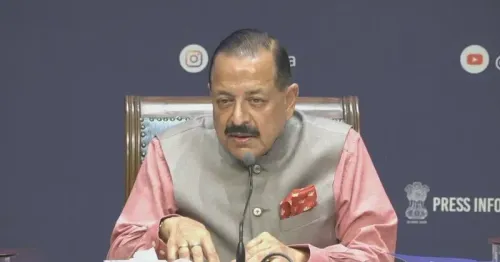
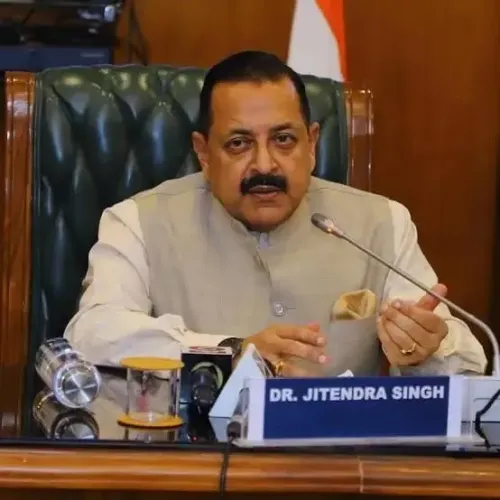
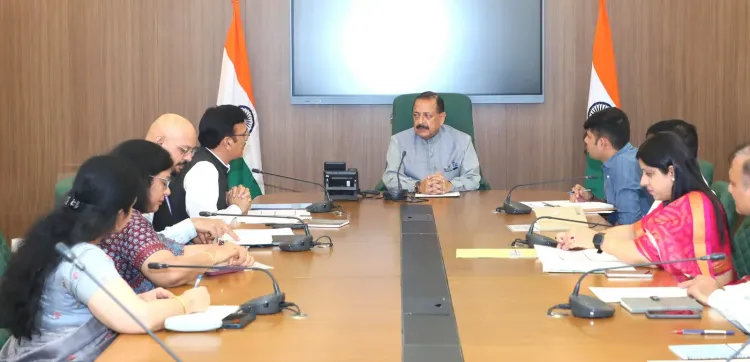
Jitendra Singh chaired a meeting of senior officials of BIRAC on 10 August 2026 .
The minister called for stronger industry outreach to promote indigenous biotechnology products and mobilise investment.
He emphasised expanding private sector participation in India's biotechnology ecosystem.
PM Narendra Modi's Rs 1 lakh crore RDI fund was cited as a key government instrument to build globally competitive biotech capacity.
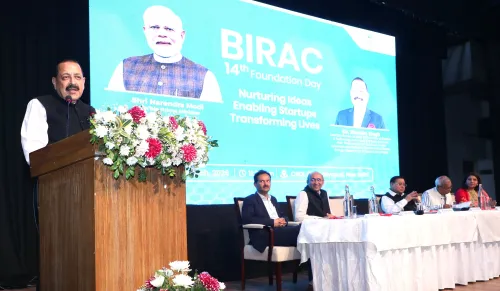
BIRAC , established in 2012 , is India's primary public sector vehicle for channelling grants, equity, and mentorship to biotech startups.
The push aligns with the Atmanirbhar Bharat framework targeting reduced import dependence in vaccines, diagnostics, and bio-manufacturing.
India's biotechnology ambitions got a sharp ministerial push on Monday, 10 August 2026, when Union Science and Technology Minister Dr. Jitendra Singh chaired a high-level meeting of senior officials of the Biotechnology Industry Research Assistance Council (BIRAC) — calling for stronger industry outreach, indigenous product promotion, and a decisive expansion of private capital in the sector.
The minister's directives were pointed: deepen industry engagement to bring homegrown biotech products to market, and actively mobilise investment that has so far flowed more freely into pharmaceuticals and IT than into frontier biology. Dr. Singh also underscored the need to expand private sector participation in India's broader biotechnology ecosystem — a signal that the government sees public funding as a catalyst, not a substitute, for commercial capital.
BIRAC's Role as India's Biotech Engine
Established in 2012 under the Department of Biotechnology, BIRAC was designed precisely for this junction: a not-for-profit public sector enterprise that channels grants, equity, and mentorship to early-stage startups while building bridges to private investors. Over more than a decade it has served as the primary vehicle for India's public-private biotech partnerships — from vaccine development to agricultural biotech and diagnostics. Monday's meeting signals that the government wants BIRAC to lean harder into its industry-facing mandate, not just its grant-making role.The Rs 1 Lakh Crore RDI Fund in the Frame
Dr. Singh explicitly anchored the meeting's ambitions to the Rs 1 lakh crore Research, Development and Innovation (RDI) fund announced by Prime Minister Narendra Modi — framing it as part of a coherent government strategy to build a 'globally competitive Biotechnology ecosystem.' The fund, a large-scale centrally announced instrument, follows a pattern India has deployed in semiconductors, green energy, and pharmaceuticals: use sovereign capital at scale to de-risk the space enough that private money follows. The minister stopped short of announcing specific disbursement timelines — details that remain to be formalised — but the directional signal was unambiguous.Atmanirbhar Biotech and the Private Capital Gap
The push fits squarely within the Atmanirbhar Bharat framework that has shaped India's science policy in recent years — reducing import dependence in vaccines, diagnostics, and bio-manufacturing while scaling up indigenous product pipelines. The National Biotechnology Development Strategy had already set targets for raising the private sector's share of R&D spending. What Monday's meeting adds is urgency: with global biotech investment cycles tightening, India's window to attract and anchor private capital in domestic innovation is not indefinitely open. The question now is whether BIRAC's next round of calls for proposals and the RDI fund's first disbursements arrive fast enough to keep the momentum real — and not just ministerial.Point of View
Dr. Singh is signalling that public capital is meant to de-risk the space, not dominate it. This mirrors the playbook used in semiconductors and green energy, where sovereign anchoring was used to attract commercial investment at scale. The real test will be whether BIRAC's operational mandates and the RDI fund's disbursement architecture are reformed quickly enough to make that signal credible to private investors watching from the sidelines.
NationPress
25 Sept 2026
Frequently Asked Questions
What is BIRAC and what does it do?
BIRAC, the Biotechnology Industry Research Assistance Council, is a not-for-profit public sector enterprise set up in 2012 under India's Department of Biotechnology. It provides grants, equity support, and mentorship to early-stage biotech startups and facilitates public-private partnerships in the sector.
What did Dr. Jitendra Singh say at the BIRAC meeting on 10 August 2026?
Dr. Jitendra Singh called for stronger industry outreach to promote indigenous biotechnology products, mobilise investment, and enhance private sector participation in India's biotechnology ecosystem. He also referenced PM Modi's Rs 1 lakh crore RDI fund as part of the government's strategy.
What is the Rs 1 lakh crore RDI fund announced by PM Modi?
The Rs 1 lakh crore Research, Development and Innovation (RDI) fund is a large-scale central government instrument announced by Prime Minister Narendra Modi to strengthen India's research and biotechnology ecosystem and make it globally competitive.
Why is private sector participation important for India's biotech ecosystem?
Private sector investment brings commercial capital, speed, and market discipline that public funding alone cannot replicate. Greater private participation is seen as essential to scaling indigenous biotech products, reducing import dependence in vaccines and diagnostics, and sustaining long-term innovation pipelines.
How does India's biotech push connect to Atmanirbhar Bharat?
India's sustained investment in BIRAC and the RDI fund is part of the Atmanirbhar Bharat framework, which aims to reduce import dependence in strategic sectors including vaccines, diagnostics, and bio-manufacturing by building domestic research and production capacity.