Massive Growth of India's Bioeconomy: Dr. Jitendra Singh Reports $195 Billion Milestone

Synopsis
India's bioeconomy has achieved remarkable growth, soaring to over $195 billion by 2025. Union Minister Dr. Jitendra Singh emphasizes biotechnology's crucial role in the nation's development, aiming for a $300 billion market by 2030 through innovative policies and support for startups.
Key Takeaways
India's bioeconomy has expanded to over $195 billion .
Annual growth rate of 17-18% in the past year.
Aiming for a $300 billion bioeconomy by 2030.
BIRAC plays a crucial role in bridging research and industry.
Over 11,800 biotech startups present in the country.
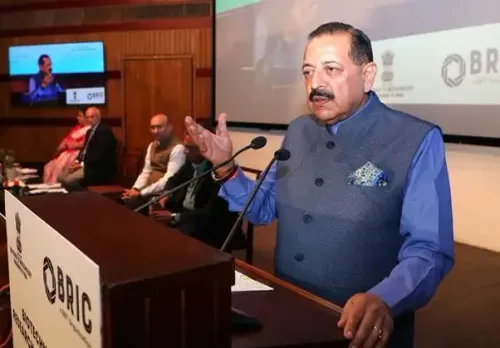
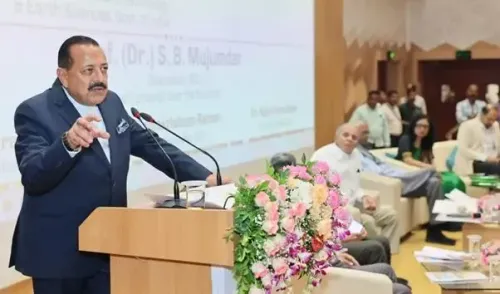
New Delhi, March 19 (NationPress) Union Minister Dr. Jitendra Singh announced on Thursday that India's bioeconomy has skyrocketed to over $195 billion by 2025, a remarkable increase from approximately $10 billion in 2014. During his address at the 14th Foundation Day of the Biotechnology Industry Research Assistance Council (BIRAC), he highlighted that this sector has experienced robust growth, achieving an annual rate of 17-18% in the last year alone.
The Minister emphasized that biotechnology is becoming an essential element of India's economic narrative, playing a pivotal role in healthcare, agriculture, climate solutions, and sustainable manufacturing.
Dr. Singh stated that India is on a steady path towards realizing its goal of a $300 billion bioeconomy by 2030, bolstered by an increasing number of scientists, startups, and entrepreneurs.
He expressed the significance of BIRAC, noting that it has been crucial in closing the gap between research and industry, facilitating the transformation of innovations into commercially viable products.
Discussing policy measures, the Minister mentioned the BioE3 Policy, designed to fortify bio-based industries and encourage sustainable biomanufacturing. This policy aims to foster innovation in areas like biotherapeutics, climate-resilient agriculture, and bio-based chemicals.
Dr. Singh also pointed out the government's Research, Development and Innovation (RDI) Fund, which has an allocation of Rs 1 lakh crore, positioning BIRAC to significantly support biotechnology initiatives and enhance innovation scaling.
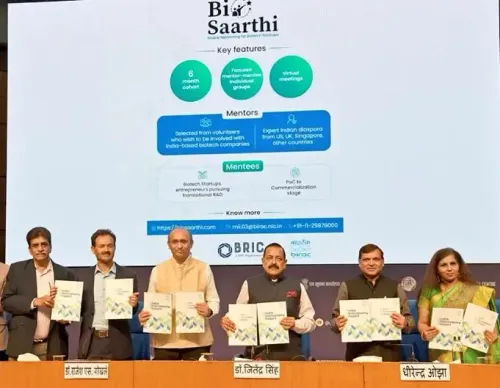
At the event, the India Bioeconomy Report 2026 and the BIRAC Impact Report were unveiled, revealing that the sector has more than doubled since 2020, now contributing around 4.8% to the nation's GDP.
The report further indicated that India boasts over 11,800 biotech startups, demonstrating the rapid expansion of the innovation landscape, as shared by the government.
The Minister stressed the importance of nurturing young talent, especially from smaller cities, and advocated for increased collaboration between industry, academia, and policymakers to propel innovation and economic growth.
Point of View
I recognize the significance of Dr. Jitendra Singh's announcement regarding India's burgeoning bioeconomy. This impressive growth is not only a testament to the potential of biotechnology but also highlights the collaborative efforts of various stakeholders in fostering innovation and economic resurgence in the nation.
NationPress
20 Sept 2026
Frequently Asked Questions
What is the current value of India's bioeconomy?
India's bioeconomy is currently valued at over $195 billion and is projected to grow further.
How much has India's bioeconomy grown since 2014?
It has increased from around $10 billion in 2014 to over $195 billion in 2025.
What role does BIRAC play in India's bioeconomy?
BIRAC is instrumental in connecting research and industry, aiding in the commercialization of innovations.
What is the target for India's bioeconomy by 2030?
India aims to achieve a $300 billion bioeconomy by 2030.
How many biotech startups are there in India?
India has over 11,800 biotech startups, reflecting rapid growth in the sector.