Is India Redefining Global Leadership in Science and Innovation?
Synopsis
Prime Minister Narendra Modi articulates India’s ambition to set new global standards in science and innovation, emphasizing initiatives that bolster self-reliance and inspire global recognition. This article delves into India’s transformative journey across various scientific domains, spotlighting the Northeastern region's potential in boosting the bioeconomy.
Key Takeaways
India is setting new global standards in various fields of science and innovation.
The Prime Minister emphasizes the importance of **self-reliance** and **confidence**. **Northeast India** holds significant potential for enhancing the bioeconomy.
Government initiatives aim to empower farmers, especially women and youth.
Successful models like the “**Purple Revolution**” can be replicated in other regions.
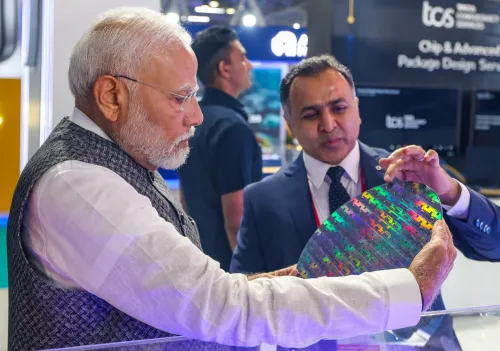
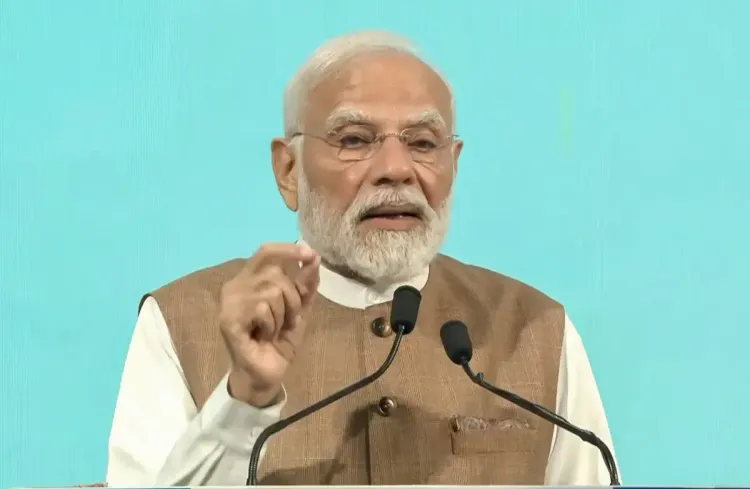
New Delhi, Oct 31 (NationPress) Prime Minister Narendra Modi stated that India is establishing new global standards in science and innovation, ranging from Digital India to Deep Tech, and from Chandrayaan to the bioeconomy, showcasing the nation's increasing confidence and self-reliance.
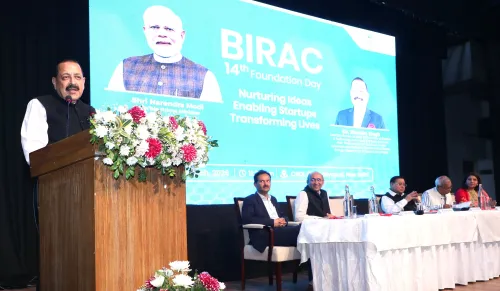
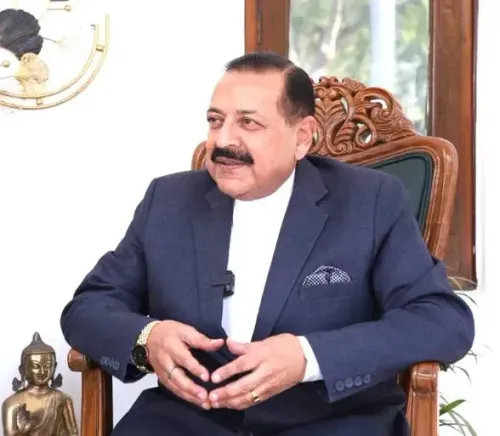
The Prime Minister shared insights from an article by Union Minister of State (Independent Charge) for Science and Technology, Dr. Jitendra Singh, which emphasizes India's significant advancements in sectors like space technology, biotechnology, deep tech, and digital transformation.
In a post on X, he expressed, “India is setting the record straight, from Digital India to Deep Tech, from Chandrayaan to the bioeconomy and much more! Thanks to our collective efforts, our nation is redefining global leadership in science & innovation, with a confident Aatmanirbhar Bharat inspiring the world.”
The article shared by Dr. Jitendra Singh outlines India's scientific accomplishments and policy-driven advancements over the last decade, highlighting how science and technology are pivotal to economic growth and global recognition.
Recently, Dr. Singh underscored the vast potential of India’s Northeast region in enhancing the country's bioeconomy.
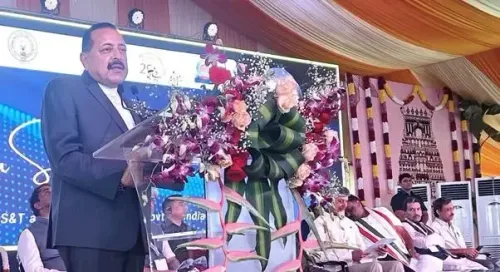
At a CSIR-NEIST event in Assam on October 30, he noted that the region's rich biodiversity and distinct agro-climatic conditions could transform it into a hub for high-value plant-based industries.
He pointed out the government's initiatives to merge modern scientific methods with traditional practices, creating new job opportunities through programs like the CSIR-Aroma Mission and CSIR-Floriculture Mission.
According to Singh, these initiatives have empowered farmers and entrepreneurs, particularly women and youth, by encouraging the cultivation of aromatic and floricultural crops.
The Union Minister also cited the success of the “Purple Revolution” in Jammu and Kashmir as a model for how science-led interventions can revolutionize rural livelihoods.
He urged the Northeastern states to emulate this model to position the region as a vital component of India’s aroma and floriculture economy.
Point of View
It's imperative to recognize that India's strides in science and innovation are not just national achievements but are poised to elevate the country on a global stage. The government’s commitment to integrating traditional practices with modern science reflects a holistic approach to sustainable development that benefits all.
NationPress
20 Sept 2026
Frequently Asked Questions
What initiatives are driving India's innovation in science?
India's innovation is propelled by projects like Digital India, the CSIR-Aroma Mission, and the CSIR-Floriculture Mission, which integrate modern technology with traditional methods.
How is the Northeast region significant to India's bioeconomy?
The Northeast is rich in biodiversity and has unique agro-climatic conditions ideal for developing high-value plant-based industries, making it a crucial area for India's bioeconomy.
What is the Purple Revolution?
The Purple Revolution in Jammu and Kashmir refers to a successful initiative that utilizes scientific interventions to improve rural livelihoods through the cultivation of lavender.
What role does science and technology play in India's economic growth?
Science and technology are key drivers of India's economic growth, facilitating innovation, creating jobs, and enhancing global recognition.
How can other states replicate the success of the Northeast region?
Other states can adopt similar models as the Northeast by combining local resources with scientific advancements, fostering sustainable agricultural practices to boost their economies.