Nepal cancels Tibetan studies conference amid reported Chinese pressure
Synopsis
Nepal has cancelled the 17th IATS Tibetan studies seminar in Kathmandu — a premier global academic gathering — following a government directive to Kathmandu University. Local media reports point to sustained Chinese diplomatic lobbying, reportedly driven by fears of protests against Beijing's new Ethnic Unity Law. The university denies receiving direct pressure, but the sequence of high-level Chinese diplomatic interventions tells a different story.
Key Takeaways
The 17th IATS Seminar on Tibetan Studies , scheduled for 23–29 August in Kathmandu , has been cancelled after Kathmandu University withdrew under a government directive.
Chief Secretary Govinda Bahadur Karki cited 'prevailing environment and circumstances' as the reason for advising organisers to cancel.
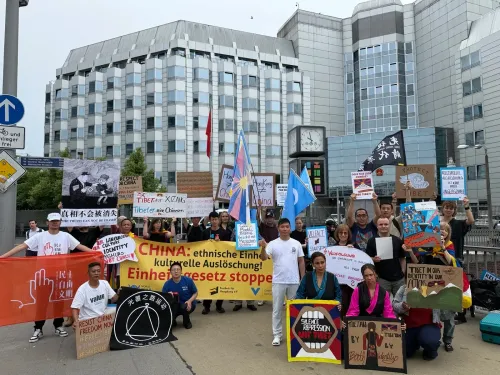
Local media reports link the decision to lobbying by China , reportedly tied to fears of protests against China's Ethnic Unity Law , effective 1 July .
Chinese Ambassador Zhang Maoming met Nepal's Foreign Secretary Amrit Bahadur Rai on 21 July , reportedly urging vigilance over pro-Tibet statements.
Around half a dozen Tibetan scholars from the Tibetan Policy Institute in India had reportedly already withdrawn from the conference.
Organisers had expected 600–700 delegates , including one of the largest delegations from China itself.
An international conference on Tibetan studies scheduled in Kathmandu has been cancelled after Kathmandu University (KU) withdrew from hosting the event following a directive from the Nepal government. Local media reports have linked the cancellation to concerns raised by China, although the university maintains it received no direct pressure from the Chinese side.
What Was Planned
The 17th Seminar of the International Association for Tibetan Studies (IATS) — widely regarded as the premier global gathering for Tibetan scholarship — was scheduled to run from 23 to 29 August in Kathmandu. The event was being co-hosted by the Himalaya Centre for Asian Studies, Kathmandu University, and the Kathmandu University Centre for Buddhist Studies at Rangjung Yeshe Institute, in collaboration with the IATS. Organisers had expected between 600 and 700 delegates from across the world, with one of the largest delegations anticipated from China itself.
The Government Directive
Professor Sagar Raj Sharma of Kathmandu University, one of the event's chief conveners, said the university withdrew after receiving a directive from Chief Secretary Govinda Bahadur Karki to suspend the conference. 'The Chief Secretary informed the university that the current environment and circumstances are not appropriate, so the programme should not be held for the time being,' Sharma said.
Karki separately confirmed to a leading Nepali daily that the government had advised organisers against holding the event. 'It could be sensitive, several concerns might arise, and it could pose security risks. So we advised the organisers, in good faith, to cancel the event,' he said.
Reported Chinese Concerns
Local media reports have attributed the cancellation to lobbying by Beijing, reportedly linked to fears of protests against China's new Ethnic Unity Law, which came into effect on 1 July. An anonymous organiser was quoted as saying: 'There have been major protests against China's new Ethnic Unity Law. That is why Beijing intensified its lobbying and used its influence to prevent any untoward incidents in Kathmandu.'
According to reports, Chinese Ambassador to Nepal Zhang Maoming met with Nepal's Foreign Secretary Amrit Bahadur Rai on 21 July, during which the Ambassador reportedly urged Nepal to remain 'vigilant' about participants who might make pro-Tibet statements. On 29 July, Venerable Master Yinshun — a member of the National Committee of the Chinese People's Political Consultative Conference (CPPCC) and former Vice President of the Buddhist Association of China — arrived in Kathmandu and reportedly discussed the seminar during his visit. Following these diplomatic exchanges, approximately half a dozen Tibetan scholars from the Tibetan Policy Institute in India, associated with the Central Tibetan Administration (CTA), reportedly withdrew from the conference.
University's Position
Professor Sharma was emphatic that the conference had no political agenda. 'The event was purely an academic conference. It is the university's role to organise academic debates, intellectual discussions and conferences. We regularly conduct such academic events. Beyond that, we had no other objective or vested interest,' he said.
Sharma also noted that since one of the largest delegations was expected from China, the suggestion that the event would have served as an anti-China platform was unfounded. He added: 'We did not experience any direct pressure or concern from the Chinese side. As for the actual reason behind the decision, the government would probably know better.'
Broader Diplomatic Context
Notably, until recently, Home Minister Sudhan Gurung had maintained that the seminar would not be cancelled and that participants would only be subject to security vetting — a position that has since been reversed. This comes amid a period of active diplomatic balancing by Kathmandu: Rastriya Swatantra Party (RSP) President Rabi Lamichhane, who visited India in June at the invitation of the Bharatiya Janata Party (BJP), is expected to visit Beijing later this month at the invitation of the Communist Party of China (CCP) as part of efforts to strengthen party-to-party ties. The cancellation of a purely academic event under reported diplomatic pressure raises questions about the space for independent scholarly discourse in Nepal on sensitive regional subjects.
Point of View
But the timeline — ambassador meetings, a CPPCC envoy's visit, and scholar withdrawals — suggests a structured lobbying campaign rather than a spontaneous risk assessment. What makes this particularly telling is that China itself was sending one of the largest delegations; the concern was not the conference's existence but the possibility of dissent within it. For a country that must balance ties with both India and China, Nepal's readiness to suppress academic space on Tibetan subjects signals a tilt that goes beyond diplomatic pragmatism.
NationPress
20 Sept 2026
Frequently Asked Questions
Why was the Tibetan studies conference in Kathmandu cancelled?
The 17th IATS Seminar on Tibetan Studies was cancelled after Nepal's Chief Secretary Govinda Bahadur Karki directed Kathmandu University to suspend the event, citing the 'prevailing environment and circumstances.' Local media reports have linked the decision to diplomatic pressure from China, reportedly over concerns about protests against Beijing's new Ethnic Unity Law.
What is the IATS seminar and how significant is it?
The International Association for Tibetan Studies (IATS) seminar is widely regarded as the premier global gathering for Tibetan scholarship. The 17th edition, planned for 23–29 August in Kathmandu, was expected to draw 600–700 delegates from around the world, including a large contingent from China.
Did China directly pressure Nepal to cancel the conference?
Kathmandu University says it received no direct pressure from China. However, local media reports indicate that Chinese Ambassador Zhang Maoming met Nepal's Foreign Secretary Amrit Bahadur Rai on 21 July and reportedly urged vigilance over pro-Tibet statements. A senior CPPCC member also visited Kathmandu on 29 July and reportedly discussed the seminar with officials.
What is China's Ethnic Unity Law and why is it relevant?
China's Ethnic Unity Law came into effect on 1 July 2025 and has drawn protests from Tibetan communities. According to local media reports, Beijing feared that the Kathmandu conference could become a platform for demonstrations against the law, prompting its diplomatic intervention with Nepali authorities.
What happens next for the IATS seminar?
No alternative venue or date has been announced for the 17th IATS Seminar. The International Association for Tibetan Studies has not publicly indicated whether the event will be rescheduled or relocated. The cancellation leaves the global Tibetan studies community without its flagship gathering for this cycle.