China ethnic unity law: 400+ march in Zurich, demand global action
Synopsis
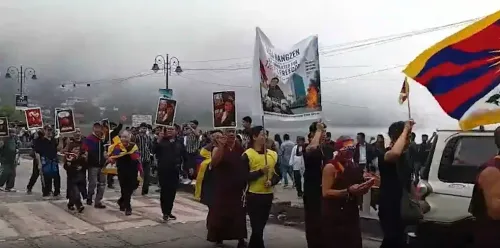
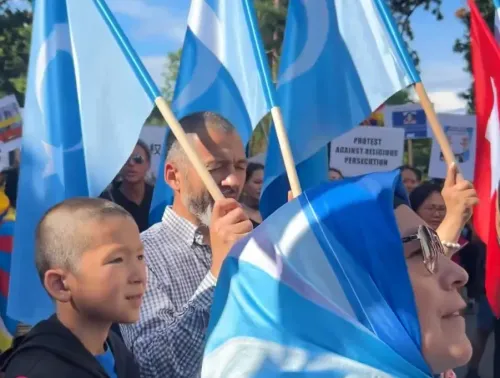
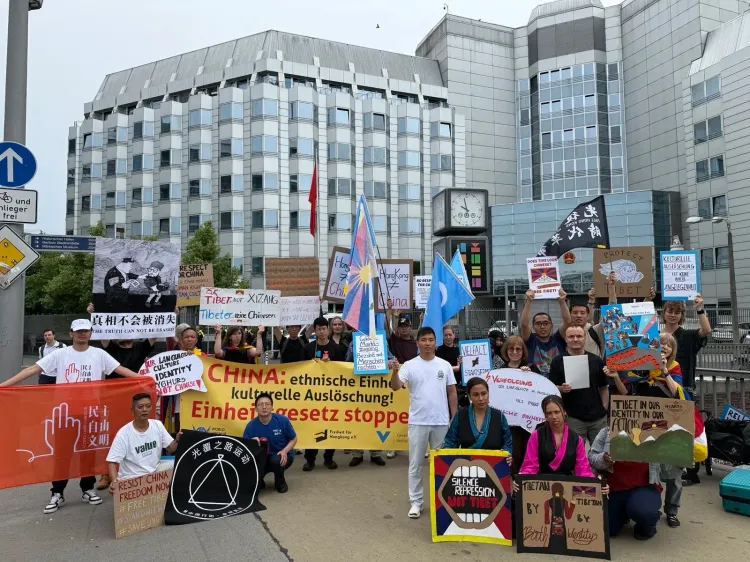
More than 400 protesters took to the streets of Zurich on 3 July, marching to the Chinese Consulate to demand the repeal of Beijing's new ethnic unity law — a legislation the UN High Commissioner for Human Rights has already called to be scrapped. With Tibetan, Uyghur, and religious minority groups united on one platform, the march signals a coordinated push for Western parliamentary intervention.
Key Takeaways
More than 400 people marched in Zurich on 3 July to protest China's 'Law on Promoting Ethnic Unity and Progress' .
The demonstration was organised by a coalition including the Tibetan Community of Switzerland and Liechtenstein , the World Uyghur Congress , and the Church of Almighty God .
UN experts and the UN High Commissioner for Human Rights have called for the law's repeal, warning it risks 'entrenching forced assimilation and encouraging transnational repression.' Thinlay Chukki , Representative of the Dalai Lama to Central and Eastern Europe, cited more than 157 self-immolations in Tibet as evidence of the severity of the situation.
Protesters urged parliamentary groups in Switzerland , the Czech Republic , Italy , and beyond to formally oppose the legislation.
More than 400 people marched through Zurich on 3 July to protest China's newly enacted 'Law on Promoting Ethnic Unity and Progress', rallying from Werdmuhleplatz to the Chinese Consulate General in a demonstration organised by a coalition of Tibetan and Uyghur advocacy groups. Protesters called on the international community to reject the legislation and take concrete steps to protect the rights of Tibetans, Uyghurs, and other ethnic minorities in China.
Who Organised the March
The demonstration was a joint effort by the Tibetan Community of Switzerland and Liechtenstein, the Tibetan Youth Association in Europe (TYAE), the Swiss Tibetan Friendship Association (GSTF), the World Uyghur Congress, the Swiss Tibetan Women's Association, and the Church of Almighty God. The event opened with addresses by Thinlay Chukki, Representative of the Dalai Lama to Central and Eastern Europe, and Venerable Khenpo Tenzin Jangchup of Rikon Monastery.
What Protesters Said
Speaking at the gathering, Thinlay Chukki said the legislation was not a genuine unity measure. 'We have also seen the United Nations High Commissioner for Human Rights call for the repeal of this law because it is clear that this legislation is not intended to promote unity. Rather, it is designed to facilitate the complete erasure and forced assimilation of Tibetans, Uyghurs, and other so-called ethnic minorities,' she stated.
Chukki also expressed solidarity with 'the more than 157 Tibetans who have self-immolated in Tibet, calling for the return of His Holiness the Dalai Lama and for freedom in Tibet.' She urged parliamentary groups worldwide — including those in Switzerland, the Czech Republic, and Italy — to stand together in opposing the law and calling unequivocally for its repeal.
Representatives of the World Uyghur Congress, the Swiss Tibetan Women's Association, and the Church of Almighty God described the legislation as 'a policy that threatens the cultural, linguistic, and religious identities of Tibetans, Uyghurs, and other ethnic minorities.'
International Concern Over the Law
Beijing's ethnic unity law came into force on Wednesday, drawing swift condemnation internationally. UN experts have warned that the legislation risks 'entrenching forced assimilation and encouraging transnational repression.' The UN High Commissioner for Human Rights has separately called for the law's repeal, lending institutional weight to the protesters' demands.
This comes amid a pattern of escalating international scrutiny over China's policies in Tibet and the Uyghur regions, with multiple UN bodies and Western governments having previously flagged concerns about cultural suppression and surveillance in those areas.
What Demonstrators Are Demanding
Beyond the repeal of the law, protesters called on governments and parliamentary bodies to demand accountability from China under international law and existing human rights conventions. The coalition urged an end to what it described as Beijing's systematic assimilation policies targeting ethnic minorities, and pressed for concrete action rather than diplomatic silence.
With the law now in effect and UN criticism already on record, the coming weeks will test whether Western parliaments translate solidarity statements into formal diplomatic pressure on Beijing.
Point of View
Uyghur Muslims, and a Christian minority group standing on the same platform is a rare convergence that Beijing will find difficult to dismiss as single-issue lobbying. What is missing, however, is binding state action: solidarity marches and UN statements have accumulated for years without altering China's trajectory in Tibet or Xinjiang. The real question is whether European parliaments — which have largely limited themselves to non-binding resolutions — will now move toward concrete diplomatic or trade-linked accountability measures. The law's entry into force gives them a fresh legal hook to do so, if the political will exists.
NationPress
2 Oct 2026
Frequently Asked Questions
What is China's 'Law on Promoting Ethnic Unity and Progress'?
It is a legislation enacted by Beijing that came into force in early July, officially framed as promoting harmony among ethnic groups. Critics, including UN experts, argue it is designed to accelerate the forced assimilation of Tibetans, Uyghurs, and other ethnic minorities by suppressing their cultural, linguistic, and religious identities.
Why did protesters march to the Chinese Consulate in Zurich?
Demonstrators marched to the Chinese Consulate General in Zurich on 3 July to formally register opposition to the new ethnic unity law and call on the international community to demand its repeal. The consulate was chosen as a symbolic target representing the Chinese government in Switzerland.
Who organised the Zurich protest against China's ethnic unity law?
The march was organised by the Tibetan Community of Switzerland and Liechtenstein in partnership with the Tibetan Youth Association in Europe, the Swiss Tibetan Friendship Association, the World Uyghur Congress, the Swiss Tibetan Women's Association, and the Church of Almighty God.
What has the United Nations said about China's ethnic unity law?
UN experts have warned that the law risks 'entrenching forced assimilation and encouraging transnational repression.' The UN High Commissioner for Human Rights has separately called for the law's repeal, marking one of the more direct UN interventions on the issue.
What action are protesters demanding from the international community?
Protesters are calling for the formal repeal of the law, demanding that governments hold China accountable under international human rights conventions. They specifically urged parliamentary Tibet groups in Switzerland, the Czech Republic, and Italy to take a unified stand against the legislation.