Rahul Gandhi backs Allahabad University students amid fee-hike protests
Synopsis
Rahul Gandhi declared solidarity with Allahabad University students protesting fee hikes and seat cuts, accusing the administration of filing FIRs against protesters and attempting to block his planned visit to Prayagraj to hear their grievances.
Key Takeaways
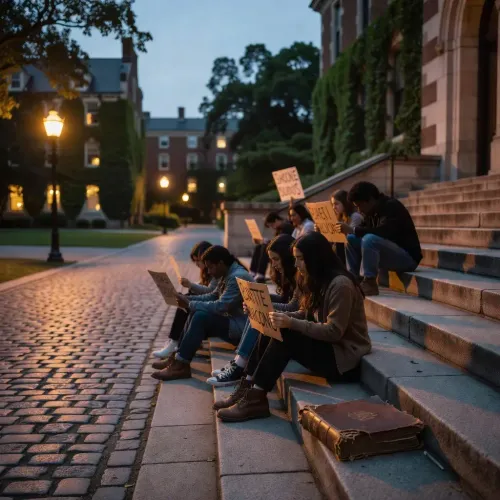
Students at the University of Allahabad in Prayagraj are protesting fee hikes and reductions in seat availability.
Rahul Gandhi alleges the university administration has filed FIRs against protesting students instead of engaging in dialogue.
Gandhi says authorities have been attempting to prevent his planned visit to Prayagraj 'by every possible means.' He accused the Modi government of systematically suppressing youth dissent — using batons, criminal cases, and pellet guns.
Neither the university administration nor Uttar Pradesh authorities had publicly responded to the allegations at the time of posting.
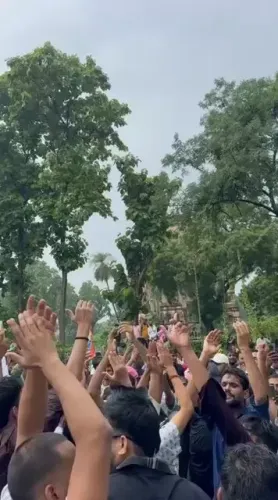
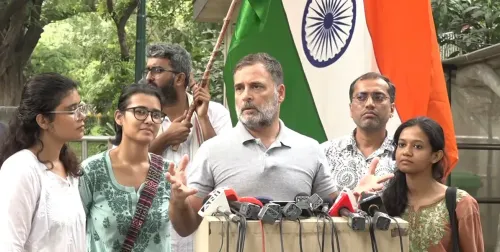
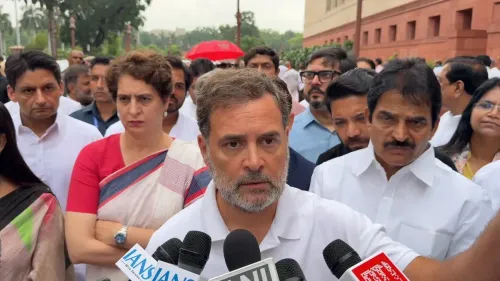
Students at one of India's oldest central universities are fighting a two-front battle — against fee hikes and seat cuts on campus, and against FIRs filed by their own administration. Congress leader Rahul Gandhi stepped squarely into that fight on Thursday, August 6, 2026, announcing his intent to travel to Prayagraj in solidarity with protesters at the University of Allahabad — and alleging that authorities have been working to block him at every turn.
Students vs administration: FIRs instead of dialogue
Gandhi's post, written in Hindi, accused the university administration of responding to student grievances with police complaints rather than conversation. 'सवाल पूछो तो लाठी, विरोध करो तो मुक़दमे, और आवाज़ उठाओ तो पेलेट गन' — 'Ask a question and get a baton, protest and face a case, raise your voice and face pellet guns' — he wrote, laying out what he described as the government's playbook for handling dissent.
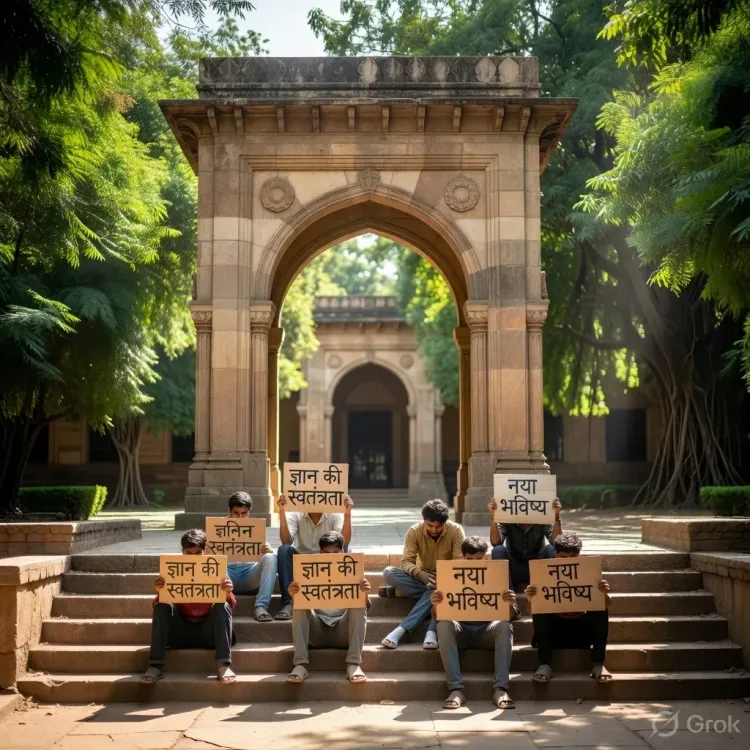
The University of Allahabad, established in 1887 and one of India's premier central universities, has been the site of student unrest over proposed fee increases and reductions in seat availability. Protests over fee hikes and admission policy changes at central universities are not new; similar disputes have erupted periodically across campuses, often drawing opposition politicians who use the moment to frame a wider critique of education policy.
Gandhi's blocked Prayagraj visit and what it signals
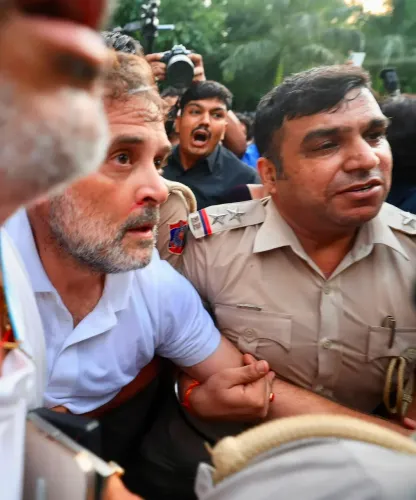
Gandhi said that from the moment he decided to travel to Prayagraj to hear students directly, the administration began trying to prevent his programme 'by every possible means.' He read that obstruction as telling in itself — 'साफ़ है, उन्हें छात्रों की गूंज से भी डर लग रहा है' — 'clearly, they are afraid even of the echo of the students.'
The claim puts the spotlight on the Uttar Pradesh administration and its relationship with the Modi government's broader stance on campus politics. Gandhi, as Leader of the Opposition in Lok Sabha and MP from Rae Bareli, has made youth unemployment and education access recurring themes in his political messaging. His framing here — that the government's policy is to 'suppress the voice of the young' — fits that established line of attack squarely.
The university's silence and what comes next
As of the time of posting, neither the University of Allahabad administration nor Uttar Pradesh authorities had issued a public response to Gandhi's allegations regarding the FIRs, the protest conditions, or any restrictions on his planned visit. The specific details of the fee revision and seat cuts that triggered the protests remain subjects of the ongoing campus dispute.
Gandhi closed with a direct pledge to students: 'I am with the students. No matter how hard the government tries, it cannot stop me from raising the students' voice.' Whether that visit materialises — and how authorities respond — will determine whether this remains a social-media moment or escalates into a sharper political confrontation on the ground in Prayagraj.
A central university's gates, a stack of FIRs, and a blocked political visit: the next move belongs to Uttar Pradesh.
Point of View
Keeps the Congress party visible in Uttar Pradesh — a state it has struggled in for decades — and forces the BJP-led state and central governments onto the defensive over campus governance. The allegation that his visit is being administratively blocked is particularly shrewd; if true, it becomes a free-speech story; if denied, it still generates attention. Central university fee disputes have historically been pressure points where the opposition can draw contrasts on education access, and Gandhi is leaning into that pattern with a sharper, more confrontational edge than usual.
NationPress
6 Aug 2026
Frequently Asked Questions
Why are Allahabad University students protesting?
Students at the University of Allahabad are protesting against proposed fee hikes and reductions in seat availability, which they say threaten access to higher education.
What did Rahul Gandhi say about Allahabad University protests?
Rahul Gandhi expressed solidarity with the students, accused the administration of filing FIRs against protesters instead of listening to them, and alleged that authorities were trying to block his planned visit to Prayagraj.
Is Rahul Gandhi visiting Prayagraj for the student protests?
Gandhi announced his intention to visit Prayagraj to hear students directly, but alleged that the administration has been attempting to obstruct his programme by every possible means.
What is the University of Allahabad?
The University of Allahabad, established in 1887, is one of India's oldest and most prominent central universities, located in Prayagraj, Uttar Pradesh.
How has the Modi government responded to the Allahabad University protest?
As of August 6, 2026, neither the university administration nor Uttar Pradesh or central government authorities had issued a public response to the allegations raised by Rahul Gandhi.