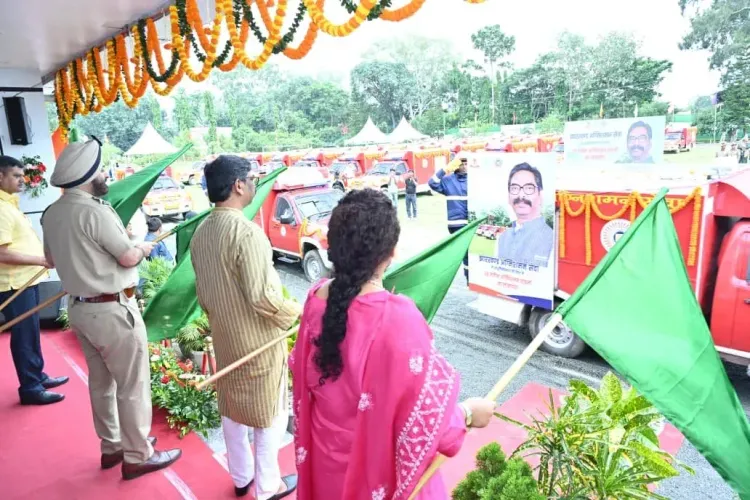
CM Soren flags off 58 mini fire tenders for Jharkhand
Synopsis
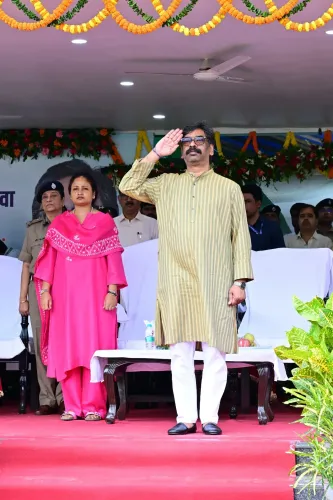
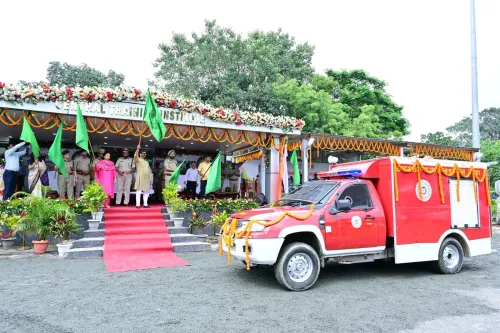
Jharkhand CM Hemant Soren flagged off 58 Mini Water Tenders with Mist Technology for the state fire service at Dhurwa on 6 August 2026, targeting narrow lanes, dense settlements, and remote areas unreachable by standard fire trucks.
Key Takeaways
58 Mini Water Tenders with Mist Technology were inducted into the Jharkhand Fire Service on 6 August 2026 .
The flag-off ceremony was held at the Central Training Institute, Dhurwa, Ranchi .
The vehicles are designed to access narrow lanes, dense settlements, and remote areas where large tenders cannot reach.
Mist Technology atomises water for more efficient fire suppression with less water — critical in areas far from hydrants.
The event included a live demonstration of modern firefighting equipment and techniques for personnel.
CM Soren described state safety as the government's 'highest priority' and the procurement as a step toward a faster, more capable fire safety system.
When a gas cylinder bursts in a crowded Ranchi lane or a short circuit ignites a dense settlement at midnight, the race against fire begins — and until now, Jharkhand's large fire tenders often couldn't even reach the scene. Jharkhand Chief Minister Hemant Soren moved to close that gap on Thursday, 6 August 2026, flagging off 58 Mini Water Tenders equipped with Mist Technology for the state's fire service at the Central Training Institute in Dhurwa, Ranchi.
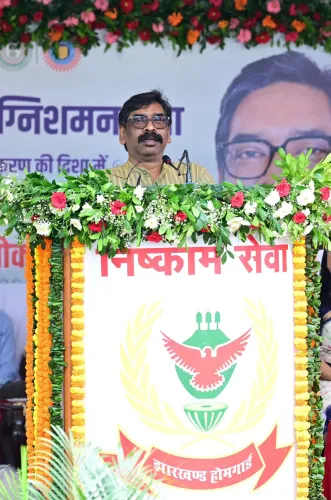
Posting on X, Soren framed the moment in unambiguous terms: 'राज्य की सुरक्षा हमारी सर्वोच्च प्राथमिकता है' — 'The safety of the state is our highest priority.' The vehicles, he said, are designed to reach 'narrow lanes, dense settlements, and remote areas where large fire tenders cannot go,' and will deliver rapid relief in emergencies ranging from gas cylinder explosions and short circuits to residential and commercial fires.
Why Mist Technology changes the calculus
Standard fire tenders carry volume — but volume needs roads wide enough to carry the truck. Much of Jharkhand's urban fabric is a patchwork of congested mohallas and rapidly expanding peri-urban colonies where alleyways narrow to a few feet. Rural and tribal habitations present a different constraint: distance and terrain. Mini tenders are built for exactly these gaps — smaller footprint, faster ingress, faster egress.
Mist Technology adds a further edge. High-pressure water mist systems atomise water into fine droplets, suppressing fire with significantly less water than a conventional jet. That means the same tank goes further — critical when a vehicle is operating far from a hydrant or reservoir. The event at Dhurwa also featured a live demonstration of modern firefighting equipment and techniques, giving personnel a first look at the tools they will now deploy in the field.
Jharkhand's incremental push on disaster readiness
The state's fire service has seen periodic fleet and equipment upgrades over the years as successive governments grappled with the twin pressures of urban densification and the dispersed geography of a state where a significant share of the population lives in forested or hilly terrain. Today's induction of 58 vehicles in a single ceremony represents one of the larger single-day additions to the fleet in recent memory.
Soren called the move 'an important step toward making our fire safety system more capable, faster, and more effective in line with changing needs.' The Jharkhand Mukti Morcha-led government has positioned public safety infrastructure as a governance priority, and the scale of Thursday's flag-off — with a parallel display of advanced firefighting technology — signals an intent to institutionalise, not just announce, the upgrade.
The real test will come in deployment: whether the tenders are stationed at posts that actually cover the high-risk dense settlements they were procured for, and whether training keeps pace with the technology. Fifty-eight vehicles are a start. Where they park next is what matters.
Point of View
Quantifiable governance act — harder to dismiss than a ribbon-cutting on a single vehicle. For the JMM government, it serves a dual purpose: addressing a real operational gap in fire response coverage while signalling administrative delivery ahead of what remains a competitive political landscape in Jharkhand. The Mist Technology angle is notable — it reflects an awareness that modern urban fire risk is not just about volume of water but speed and precision of deployment. Whether the state follows through with matching investments in training, station placement, and maintenance will determine whether this fleet upgrade translates into lives saved or merely into a well-photographed flag-off.
NationPress
6 Aug 2026
Frequently Asked Questions
What are the 58 vehicles Hemant Soren flagged off in Jharkhand?
They are Mini Water Tenders equipped with Mist Technology, inducted into the Jharkhand Fire Service on 6 August 2026 at the Central Training Institute in Dhurwa, Ranchi. The compact vehicles are designed to reach narrow lanes, dense settlements, and remote areas inaccessible to standard large fire tenders.
What is Mist Technology in fire tenders?
Mist Technology uses high-pressure systems to atomise water into fine droplets, suppressing fires more efficiently with less water than a conventional jet. This makes it especially effective in areas far from water hydrants or reservoirs.
Where was the Jharkhand fire tender flag-off ceremony held?
The ceremony was held at the Central Training Institute in Dhurwa, a locality in Ranchi, Jharkhand.
Why does Jharkhand need mini fire tenders instead of standard ones?
Much of Jharkhand's urban fabric consists of congested lanes too narrow for large fire trucks, while rural and tribal habitations are dispersed across hilly or forested terrain. Mini tenders have a smaller footprint and can reach these areas faster.
What types of emergencies will these new vehicles handle?
According to CM Soren, the tenders will respond to gas cylinder explosions, short circuits, and fires in residential and commercial establishments, particularly in areas previously difficult to access quickly.