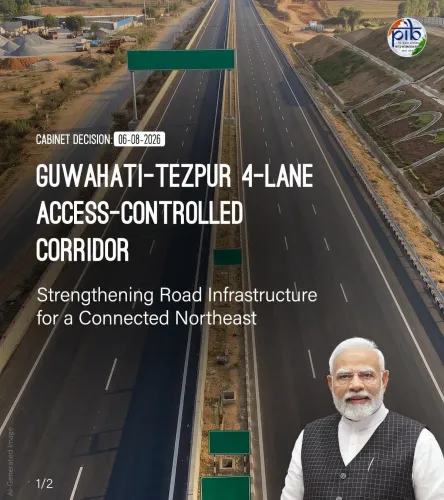
Cabinet Clears ₹8,970 Cr Guwahati–Tezpur Highway Corridor
Synopsis
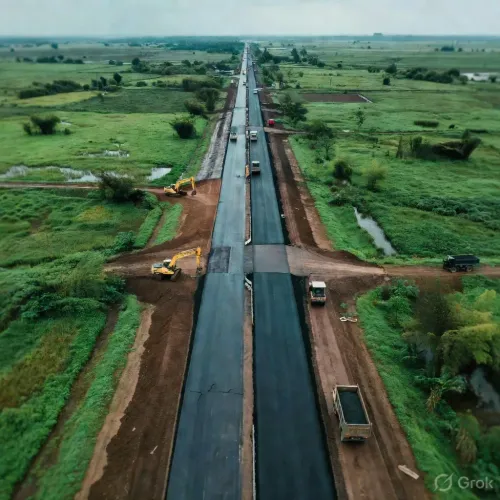
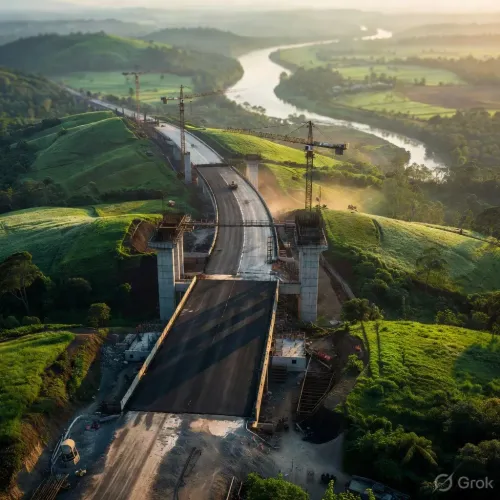
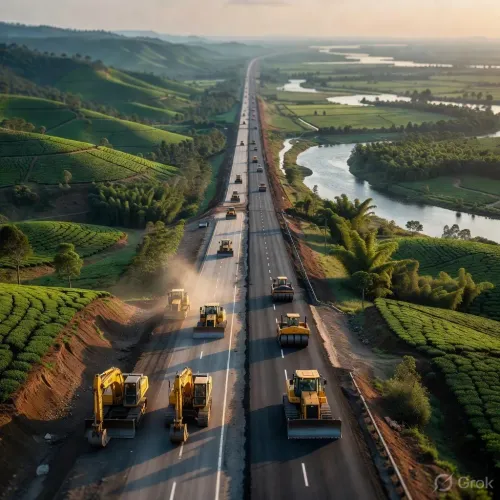
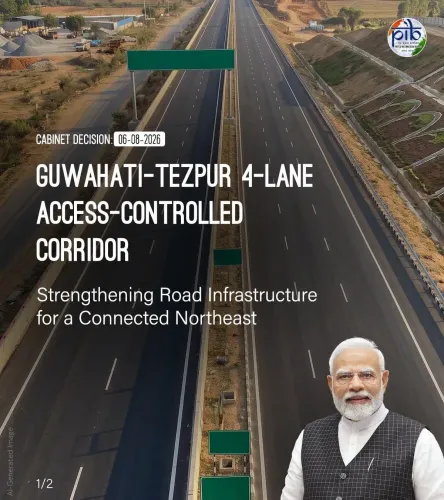
The Union Cabinet has approved a ₹8,970 crore, 135.871 km four-lane access-controlled corridor on NH-15 in Assam connecting Guwahati and Tezpur under the BOT toll model, boosting Northeast connectivity under the Bharatmala Pariyojana framework.
Key Takeaways
The Union Cabinet approved the Guwahati–Tezpur corridor on 6 August 2026 .
The project spans 135.871 km on NH-15 in Assam and will be a four-lane, access-controlled highway.
Total project cost is ₹8,970 crore , to be developed under the Build-Operate-Transfer (BOT) toll model .
The corridor connects Guwahati , Assam's commercial hub, with Tezpur , a strategic city on the Brahmaputra's northern bank.
The project aligns with the Bharatmala Pariyojana framework for national highway development in the Northeast.
Next steps include tendering, land acquisition, and environmental clearances before construction begins.
A ₹8,970 crore decision is about to reshape how the Northeast moves. The Union Cabinet has approved a 135.871-kilometre, four-lane access-controlled corridor on NH-15 in Assam, linking Guwahati and Tezpur under the Build-Operate-Transfer (BOT) toll model — one of the most significant highway investments in the region in recent years. Union Textiles Minister Giriraj Singh shared the announcement on Thursday, 6 August 2026, calling it a crucial step toward faster, safer, and more seamless connectivity.
Guwahati to Tezpur: What the Corridor Actually Covers
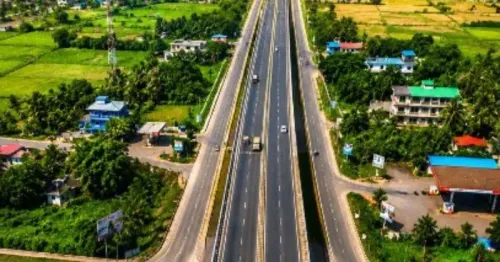
The approved project will upgrade a stretch of NH-15 — the national highway threading through Assam's Brahmaputra valley — into a fully access-controlled, four-lane expressway-grade corridor. Guwahati, Assam's commercial and administrative nerve centre, anchors the southern end. Tezpur, a strategic city on the northern bank of the Brahmaputra and a gateway to Arunachal Pradesh, anchors the north. The 135.871 km stretch currently demands hours of stop-start travel; the new corridor is designed to cut that down sharply while improving freight movement and road safety.
The BOT toll model brings in private capital to build and operate the highway for a defined concession period, after which ownership reverts to the government. This structure has been used across several high-traffic national corridors to reduce the burden on public finances while ensuring long-term asset maintenance — a pattern the central government has leaned on heavily since the mid-2010s.
Northeast Highways and the Bharatmala Push
This approval sits inside a much larger strategic frame. India's Bharatmala Pariyojana, launched in 2015, set out to build expressways and national highway corridors across the country, with the Northeast identified as a priority zone. Successive phases have targeted four-laning, access-controlled upgrades, and new alignments across Assam, Meghalaya, Manipur, Nagaland and neighbouring states — partly to cut travel times, partly to strengthen logistics for the Act East Policy, and partly to improve strategic road access in a sensitive border region.
The Guwahati–Tezpur corridor fits squarely into that arc. Assam commuters, Northeast traders, and logistics operators moving goods between the Brahmaputra valley and the hill states stand to benefit directly. For Tezpur and the districts beyond it, faster access to Guwahati's rail, air, and river infrastructure could meaningfully change the economics of daily commerce.
Singh's Post and the Cabinet's Signal
Minister Singh framed the approval as 'connectivity aur vikas ko nayi gati' — 'new momentum for connectivity and development' — a phrase that captures the dual intent: physical infrastructure and economic acceleration. The Cabinet's green light triggers the next stage: tendering, land acquisition, and environmental clearances. How quickly those move will determine whether the corridor's ambition translates into asphalt on the ground.
The Northeast's infrastructure deficit has been narrowing for a decade. This ₹8,970 crore corridor is the latest, and one of the largest, bets that the pace of closing it is about to get faster.
Point of View
BOT-financed, and strategically placed in the Northeast where infrastructure gaps have historically constrained both economic growth and strategic mobility. The choice of the BOT toll model signals confidence that traffic volumes on this corridor can sustain private investment — a meaningful benchmark for a region often seen as commercially marginal. For the BJP government, approvals of this scale in Assam also carry political weight ahead of any electoral cycle, reinforcing its 'development in the Northeast' narrative. The real test, as with most large highway projects in the region, will be the speed of land acquisition and environmental clearance — the two choke-points that have repeatedly delayed Northeast highway timelines.
NationPress
21 Sept 2026
Frequently Asked Questions
What is the Guwahati–Tezpur corridor project approved by the Cabinet?
It is a 135.871 km, four-lane access-controlled highway corridor on NH-15 in Assam connecting Guwahati and Tezpur , approved at a cost of ₹8,970 crore under the BOT toll model.
What is the BOT toll model used for this highway project?
Under the Build-Operate-Transfer (BOT) toll model , a private developer finances, builds, and operates the highway for a fixed concession period, recovering costs through tolls, after which ownership transfers back to the government.
How does this project connect to Bharatmala Pariyojana?
Bharatmala Pariyojana , launched in 2015 , is the central government's flagship highway development programme that prioritises the Northeast for expressway and access-controlled corridor upgrades — the Guwahati–Tezpur project falls within this framework.
Who will benefit from the Guwahati–Tezpur highway corridor?
Assam commuters, Northeast traders, logistics operators, and residents of districts beyond Tezpur — including those accessing Arunachal Pradesh — stand to gain from faster, safer travel and improved freight movement.
What are the next steps after Cabinet approval of the NH-15 corridor?
Following Cabinet approval, the project moves to tendering, land acquisition, and environmental clearances — the key milestones that will determine when construction on the corridor actually begins.