Cabinet Clears ₹8,970 Cr Guwahati-Tezpur Highway for Assam
Synopsis
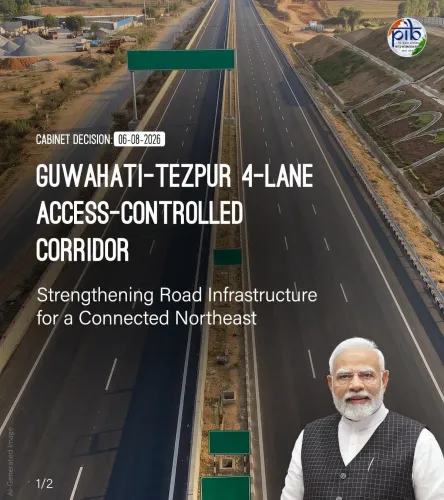
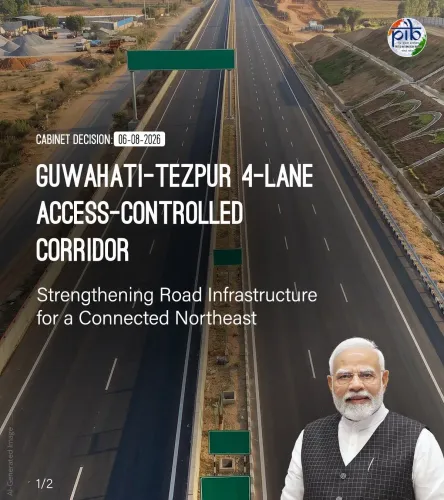
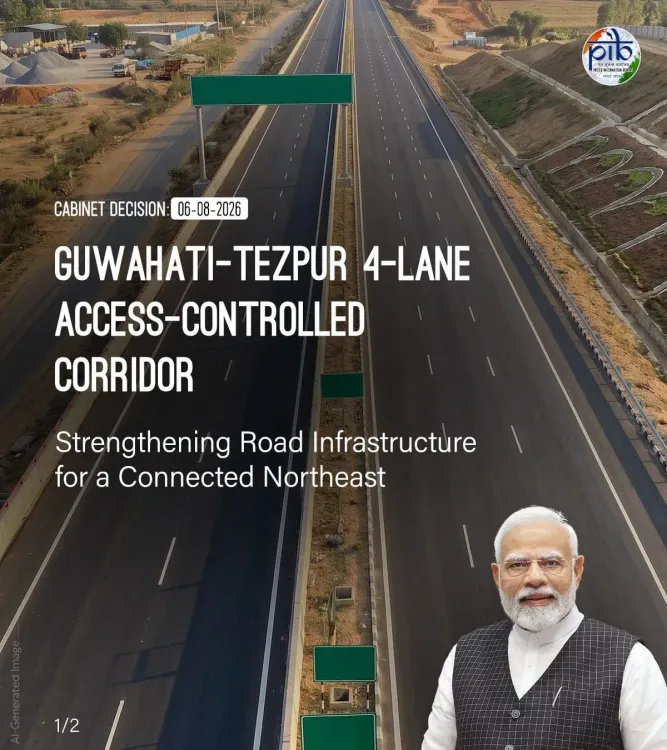
The Union Cabinet has approved the 135.87 km, four-lane Guwahati-Tezpur Highway (NH-15) at ₹8,970.20 crore. The access-controlled corridor includes 19 flyovers, 5 bypasses, an IAF emergency landing facility, and an elephant underpass, boosting Northeast connectivity and defence utility.
Key Takeaways
The Union Cabinet approved the Guwahati-Tezpur Highway (NH-15) on 6 August 2026 .
The project spans 135.87 km as a four-lane, access-controlled corridor at a cost of ₹8,970.20 crore .
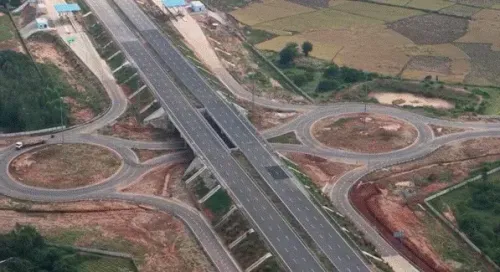
The highway includes 19 flyovers and 5 major bypasses for high-speed, high-volume movement.
An Emergency Landing Facility for the Indian Air Force is embedded in the highway design, reflecting dual civilian-defence utility.
An Elephant Underpass addresses ecological continuity near Kaziranga and Orang National Parks .
The project aligns with the Bharatmala Pariyojana framework for Northeast highway development.
A 135.87-kilometre, four-lane corridor connecting two of Assam's most strategically vital cities just got the green light from India's highest executive body — and the details packed into this project reveal exactly how ambitiously the Centre is thinking about the Northeast.
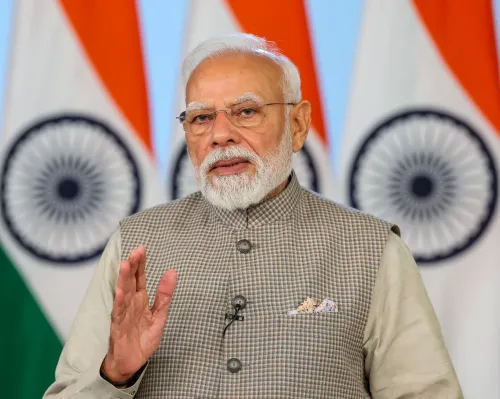
The Union Cabinet, chaired by Prime Minister Narendra Modi, approved the Guwahati-Tezpur Highway (NH-15) on Thursday, 6 August 2026, sanctioning a budget of ₹8,970.20 crore for the access-controlled, four-lane expressway. The Chief Minister's Office of Assam announced the approval, calling it a transformative step for connectivity and economic growth across the region.
19 Flyovers, 5 Bypasses — and a Runway in the Road
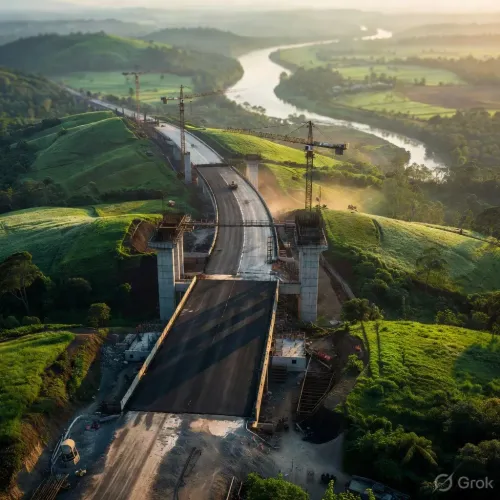
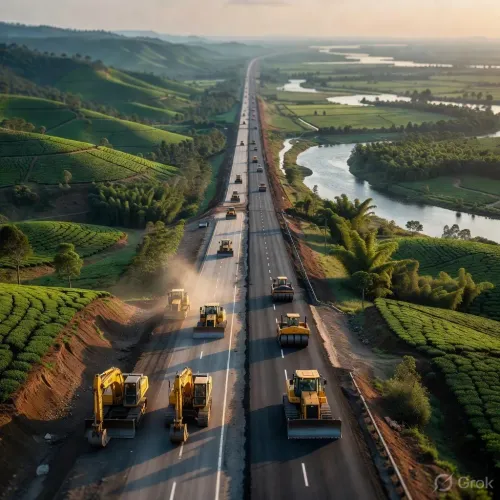
The engineering ambition here goes well beyond asphalt. The highway will feature 19 flyovers and 5 major bypasses — the kind of infrastructure that signals a corridor designed for speed and volume, not just passage. But the headline detail is an Emergency Landing Facility for the Indian Air Force built directly into the highway. Dual-use infrastructure of this kind — a civilian road that doubles as a military airstrip — has become a signature design choice on strategically sensitive national highways, particularly those running close to India's northeastern frontier. Then there is the Elephant Underpass. In a region defined by its extraordinary biodiversity, the corridor threads through territory adjacent to Kaziranga National Park — a UNESCO World Heritage Site — and Orang National Park. Engineering wildlife crossings into highway design is now standard practice in ecologically sensitive zones, but its inclusion here underlines the balancing act: accelerating human movement without fragmenting the habitats that make Assam globally significant.Bharatmala's Northeast Ambition, Made Concrete
This project does not arrive in isolation. It sits squarely within the Bharatmala Pariyojana, the Centre's flagship highway-development programme launched in 2015 with a particular emphasis on the Northeast — a region historically underserved by road infrastructure relative to its strategic and economic importance. The Guwahati-Tezpur corridor accelerates connectivity between Assam's commercial capital and the gateway to Arunachal Pradesh, compressing travel time and opening arteries for trade that currently crawl along older, congested routes. The project's stated goals — cutting travel time, boosting access to Kaziranga and Orang, and driving economic growth across the Northeast — map directly onto the broader federal logic: integrate the region's economy with the national mainstream, reduce logistics costs for traders, and give the armed forces a faster, more flexible surface network in terrain where air and road assets are both critical. Construction timelines, land acquisition progress, and phased inauguration schedules from NHAI and the Assam government will be the next markers to watch. The approval is the starting gun — the real test is delivery.Point of View
Defence preparedness, and ecological optics. The IAF landing strip embedded in the corridor signals that New Delhi views surface infrastructure in this region through a security lens as much as a development one, particularly given the proximity to the Arunachal Pradesh frontier. The elephant underpass, meanwhile, pre-empts the environmental pushback that has delayed or derailed highway projects elsewhere in India. Whether the project delivers on its timeline will be the real political test — the Northeast has seen ambitious approvals stall at land acquisition before.
NationPress
21 Sept 2026
Frequently Asked Questions
What is the Guwahati-Tezpur Highway project approved by the Cabinet?
The Union Cabinet approved the Guwahati-Tezpur Highway (NH-15) , a 135.87 km , four-lane access-controlled corridor in Assam worth ₹8,970.20 crore , featuring 19 flyovers, 5 bypasses, an IAF emergency landing facility, and an elephant underpass.
Why does the Guwahati-Tezpur Highway have an IAF emergency landing facility?
The Emergency Landing Facility built into the highway allows Indian Air Force aircraft to use the road as a runway in operational scenarios, a dual-use design increasingly common on strategically located national highways near India's northeastern borders.
How does the highway help Kaziranga National Park?
The highway includes an Elephant Underpass to maintain wildlife movement corridors near Kaziranga National Park — a UNESCO World Heritage Site — and Orang National Park , reducing the ecological impact of the road on Assam's biodiversity.
What is Bharatmala Pariyojana and how does this project fit in?
Bharatmala Pariyojana , launched in 2015 , is the Centre's flagship national highway development programme with a strong focus on the Northeast. The Guwahati-Tezpur corridor is part of this framework to improve connectivity and economic integration in the region.
What will the Guwahati-Tezpur Highway cost and who approved it?
The project was approved by the Union Cabinet under Prime Minister Narendra Modi at a cost of ₹8,970.20 crore for the 135.87 km stretch between Guwahati and Tezpur in Assam.