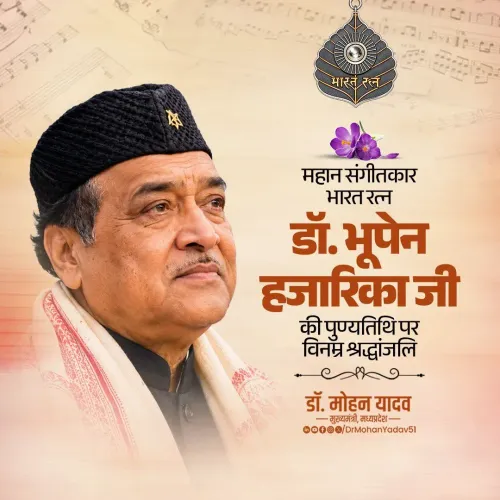
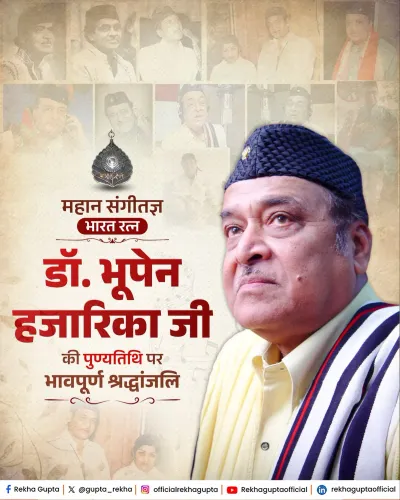
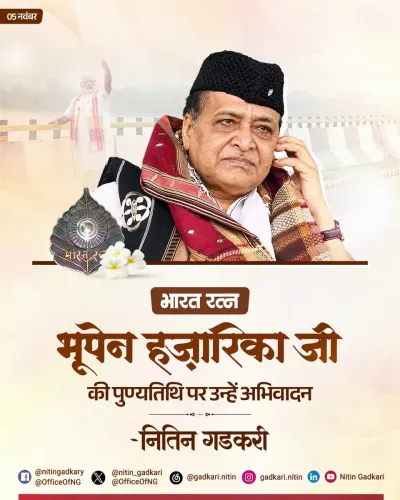
Khattar pays tribute to Bharat Ratna Bhupen Hazarika on death anniversary
Synopsis
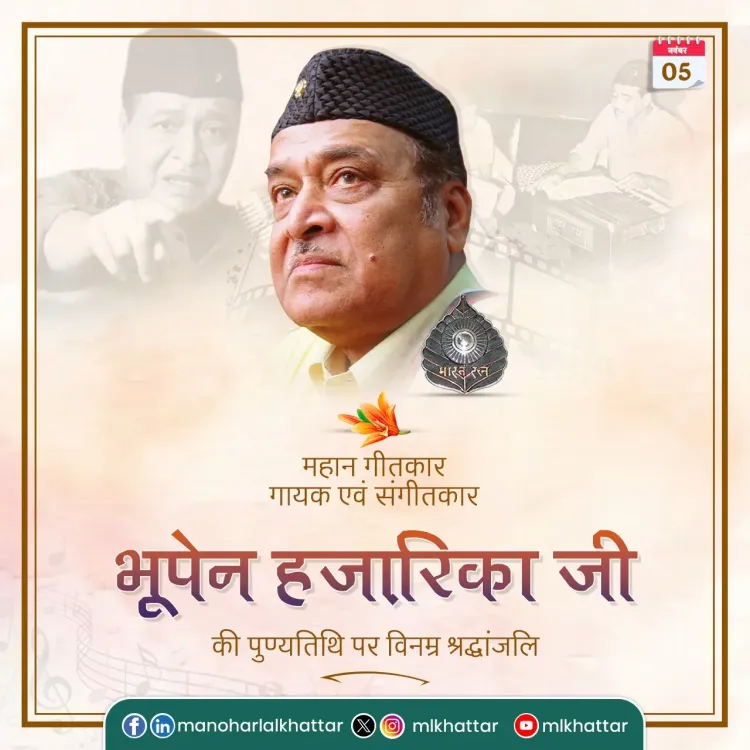
Union Power Minister Manohar Lal Khattar marked the death anniversary of Bharat Ratna Dr. Bhupen Hazarika on 5 November 2026, praising the legendary Assamese musician's timeless compositions for uniting India across linguistic and regional divides.
Key Takeaways
Union Power Minister Manohar Lal Khattar posted a tribute to Dr.
Bhupen Hazarika on his death anniversary on 5 November 2026 .
Hazarika was awarded the Bharat Ratna — India's highest civilian honour — posthumously in 2019 .
Khattar linked Hazarika's musical legacy to the spirit of Ek Bharat, Shreshtha Bharat , the Central Government programme launched in 2015 to promote inter-state cultural unity.
The minister praised Hazarika for 'breaking the boundaries of language and region' and elevating Assamese culture and Indian music on the global stage.
The tribute reflects a wider government practice of publicly honouring northeastern cultural icons to reinforce national integration narratives.
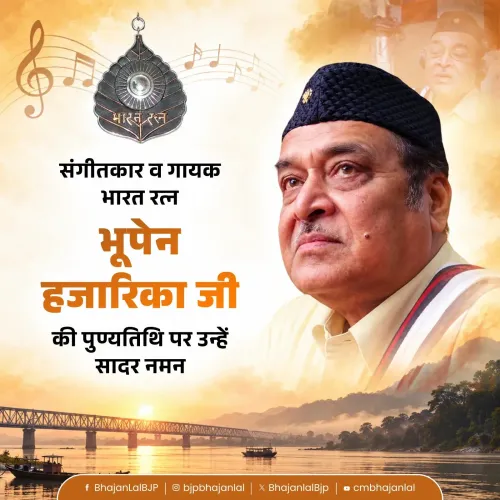
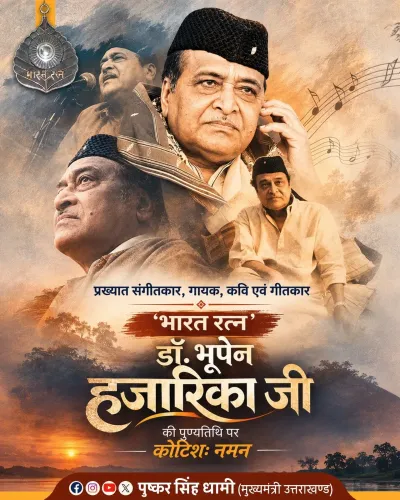
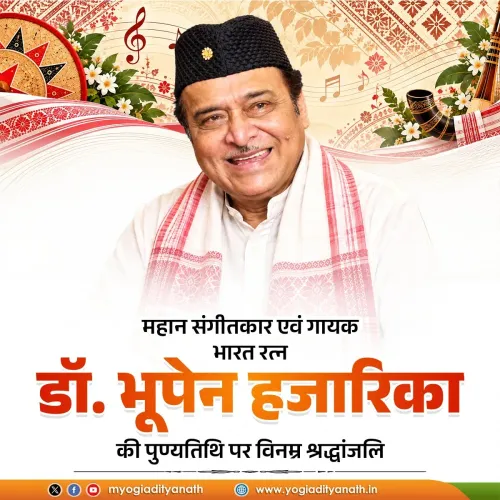
A voice that dissolved borders between languages and regions, Bharat Ratna Dr. Bhupen Hazarika is remembered today on his death anniversary — with Union Power Minister Manohar Lal Khattar leading tributes from the Union Cabinet on Thursday, 5 November 2026.
Posting in Hindi on X, Khattar called Hazarika a 'man of extraordinary talent, a great musician and an unparalleled creator' — ('विलक्षण प्रतिभा के धनी, महान संगीतज्ञ एवं अद्वितीय रचनाकार') — and offered his respectful homage on the occasion. He noted that the arc of Hazarika's life bore 'a clear imprint of the spirit of Ek Bharat, Shreshtha Bharat,' and that his timeless compositions 'broke the boundaries of language and region to unite the nation.'
The Bard of Brahmaputra's legacy
Born in Assam and shaped by the Brahmaputra's vast cultural basin, Bhupen Hazarika became one of independent India's most distinctive voices — a singer, composer, and filmmaker whose work crossed every linguistic frontier the subcontinent could throw at it. His songs, rooted in Assamese folk tradition, found audiences in Bengali, Hindi, and beyond, earning him a reputation as a unifier through melody rather than mandate.
The recognition was formalised at the highest level when the Government of India conferred the Bharat Ratna — the country's highest civilian honour — on him posthumously in 2019, nearly eight years after his passing in 2011. The award acknowledged both his musical genius and the integrative power his art had consistently exercised across a diverse nation.
Ek Bharat, Shreshtha Bharat — woven into a musical life
Khattar's invocation of Ek Bharat, Shreshtha Bharat — the Central Government programme launched in 2015 to foster inter-state cultural exchange and national integration — frames Hazarika's legacy squarely within a contemporary policy narrative. The minister's tribute argues, in effect, that Hazarika practised in his art what the scheme now pursues as formal government policy: the idea that regional cultures, celebrated and shared, strengthen rather than fragment national identity.
Khattar concluded by noting that Hazarika would 'always be remembered for elevating Assamese culture and securing a distinctive place for Indian music on the global stage.' It is a tribute with reach: northeastern icons have rarely occupied centre-stage in the national cultural imagination, and ministerial acknowledgments like this one form part of a broader, deliberate effort to change that.
Point of View
Shreshtha Bharat — is now a recognisable pattern in the BJP government's cultural outreach. By framing Bhupen Hazarika's art as a living embodiment of national integration policy, Khattar reinforces the government's long-running effort to anchor the northeast more visibly within the mainstream national narrative. The posthumous Bharat Ratna in 2019 was itself part of that arc. Tributes like this one serve a dual purpose: honouring a genuine cultural giant while simultaneously signalling sustained governmental attention to a region that has historically felt peripheral to Delhi's imagination.
NationPress
5 Nov 2026
Frequently Asked Questions
Who was Bhupen Hazarika?
Bhupen Hazarika was a legendary Assamese singer, composer, and filmmaker, often called the 'Bard of Brahmaputra.' He was awarded the Bharat Ratna — India's highest civilian honour — posthumously in 2019 for his contributions to Indian music and national integration.
When did Bhupen Hazarika pass away?
Bhupen Hazarika passed away in 2011. His death anniversary is observed on 5 November each year.
Why was Bhupen Hazarika given the Bharat Ratna?
The Bharat Ratna was conferred on Bhupen Hazarika posthumously in 2019 in recognition of his exceptional musical legacy, his role in promoting Assamese culture, and the unifying power his compositions exercised across India's diverse linguistic communities.
What is Ek Bharat Shreshtha Bharat?
Ek Bharat Shreshtha Bharat is a Central Government initiative launched in 2015 to promote national unity through cultural exchanges between states, encouraging citizens to appreciate the diversity of India's regional cultures.
What did Manohar Lal Khattar say about Bhupen Hazarika?
Khattar called Hazarika a man of extraordinary talent and an unparalleled creator, saying his timeless compositions broke the boundaries of language and region to unite the nation. He also praised Hazarika for elevating Assamese culture and securing a distinctive place for Indian music globally.