MP CM Yogi Pushes Rural Property Rights via Swamitva Scheme

Synopsis
The Chief Minister's Office of Madhya Pradesh has highlighted the Swamitva Adhikar Abhilekh Nishpadan Evam Panjiyan Yojana on November 5, 2026, a state scheme registering legal property ownership records for rural families, deepening the state's parallel work alongside the Centre's SVAMITVA initiative.
Key Takeaways
Madhya Pradesh 's Swamitva Adhikar Abhilekh Nishpadan Evam Panjiyan Yojana registers legal ownership records for rural households.
The scheme was highlighted by the official Chief Minister's Office account on November 5, 2026 , with CM Dr.
Mohan Yadav tagged directly.
It builds on the national SVAMITVA scheme launched in 2020 by the Ministry of Panchayati Raj , which used drone surveys to map rural land.
Legal title enables rural families to access formal credit, resolve disputes, and secure their homes against encroachment.
District-level rollout statistics and beneficiary numbers have not yet been detailed publicly.
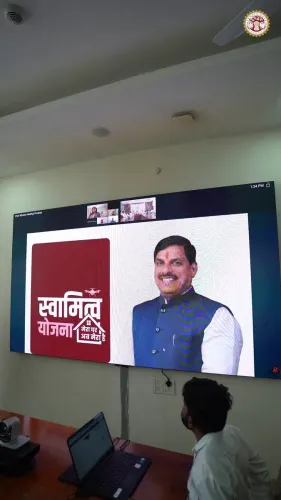
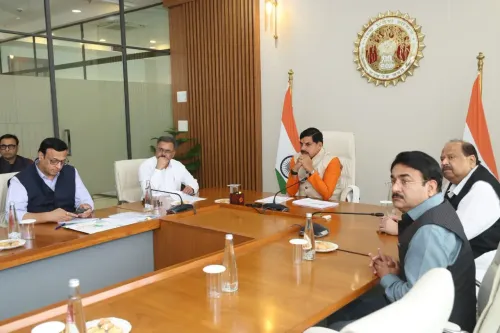
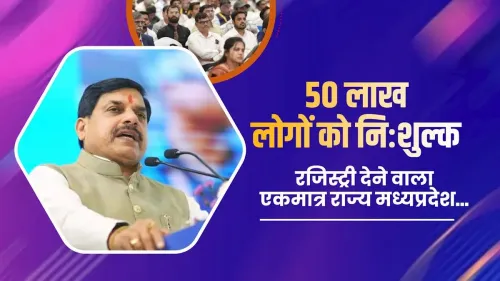
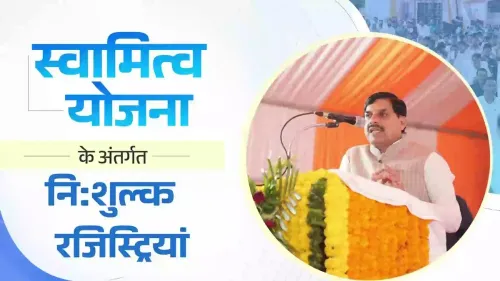
Millions of rural families in Madhya Pradesh have long held their homes and land without a scrap of legal proof — leaving them locked out of credit, vulnerable to disputes, and invisible to the formal economy. The Chief Minister's Office of Madhya Pradesh moved to change that narrative on Thursday, November 5, 2026, spotlighting the Swamitva Adhikar Abhilekh Nishpadan Evam Panjiyan Yojana — a state scheme designed to execute and register legal ownership records for rural households, with Chief Minister Dr. Mohan Yadav personally associated with the push.
The post, shared by the official Chief Minister's Office account, declared: 'ग्रामीण परिवारों को मिल रहा है संपत्ति का कानूनी अधिकार' — 'Rural families are getting the legal right to property.' That single line captures a promise that has historically eluded India's villages.What the Swamitva Adhikar scheme actually does
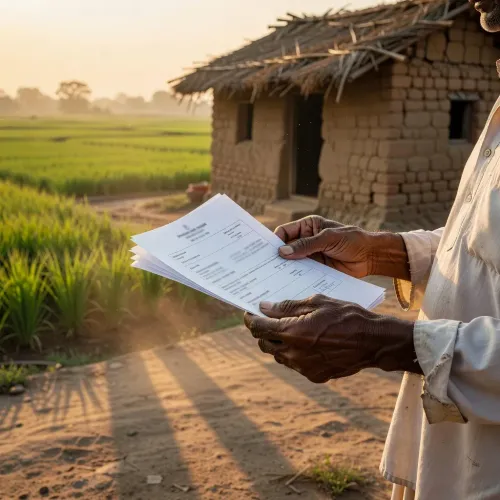
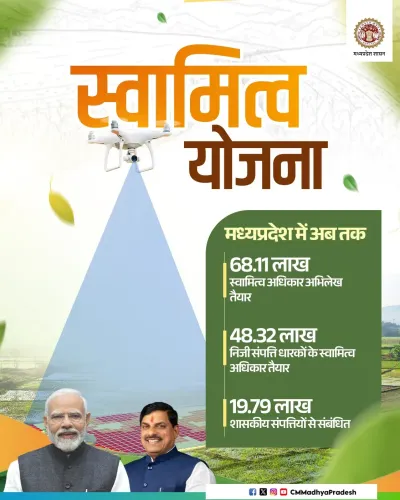
The Swamitva Adhikar Abhilekh Nishpadan Evam Panjiyan Yojana is a Madhya Pradesh state-level initiative targeting the execution and formal registration of property ownership records for rural residents. At its core, it converts informal, multigenerational occupation of land and homes into registered legal title — giving a family document that holds up in court, at a bank, and in a government office.
It draws from the same philosophy as the central government's SVAMITVA scheme, launched in 2020 by the Ministry of Panchayati Raj, which deployed drone surveys to map rural 'abadi' (inhabited) land and issue property cards. Madhya Pradesh's state scheme takes that mandate further into execution and registration — the final, binding step that turns a survey into a deed.
Why legal title is a game-changer for rural India
The absence of formal land titles is one of the most stubborn drivers of rural poverty in India. Without a registered document, a family cannot pledge their home as collateral for a bank loan, cannot easily resolve a boundary dispute in court, and can be displaced with limited legal recourse. Formalising ownership breaks each of those barriers in a single stroke.
Madhya Pradesh's push sits inside a broader national pattern: state governments racing to digitise and legalise rural land records as the Centre makes property formalisation a pillar of rural economic empowerment. The state has been an active participant in land-records modernisation for years, and this scheme represents the downstream end of that pipeline — where the data finally becomes a deed in a family's hand.
Dr. Mohan Yadav's land-rights focus
Dr. Mohan Yadav, who has served as Chief Minister of Madhya Pradesh since December 2023, has aligned his administration with welfare schemes that build tangible, documented assets for rural communities. Associating the Chief Minister's handle directly with this post signals that property formalisation is being elevated as a governance priority, not buried in a departmental circular.
The numbers behind district-level rollout and integration with the national SVAMITVA property-card framework are yet to be detailed publicly. But the direction is unambiguous. When a rural family receives a registered title, they don't just get a piece of paper — they get a seat at the table of the formal economy.
Point of View
Credit-accessible system. By staking the Chief Minister's personal brand on this scheme, the Yadav administration signals that land-titling is a political deliverable, not just a bureaucratic exercise. The real test will be in the registration numbers at the district level — legal title on paper means little if the pipeline stalls before deeds reach families. If Madhya Pradesh can demonstrate seamless integration with the central SVAMITVA framework, it could become a replicable model for other large rural states.
NationPress
5 Nov 2026
Frequently Asked Questions
What is the Swamitva Adhikar Abhilekh Nishpadan Evam Panjiyan Yojana in Madhya Pradesh?
It is a Madhya Pradesh state scheme that executes and registers legal ownership records for rural properties, giving village families formal, documented title to their homes and land.
How is this different from the central government's SVAMITVA scheme?
The central SVAMITVA scheme, launched in 2020, uses drone surveys to map rural 'abadi' land and issue property cards. Madhya Pradesh's state scheme focuses on the execution and formal registration stage — turning that mapping data into a legally binding ownership deed.
Who is Dr. Mohan Yadav and what is his role in this scheme?
Dr. Mohan Yadav is the Chief Minister of Madhya Pradesh since December 2023. The Chief Minister's Office tagged him directly in the post highlighting this rural property rights scheme, signalling it as a personal governance priority.
Why does legal property title matter for rural families in India?
Without a registered title, rural families cannot pledge their home as loan collateral, face difficulty resolving land disputes in court, and are more vulnerable to displacement. A formal deed opens access to bank credit and legal protection.
How many families have benefited from this scheme in Madhya Pradesh?
Specific beneficiary numbers and district-level rollout statistics for this scheme have not been officially disclosed in verifiable public records as of November 2026.