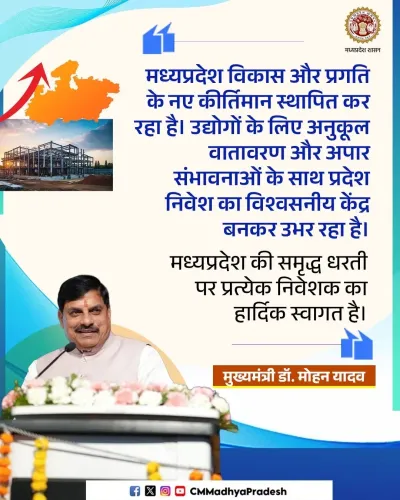
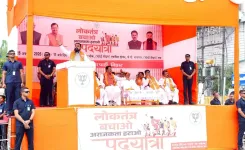
CM Mohan Yadav Pitches MP's Rural, Industry & Tourism Push
Synopsis
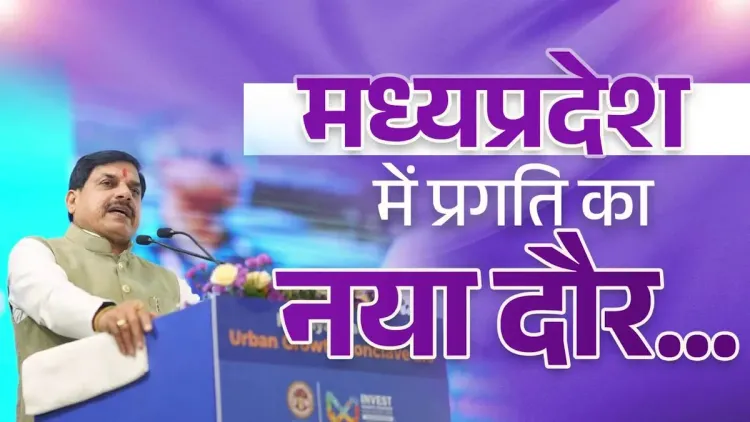
At the MP Urban Growth Conclave 2026, Chief Minister Dr. Mohan Yadav outlined a three-pronged agenda: a free land registration drive to unlock rural credit, expansion of industry and trade, and rapid growth in tourism — positioning Madhya Pradesh as a broad-based economic destination.
Key Takeaways
Mohan Yadav addressed the MP Urban Growth Conclave 2026 on 28 October 2026 , setting out Madhya Pradesh's development priorities.
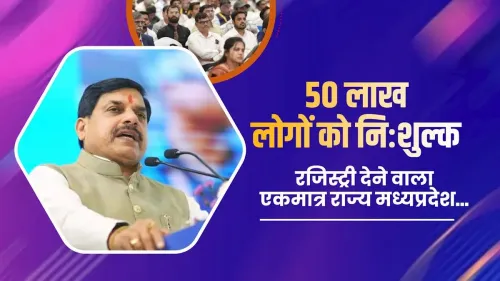
A free land registration campaign is underway to grant formal property rights to rural residents and connect them to bank credit.
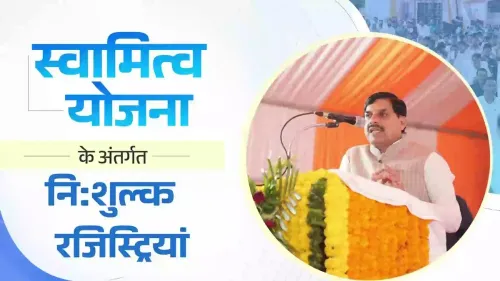
The initiative aligns with the national Swamitva Yojana (2020) , which introduced property cards in rural areas for financial inclusion.
The state is simultaneously pushing industry and trade expansion , with urban infrastructure investment as a core conclave theme.
Tourism is identified as a fast-growing third engine, leveraging assets like Khajuraho and Sanchi alongside eco-tourism circuits.
Progress on loan uptake from the registration drive and investment commitments from the conclave are the key metrics to watch.
Free land rights for villagers, a manufacturing push, and a tourism sector primed for liftoff — Chief Minister Dr. Mohan Yadav laid out Madhya Pradesh's triple-track growth agenda at the MP Urban Growth Conclave 2026 on Wednesday, 28 October 2026, signalling that the state intends to convert its vast untapped potential into measurable economic momentum.
Free Registry Drive: Turning Land into Leverage
The centrepiece of the rural push is a free land registration campaign that the state government is actively running to formally vest property rights in rural residents. The logic is direct: a registered plot is collateral, and collateral unlocks bank credit. CM Yadav framed it plainly — grant the deed, open the loan window, let rural households participate in the formal economy.
The initiative echoes the nationally launched Swamitva Yojana of 2020, which issued property cards in villages to strengthen land records and financial inclusion. Madhya Pradesh's campaign builds on that framework, pushing the last-mile step of actual registration and credit access at zero cost to the beneficiary. For a state where a large share of the population is rural, the downstream impact on household credit access could be substantial.
Industry, Urban Growth, and the Conclave Context
The remarks came at the MP Urban Growth Conclave 2026, organised by the MP Urban Development Department — a platform designed to attract investment into urban infrastructure, industrial corridors, and services. Yadav underscored that 'udyog, vyapar aur gramin suvidhaon ke vistar par zor diya ja raha hai' ('emphasis is being placed on expanding industry, trade, and rural amenities'), framing urban and rural development not as competing priorities but as parallel tracks of the same growth story.
Madhya Pradesh has been working to position itself alongside established industrial and logistics hubs in central India, leveraging its geography as a connecting state between north, west, and south. Conclaves of this kind serve as public commitment benchmarks — the progress reports that follow will determine how much of the pitch translates into signed investment.
Tourism as the Third Engine
The Chief Minister also flagged tourism as a rapidly expanding sector, noting that the state is advancing with new possibilities. Madhya Pradesh holds a formidable heritage asset base — from the UNESCO-listed temples of Khajuraho to the Buddhist stupas of Sanchi — alongside wildlife corridors and eco-tourism circuits. Threading tourism revenue into the broader growth narrative gives the state a diversification play beyond agriculture and manufacturing.
Across India, states that have combined rural land titling with deliberate tourism investment have seen compounding effects: formal credit spurs small hospitality enterprises, which in turn drive local employment. Whether Madhya Pradesh can execute that virtuous cycle at scale is now the central question coming out of today's conclave.
Point of View
Industrial investment, and tourism — reflects a calculated attempt to broaden Madhya Pradesh's economic base beyond its agrarian core. The free registration campaign is politically smart: it delivers a tangible, named benefit to a large rural constituency while simultaneously advancing financial inclusion goals aligned with central government priorities. Hosting a dedicated urban growth conclave signals that the state is competing actively for post-pandemic investment flows that have concentrated in Gujarat, Maharashtra, and Tamil Nadu. The real test of this agenda is execution fidelity — Madhya Pradesh has articulated similar investment visions before, and the distance between conclave pledges and ground-level uptake will define Yadav's legacy on economic governance.
NationPress
28 Oct 2026
Frequently Asked Questions
What is the free registration campaign in Madhya Pradesh?
It is a state government initiative that provides free land registration to rural residents, formally granting them property rights and enabling them to use their land as collateral to access bank loans.
What is the MP Urban Growth Conclave 2026?
The MP Urban Growth Conclave 2026 is a state-level investment and policy event organised by the MP Urban Development Department to attract investment into urban infrastructure, industry, and tourism in Madhya Pradesh.
How does Madhya Pradesh's land registration drive relate to Swamitva Yojana?
The national Swamitva Yojana, launched in 2020, issued property cards in villages to strengthen land records. Madhya Pradesh's free registration campaign builds on this framework by completing the formal registration step at zero cost to rural beneficiaries.
What tourism sites make Madhya Pradesh an attractive destination?
Madhya Pradesh has major heritage tourism assets including the UNESCO-listed temples of Khajuraho and the Buddhist stupas of Sanchi, alongside wildlife corridors and eco-tourism circuits across the state.
Who is Dr. Mohan Yadav?
Dr. Mohan Yadav is the Chief Minister of Madhya Pradesh, a position he has held since December 2023. He previously served in the state cabinet with a focus on education and technical education portfolios.