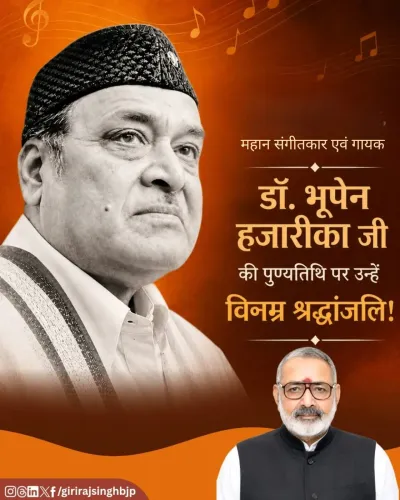
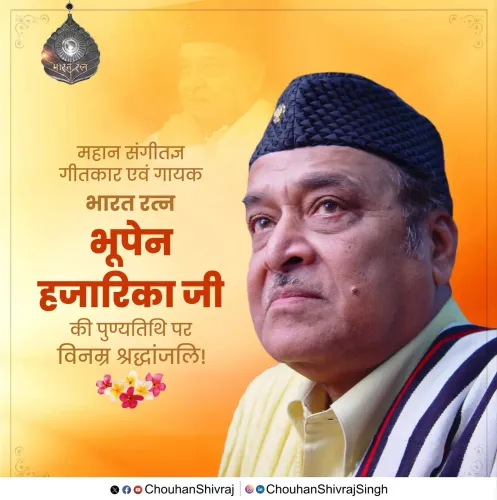
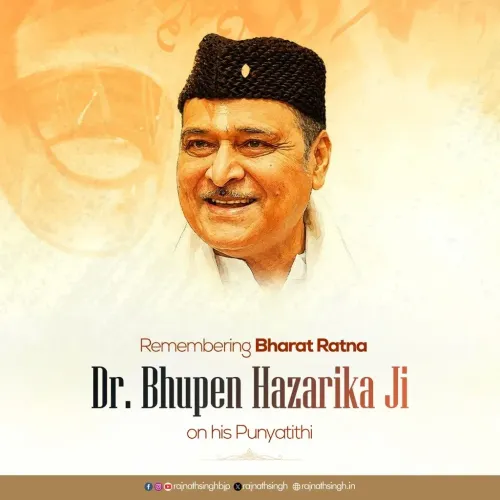
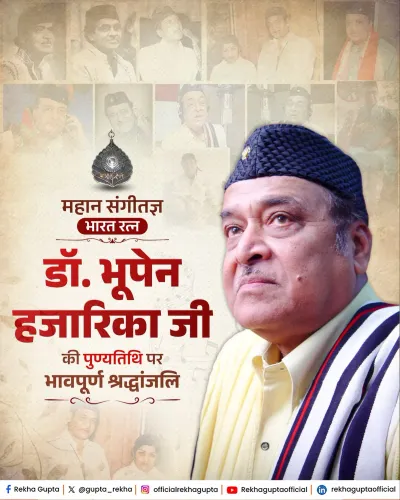
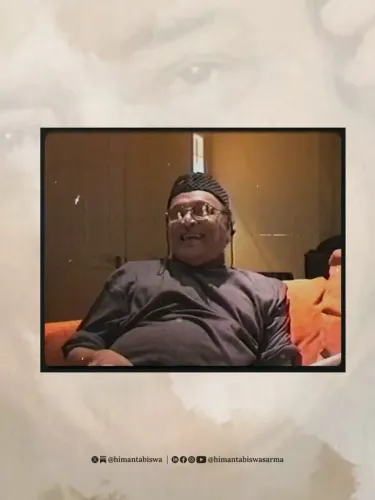
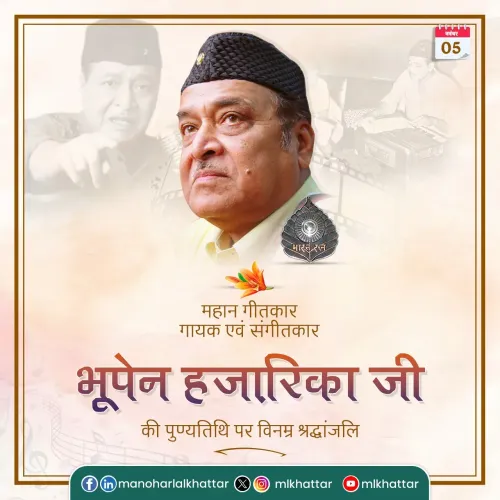
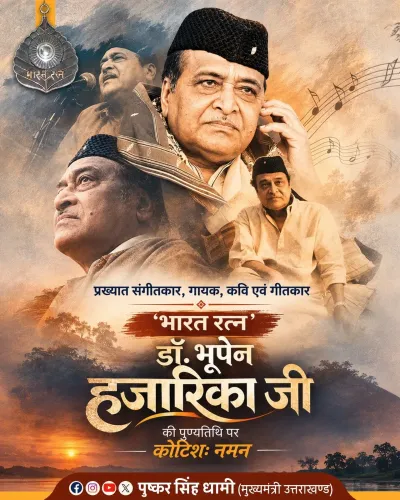
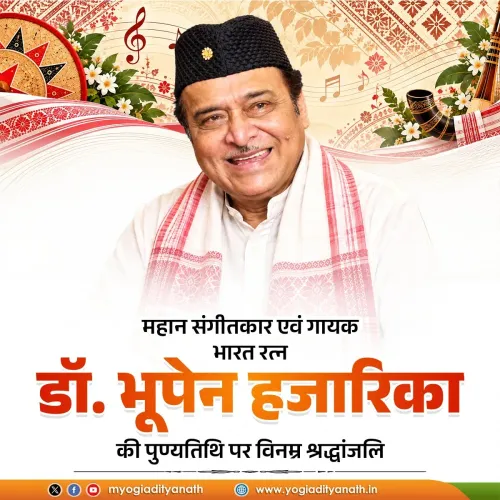
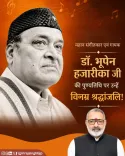
CM Mohan Yadav pays tribute to Bharat Ratna Bhupen Hazarika
Synopsis
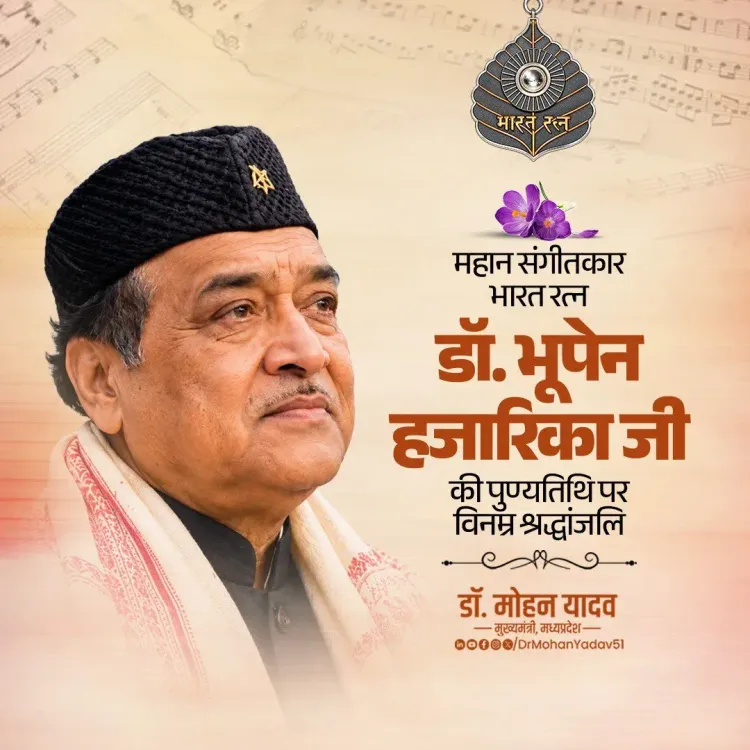
On Bhupen Hazarika's death anniversary, Madhya Pradesh CM Dr. Mohan Yadav honoured the Bharat Ratna-winning composer, calling his music an eternal voice of human sensitivity and social harmony.
Key Takeaways
Mohan Yadav , Chief Minister of Madhya Pradesh, paid tribute to Dr.
Bhupen Hazarika on his punyatithi , 5 November 2026 .
Hazarika was a legendary Assamese singer, lyricist, and composer who died on 5 November 2011 .
He was posthumously awarded the Bharat Ratna — India's highest civilian honour — in 2019 .
CM Yadav described Hazarika's music as a voice for 'human sensitivity and social harmony.' Tributes to Hazarika on this date have become an annual observance among state and national leaders across India.
Fourteen years after his passing, the voice of Dr. Bhupen Hazarika still carries across India's rivers and plains — and on Thursday, 5 November 2026, Madhya Pradesh Chief Minister Dr. Mohan Yadav paused to honour the legendary composer on his death anniversary, calling his music an enduring testament to human sensitivity and harmony.
Posting on X, CM Yadav wrote: 'महान संगीतकार एवं भारत रत्न, डॉ. भूपेन हजारिका जी की पुण्यतिथि पर विनम्र श्रद्धांजलि अर्पित करता हूं' — 'I offer humble tribute on the death anniversary of the great composer and Bharat Ratna, Dr. Bhupen Hazarika.' He added that Hazarika gave voice to human emotions and social harmony through his melodies, and that his songs 'will forever fill the hearts of admirers with joy.'
A voice that belonged to all of India, not just Assam
Bhupen Hazarika was born on 8 September 1926 in Sadiya, Assam, and went on to become one of the most singular creative forces in Indian music — singer, lyricist, composer, and filmmaker rolled into one. His songs drew from the Brahmaputra's folklore, but their themes — brotherhood, the plight of the marginalised, the universality of love — transcended language and region. He died on 5 November 2011 in Mumbai.
In 2019, the Government of India conferred upon him the Bharat Ratna posthumously, the country's highest civilian honour, recognising his immeasurable contribution to Indian culture. The award placed him alongside the rarest names in the nation's public life.
Why BJP leaders reach across regional lines on this date
Every 5 November, state and national leaders mark Hazarika's punyatithi (death anniversary) with public tributes. For BJP chief ministers in particular, honouring a towering Assamese cultural figure carries a deliberate signal — one of cultural inclusivity that reaches beyond the party's traditional heartland in the Hindi belt. CM Yadav's tribute from Bhopal is part of that broader pattern of acknowledgement.
Hazarika's legacy endures in classrooms, concert halls, and streaming playlists alike. His compositions — including the haunting 'Dil Hoom Hoom Kare' and the socially charged 'Manuhe Manuhor Babe' — remain touchstones for anyone seeking music that doubles as a moral statement. The annual remembrance is less a ritual and more a reminder that some artists never really leave the room.
Point of View
Issuing such a tribute from Madhya Pradesh underlines a broader BJP strategy of building symbolic bridges across India's diverse regional identities — culture as soft coalition-building, year after year.
NationPress
5 Nov 2026
Frequently Asked Questions
When did Bhupen Hazarika die?
Dr. Bhupen Hazarika passed away on 5 November 2011 in Mumbai. His death anniversary is observed annually across India.
Why was Bhupen Hazarika given the Bharat Ratna?
Bhupen Hazarika was posthumously awarded the Bharat Ratna in 2019 in recognition of his extraordinary contribution to Indian music, cinema, and culture over several decades.
Who is paying tribute to Bhupen Hazarika in 2026?
Madhya Pradesh Chief Minister Dr. Mohan Yadav paid tribute on 5 November 2026 , posting on X to honour the composer on his death anniversary.
What is Bhupen Hazarika known for?
Hazarika was a celebrated Assamese singer, lyricist, and filmmaker whose songs focused on human unity, social harmony, and the lives of ordinary people. He is widely regarded as one of India's most distinctive musical voices.
What does punyatithi mean?
Punyatithi is a Sanskrit-origin term meaning death anniversary, used in Indian tradition to mark the day a revered person passed away and to offer prayers or tributes in their memory.