India's Chemical Sector Set to Boost Global Share to 5-6% by 2030
Synopsis
India is poised to significantly expand its share of the global chemical market to 5-6% by 2030, with ambitious plans to achieve a $1 trillion turnover by 2040. Discover the government's strategic initiatives and investments aimed at transforming the industry.
Key Takeaways
India's chemical sector share to rise to 5-6% by 2030 .
Projected turnover of $ 1 trillion by 2040 .
Rs 13,000 crore earmarked for Bio-Pharma SHAKTI .
Focus on biologics with $300 billion in patents expiring.
Establishment of 1,000 clinical trial sites for enhanced research.
New Delhi, March 4 (NationPress) The share of India in the global chemical industry is projected to rise to 5-6% by the year 2030, with an aim to reach a turnover of $1 trillion by 2040, as per government reports.
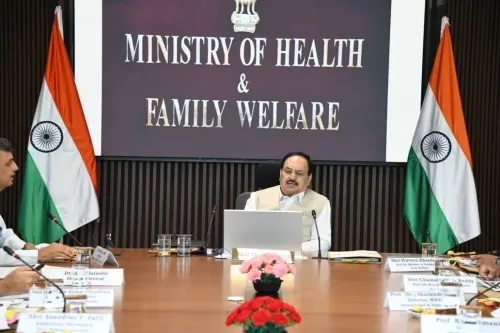
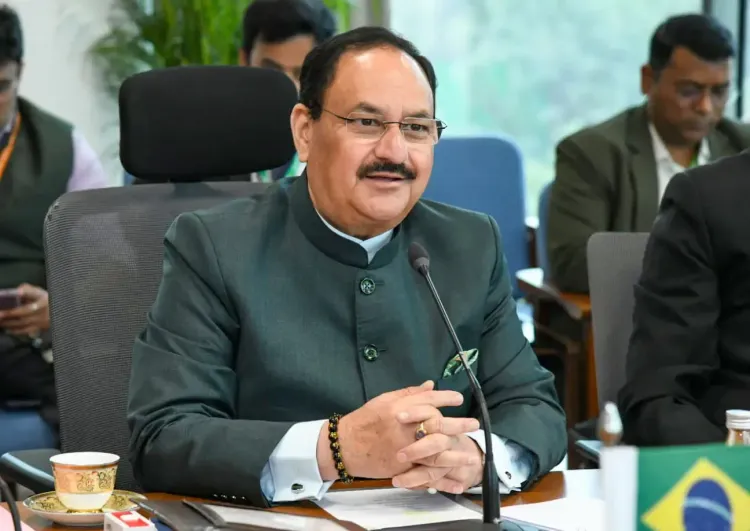
Union Minister JP Nadda stated that the allocation of Rs 13,000 crore for the Bio-Pharma SHAKTI initiative and the establishment of three specialized Chemical Parks represent a significant investment in India’s future.
During a post-Budget webinar, the minister highlighted that by 2035, 40% of global medicines are expected to be biologics.
With around $300 billion worth of patents expiring by 2030, he emphasized the need for a shift towards biologics, affirming India's commitment to tackle this transition through the BioPharma Mission.
A budget of Rs 10,000 crore is set aside for this mission over the next five years.
“Capturing just a 1% share of the global biosimilars market could offer India an annual opportunity worth Rs 2 lakh crore,” he added.
The minister also pointed out the significance of reinforcing institutions like NIPER by closely integrating them with talent and skill development.
Establishing 1,000 clinical trial sites nationwide will bolster research capacity and promote innovation. He stressed the importance of the Central Drugs Standard Control Organization (CDSCO) in expediting regulatory approvals, stating it will be strengthened to support biosimilars and drug fermentation.
Nadda noted that while India's chemical sector generates an output valued at Rs 19.4 lakh crore and excels in areas like dyes and agrochemicals, its global market share is currently only 3%.
Identifying infrastructure as a critical gap, the Minister mentioned that Rs 3,300 crore will be invested in three world-class chemical parks featuring plug-and-play utilities, advanced effluent treatment systems, integrated logistics, and built-in safety measures to bridge this gap.
These parks are anticipated to facilitate cost reductions of 20-40% through industrial symbiosis and foster a circular economy.
Point of View
I view India's strategic investments in the chemical sector as a pivotal step towards enhancing its global competitiveness. The government's commitment to boosting biologics and infrastructure development indicates a proactive approach to address market demands and foster innovation.
NationPress
25 Sept 2026
Frequently Asked Questions
What is India's projected share in the global chemical sector by 2030?
India's global share in the chemical sector is projected to rise to 5-6% by 2030.
How much turnover is India aiming to achieve by 2040?
India aims to achieve a turnover of $1 trillion by the year 2040.
What budget has been allocated for the Bio-Pharma SHAKTI initiative?
The government has allocated Rs 13,000 crore for the Bio-Pharma SHAKTI initiative.
What is the significance of the new chemical parks?
The new chemical parks are expected to facilitate cost reductions and support a circular economy.
What role does the CDSCO play in this initiative?
The CDSCO will be strengthened to expedite regulatory approvals for biosimilars and drug fermentation.