Punjab Police Hits 75,025 Drug Arrests on Day 517 of Yudh Nashian Virudh
Synopsis
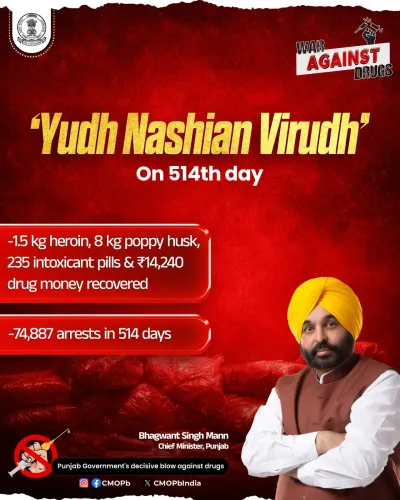
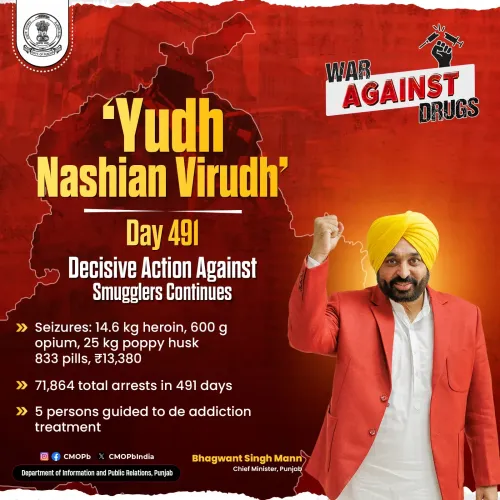
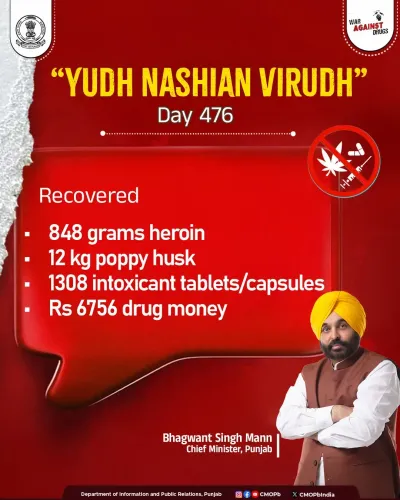
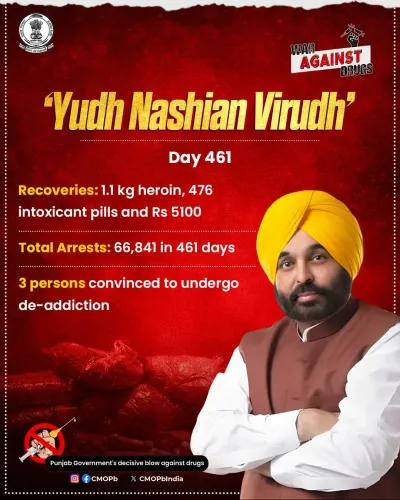
On day 517 of Punjab's Yudh Nashian Virudh campaign, police crossed 75,025 cumulative drug arrests while seizing 420g heroin, 5kg poppy husk, and 6,078 intoxicant pills. Twenty-three persons were also referred to de-addiction treatment in a single day.
Key Takeaways
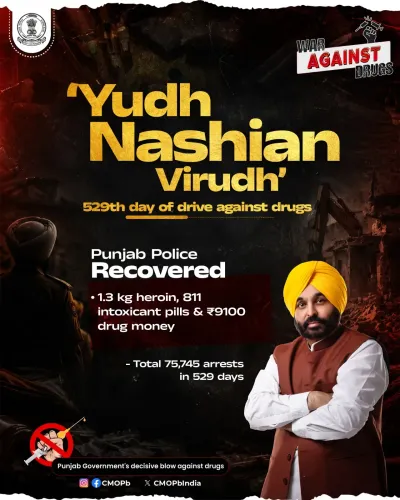
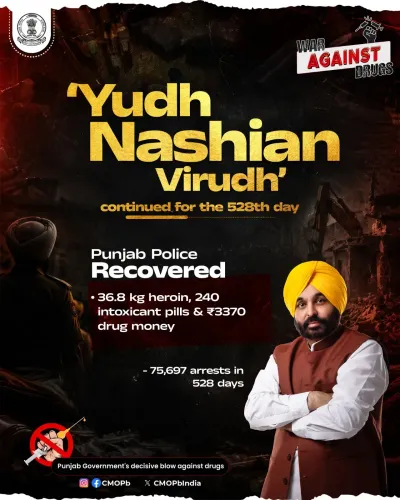
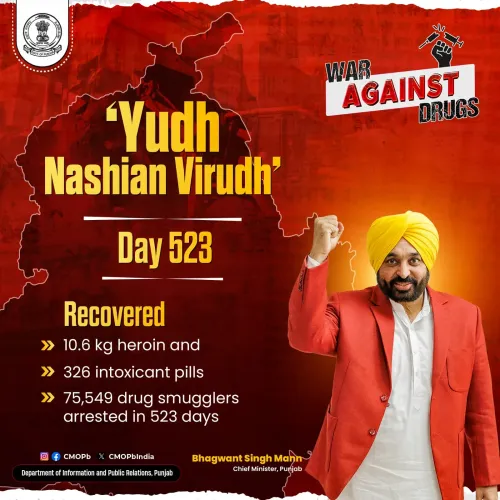
75,025 drug smugglers arrested cumulatively over 517 days of the Yudh Nashian Virudh operation.
Latest seizures include 420 grams of heroin , 5 kg of poppy husk , and 6,078 intoxicant pills . ₹6,460 in drug money recovered from arrested smugglers in the latest drive.
23 persons convinced to voluntarily enter de-addiction and rehabilitation treatment on day 517.
The campaign runs a dual track: daily enforcement arrests alongside active rehabilitation referrals by Punjab Police personnel.
Punjab's drug crisis is historically linked to trafficking routes along the India-Pakistan border , involving heroin, poppy husk, and pharmaceutical opioids.
On the 517th consecutive day of operation Yudh Nashian Virudh, Punjab Police crossed a stark milestone — 75,025 drug smugglers arrested since the campaign began, with fresh seizures and rehabilitation referrals logged on Saturday, 1 August 2026. The numbers are relentless, and so is the drive.
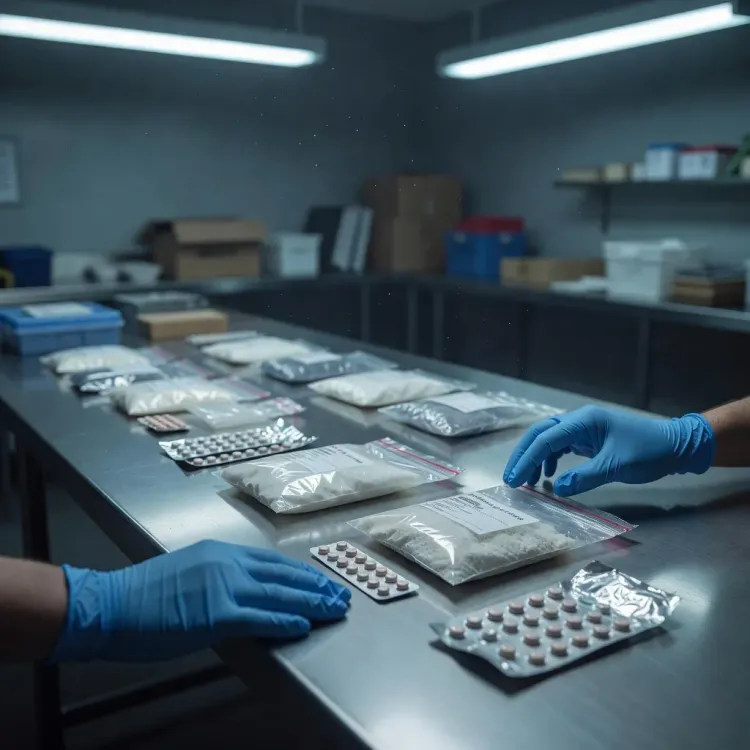
The latest enforcement sweep netted 420 grams of heroin, 5 kg of poppy husk, 6,078 intoxicant pills, and ₹6,460 in drug money from arrested smugglers. The Chief Minister's Office of Punjab shared the update on X, framing the seizures as part of the state's unbroken daily campaign against narcotics under Chief Minister Bhagwant Mann's Aam Aadmi Party government.
What 517 days of daily arrests looks like
The Yudh Nashian Virudh — literally 'War Against Drugs' — is a statewide police-led operation combining enforcement with rehabilitation. What distinguishes it from earlier Punjab anti-drug campaigns is the cadence: daily public reporting of arrests and seizures, maintaining pressure and accountability simultaneously. The cumulative arrest figure of 75,025 underscores just how embedded narcotics trafficking has become in the state's criminal ecosystem.
Punjab's drug crisis has deep roots. Trafficking routes linked to the India-Pakistan border have long funnelled heroin and pharmaceutical opioids into the state, hitting its youth hardest. Previous governments ran enforcement drives, but the current campaign has leaned into both daily accountability metrics and an explicit rehabilitation arm.
The rehabilitation push alongside the arrests
Beyond seizures, Punjab Police reported convincing 23 persons on this single day to voluntarily undergo de-addiction and rehabilitation treatment. It is a modest number against a vast problem — but the significance lies in the method: police personnel acting as frontline counsellors, not just enforcers. The campaign's dual track of arrests and treatment referrals reflects a deliberate policy choice to treat addiction as a public health failure alongside a law-and-order one.
The drugs recovered — heroin, poppy husk, and pharmaceutical pills — map directly onto Punjab's documented pattern of opioid and synthetic drug dependency, a crisis that state administrations have grappled with since the 1990s without a clean resolution.
With the counter ticking past 75,000 arrests and no sign of the campaign slowing, the real question Punjab will have to answer next is whether its de-addiction infrastructure can scale fast enough to match the scale of the problem its police are surfacing every single day.
Point of View
Distinguishing it from predecessor campaigns that lacked consistent transparency. Crossing 75,000 arrests in under 18 months is a figure the AAP government will lean on heavily as Punjab approaches the next electoral cycle. The harder policy test, however, is whether the rehabilitation pipeline — 23 referrals on a single day — can absorb the scale of addiction the enforcement data keeps revealing. A campaign that arrests faster than it heals risks becoming a churn machine rather than a cure.
NationPress
15 Sept 2026
Frequently Asked Questions
What is Yudh Nashian Virudh?
'Yudh Nashian Virudh' means 'War Against Drugs' in Punjabi. It is a statewide anti-narcotics operation by Punjab Police under Chief Minister Bhagwant Mann's government, combining daily arrests of drug smugglers with active de-addiction and rehabilitation referrals.
How many drug smugglers has Punjab Police arrested under this campaign?
As of day 517 of the campaign, Punjab Police has arrested a cumulative total of 75,025 drug smugglers under the Yudh Nashian Virudh operation.
What drugs were seized in the latest Punjab Police drive?
The latest seizures include 420 grams of heroin , 5 kg of poppy husk , and 6,078 intoxicant pills , along with ₹6,460 in drug money recovered from arrested smugglers.
Why is Punjab particularly affected by drug trafficking?
Punjab's drug crisis is partly attributed to its proximity to the India-Pakistan border, which has historically served as a trafficking route for heroin and pharmaceutical opioids. The state has documented high rates of opioid dependency among its youth since the 1990s.
Does the Punjab anti-drug campaign include rehabilitation?
Yes. Alongside arrests, Punjab Police actively refers individuals to de-addiction and rehabilitation treatment. On day 517 alone, 23 persons were convinced by police to voluntarily seek treatment.