Trump Warns Iran of Worse Retaliation After Ship Bombings
Synopsis
President Trump declared on 8 July 2026 that the US struck Iran in retaliation for Iranian ship bombings the previous day, warning Tehran that further attacks would bring 'much worse' consequences. The statement marks a sharp escalation in US-Iran tensions with major implications for Gulf shipping and global energy markets.
Key Takeaways
The White House confirmed on 8 July 2026 that a US retaliatory action was taken against Iran following Iranian attacks on ships on 7 July 2026 .
President Trump warned Iran directly: 'If it happens again, it will get much worse.' The incident follows a long pattern of US-Iran maritime confrontations, including tanker attacks in 2019 and the killing of Qasem Soleimani in January 2020 .
The Strait of Hormuz and Persian Gulf — critical global oil chokepoints — are at the centre of the standoff.
India faces potential economic exposure through higher crude oil import costs and risks to nationals working in the Gulf region .
The UN Security Council and major oil-importing nations are expected to respond to the escalation.
The White House, on behalf of President Donald J. Trump, issued a stark military warning to Iran on Wednesday, 8 July 2026, declaring that a US strike had been carried out in direct retaliation for Iranian attacks on ships the previous day, and threatening sharply escalated consequences if Tehran acts again.
Context
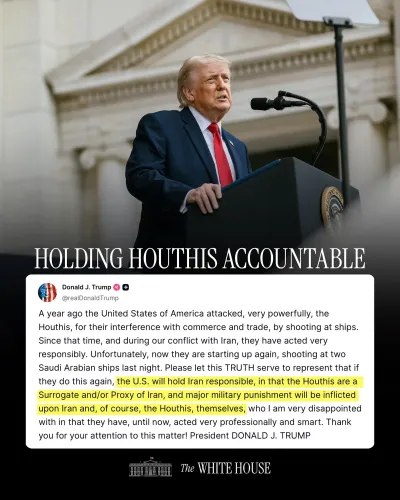
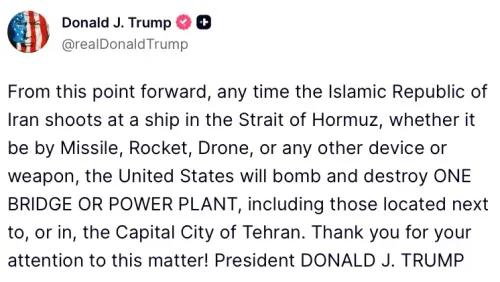
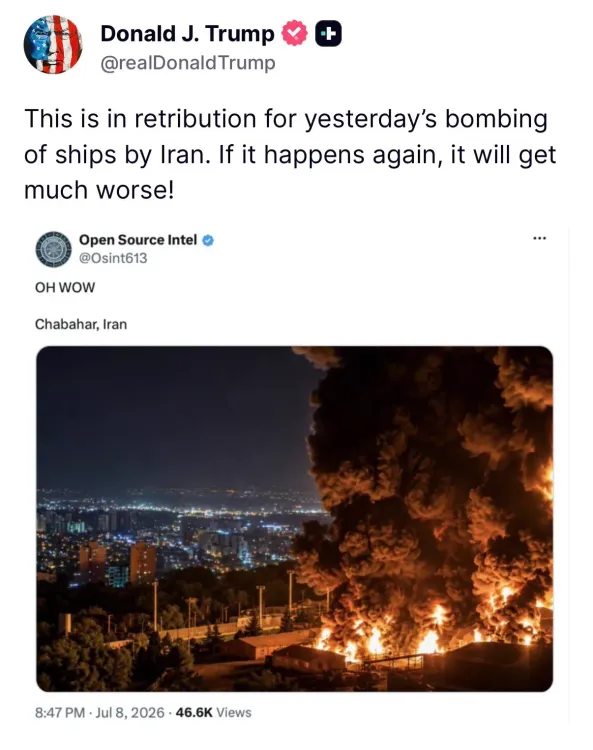
President Trump stated in unambiguous terms: 'This is in retribution for yesterday's bombing of ships by Iran. If it happens again, it will get much worse!' The statement frames the US action explicitly as a proportional response to what Washington characterises as Iranian naval aggression on 7 July 2026, making this one of the most direct presidential warnings to Tehran in recent years.
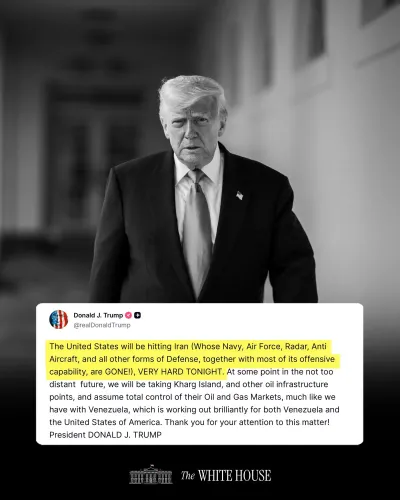
The White House post, carrying an attached image, was published at 9:38 PM Washington DC time and reached global audiences within minutes, signalling that the administration intended the message to serve as both a public record and a deterrent communicated directly to Iran's leadership.
Policy Backdrop
US-Iran tensions over maritime security have a long and documented history. In 2019, Washington attributed a series of tanker attacks in the Persian Gulf and the Strait of Hormuz to Iranian forces, triggering increased US naval deployments to the region. The pattern of ship-targeting incidents has repeatedly drawn American warnings of retaliation.
Trump's previous term (2017–2021) was defined by a 'maximum pressure' posture toward Tehran. In May 2018, his administration withdrew the United States from the Joint Comprehensive Plan of Action (JCPOA) nuclear agreement and reimposed sweeping sanctions. In January 2020, a US drone strike killed Iranian Major General Qasem Soleimani, a move Washington justified as a response to Iranian-backed attacks on US interests, including threats to shipping.
The 8 July 2026 statement continues this established pattern of direct, public presidential messaging during escalatory cycles with Tehran, bypassing conventional diplomatic channels in favour of real-time social media warnings.
Stakeholders and Impact
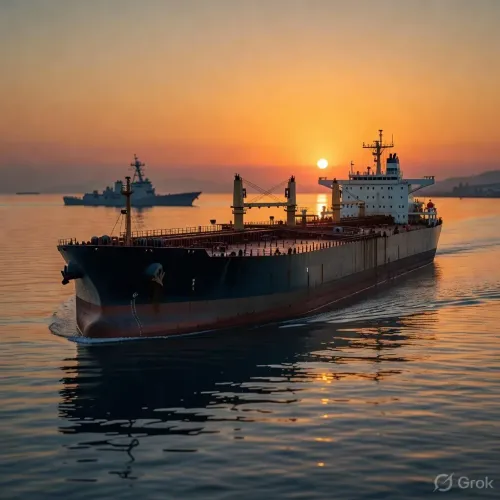
International shipping firms operating through the Persian Gulf and the Strait of Hormuz — a chokepoint through which a significant share of the world's seaborne oil passes — face immediate operational risk. Insurance premiums for vessels transiting the region are likely to spike following an open exchange of hostilities between the US and Iranian forces.
For India, which imports a substantial volume of crude oil from the Gulf region and has significant numbers of seafarers and nationals working in West Asia, any prolonged US-Iran confrontation carries direct economic and humanitarian implications. Disruption to Gulf shipping lanes can affect Indian energy costs and remittance flows from the region.
The US military and Iranian armed forces are the immediate principals, but the escalation cycle also draws in Gulf Arab states, European shipping interests, and the UN Security Council, which may be called upon to convene an emergency session.
What's Next
Analysts and governments will now watch for any Iranian military or proxy response, additional US naval movements in the Persian Gulf, and statements from the UN Security Council. Major oil-importing nations, including India and China, are expected to monitor developments closely given their dependence on stable Gulf supply lines.
Trump's explicit warning — 'it will get much worse' — leaves open the question of what further US action might look like, and whether diplomatic back-channels between Washington and Tehran remain active. The coming 48 to 72 hours will be critical in determining whether the situation stabilises or escalates further.
Point of View
Social-media-first warning to Iran follows a well-worn playbook from his first term: using direct, unambiguous language to signal resolve while bypassing traditional diplomatic protocol. The framing of the US action as purely retaliatory is deliberate — it positions Washington as the aggrieved party responding to Iranian aggression rather than an initiator of hostilities. For Gulf stability and global energy markets, the escalation arrives at a sensitive moment, and the open-ended threat of 'much worse' leaves significant room for miscalculation on both sides. The episode underscores how quickly US-Iran tensions can move from latent hostility to active military exchange, with cascading consequences for shipping, oil prices, and regional security architecture.
NationPress
7 Oct 2026
Frequently Asked Questions
Why did Trump order a strike on Iran in July 2026?
President Trump stated the US action was direct retaliation for Iranian forces bombing ships on 7 July 2026 , warning that further Iranian attacks would bring sharply escalated consequences.
What ships did Iran bomb on 7 July 2026?
The White House statement references a ship-bombing incident attributed to Iran on 7 July 2026 , but specific details about the vessels involved have not been confirmed in the public statement.
How does the July 2026 US-Iran clash affect India?
India, a major importer of Gulf crude oil, could face higher energy costs if the confrontation disrupts shipping through the Strait of Hormuz . Indian nationals working in the Gulf region may also face heightened risk.
What is the history of US-Iran ship attacks?
In 2019 , the US attributed multiple tanker attacks in the Persian Gulf to Iran, prompting increased naval deployments. In January 2020 , the US killed Iranian General Qasem Soleimani after attacks on American interests. The July 2026 incident continues this pattern.
Could the US-Iran conflict affect oil prices globally?
Any sustained disruption to shipping through the Strait of Hormuz — a key global oil chokepoint — typically puts upward pressure on crude oil prices, affecting importers worldwide including India and China .