US-China science split: the steep price of decoupling research ties
Synopsis
A proposed US Congressional bill barring federally funded American institutions from collaborating with Chinese entities has alarmed researchers and publishers — threatening decades of joint scientific work at a moment when US-China ties are at a historic low.
Key Takeaways
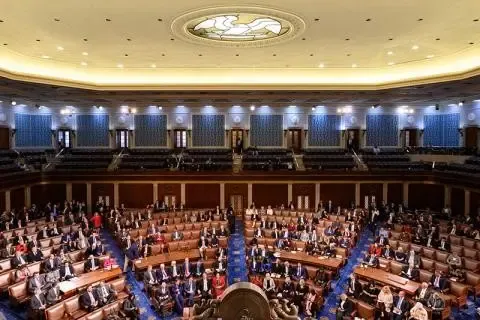
US Congress is debating a bill that would prohibit American research institutions from using federal funds to collaborate with certain Chinese entities.
Zhang Ning , founder of Maryland -based TopEdit , called the proposal 'absurd' and 'ridiculous' after learning of it at the Society for Scholarly Publishing annual meeting in San Diego in late May 2026 .
The move follows the now-defunct China Initiative , which was widely criticised for chilling legitimate academic exchange between the two countries.
Institutions including Cold Spring Harbor Laboratory , Peking University , and the Gates Foundation 's Global Health Drug Discovery Institute have longstanding cross-border research ties at risk.
A growing number of Chinese scientists previously based in the US are reportedly returning to China amid professional uncertainty.
US-China scientific ties are at a historic low in 2026 , the year the US marks its 250th founding anniversary .
US-China scientific collaboration is fraying at an accelerating pace, with proposed US Congressional legislation threatening to bar American research institutions from partnering with certain Chinese entities using federal funds — a move that researchers and industry figures warn could damage both nations' scientific progress.
The proposal rattling academic circles
In late May 2026, Zhang Ning, founder of TopEdit — a Maryland-based academic editing services firm — learned that US Congress was deliberating a bill that would restrict federally funded American research institutions from collaborating with specific Chinese entities. The news reached her during the annual meeting of the Society for Scholarly Publishing in San Diego, in a conversation with a vice-president at a global publishing company.
'My first reaction was: is this real? It is ridiculous,' Zhang recalled. She added that even if the bill ultimately failed, 'it feels as though the world is becoming increasingly irrational.'
Why it matters
The proposed restrictions arrive as US-China relations sit at a historic low point in scientific exchange — a relationship that once underpinned breakthroughs across genomics, climate science, and infectious disease. Institutions including Cold Spring Harbor Laboratory, Peking University, the National Institutes of Health, and the Gates Foundation's Global Health Drug Discovery Institute have all built cross-border research pipelines over decades.
The chilling effect extends beyond formal bans. Researchers, grant administrators, and publishers are already self-censoring collaborations out of legal uncertainty, according to reports from within the academic community.
The competitive backdrop
The legislative push follows years of escalating friction, including the now-defunct China Initiative — a US Department of Justice programme that prosecuted academics for alleged ties to Chinese institutions, widely criticised for chilling legitimate scientific exchange. Companies such as Merck and Biocom California have flagged the difficulty of maintaining global R&D pipelines amid tightening compliance requirements.
The broader context is a US that, in the year marking the 250th anniversary of its founding, is recalibrating every dimension of its relationship with Beijing — from semiconductor supply chains to peer-reviewed journals.
Voices from the ground
Zhang's reaction — 'This is absurd' — echoed sentiment expressed by academics and publishing executives at the San Diego gathering. The concern is not merely philosophical: federal funding is the lifeblood of American university research, and any restriction on its use for international collaboration carries immediate operational consequences.
The trend is already reshaping talent flows. Reports indicate a growing number of Chinese scientists who had built careers in the US are now returning to China, citing professional uncertainty and a deteriorating environment for cross-border work.
What's next
The fate of the proposed Congressional bill remains uncertain, but the debate itself signals a structural shift in how Washington views scientific openness as a national security variable. Observers will be watching whether Biocom California, NIH-affiliated researchers, and major pharmaceutical players such as Merck mount a coordinated lobbying response. The long-term question is whether a generation of joint research — catalysed in part by the post-Deng Xiaoping opening and deepened through initiatives backed by figures from Jimmy Carter's era onward — can survive the current geopolitical climate.
Point of View
While US institutions remain structurally dependent on Chinese graduate students and co-authors in fields from materials science to oncology. The talent reversal — Chinese scientists returning home — compounds the damage, effectively transferring human capital built with US federal investment back to Beijing. The deeper risk is not a single bill but the cumulative chilling effect of legal uncertainty, which is already reshaping collaboration decisions without any legislation passing at all.
NationPress
7 Oct 2026
Frequently Asked Questions
What is the US Congressional proposal on China research collaboration?
US Congress is debating a bill that would prohibit American research institutions from using federal funds to collaborate with certain Chinese entities. The proposal was being discussed as of late May 2026 and has alarmed academics, publishers, and industry figures who depend on cross-border scientific partnerships.
Why are researchers calling the proposed US-China science ban 'absurd'?
Zhang Ning , founder of Maryland -based TopEdit , described the proposal as 'absurd' and 'ridiculous,' arguing it would damage legitimate scientific exchange. She and others at the Society for Scholarly Publishing meeting in San Diego warned that even the debate itself signals an increasingly irrational global research environment.
Which institutions are most affected by US-China research decoupling?
Institutions with deep cross-border ties — including Cold Spring Harbor Laboratory , Peking University , the National Institutes of Health , and the Gates Foundation 's Global Health Drug Discovery Institute — face the greatest disruption. Pharmaceutical companies such as Merck and life-sciences groups like Biocom California have also flagged compliance risks.
Are Chinese scientists leaving the US because of research decoupling?
Yes, reports indicate a growing number of Chinese scientists who built careers in the US are returning to China . Professional uncertainty, tightening visa conditions, and the legacy of the China Initiative prosecutions have contributed to a reversal of a talent flow that once strongly favoured American universities.
What was the China Initiative and how does it relate to the current situation?
The China Initiative was a US Department of Justice programme that prosecuted academics alleged to have undisclosed ties to Chinese institutions; it was widely criticised for targeting researchers on thin evidence and was eventually wound down. The current Congressional proposal is seen by many in academia as a continuation of the same logic, extending suspicion from individuals to entire institutional partnerships.