Congress Investigates China's Role in U.S. University Funding
Synopsis
U.S. lawmakers are scrutinizing China's engagement with American universities, raising alarms about potential risks related to foreign funding and research. This Senate hearing emphasizes the need for transparency in foreign contributions to safeguard sensitive technology and research.
Key Takeaways
US lawmakers are investigating China's influence in American universities.
Concerns center around foreign funding and potential risks to national security.
Cassidy emphasizes the need for greater transparency in foreign donations.
China has reportedly contributed $6.8 billion to American universities.
Enhanced oversight could protect sensitive research while allowing for academic collaboration.
Washington, March 13 (NationPress) U.S. lawmakers expressed concerns that China could be leveraging American universities to access crucial research and advanced technology. This came to light during a Senate hearing that scrutinized billions in foreign funding and academic collaborations with U.S. institutions.
The Senate Health, Education, Labor, and Pensions Committee convened to investigate what legislators termed “malignant foreign influence” in higher education, with a significant focus on China’s research affiliations with U.S. universities and the associated risks of intellectual property theft, technology transfer, and unreported foreign funding.
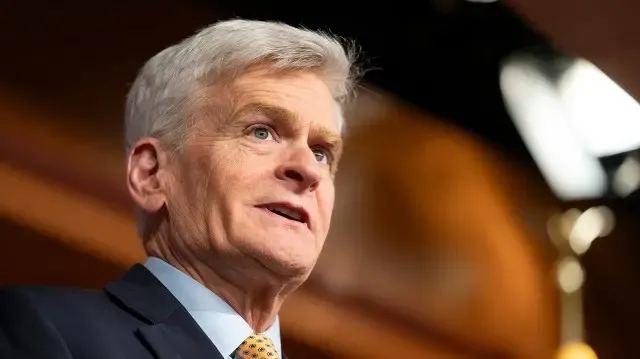
Committee chair Sen. Bill Cassidy stated that American universities are among the nation’s most vital strategic assets but cautioned that their inherent openness can lead to vulnerabilities.
“Our nation boasts the finest universities globally, where significant advancements in cancer research, artificial intelligence, military technology, biomedical engineering, and more take place,” Cassidy remarked.
He noted that the amount of foreign funding flowing into U.S. campuses has sparked national security alarms.
“Last year, $9.7 billion in foreign contributions and contracts were reported,” Cassidy added, emphasizing that this figure only reflects disclosed funds.
“However, this merely includes dollars that have been reported, and there has been a lack of accountability,” he stated.
Cassidy emphasized the necessity for Congress to enhance transparency mandates regarding foreign gifts and contracts involving universities.
“You know the common saying: follow the money — that’s precisely what we’d like to do,” he stated.
Craig Singleton, a senior fellow at the Foundation for Defense of Democracies, informed the panel that U.S. universities are central to America’s innovation ecosystem, making them appealing targets for foreign adversaries.
“American universities anchor the world’s most vibrant research environment,” Singleton explained.
“Simultaneously, these strengths render American institutions attractive targets for exploitation by foreign adversaries, particularly China.”
Singleton referenced federal data indicating that China has contributed roughly $6.8 billion in gifts and contracts to U.S. universities over time.
He also highlighted the Department of Education’s foreign funding portal, which indicates around $400 million in transactions involving entities listed on U.S. government watch lists or restricted entity lists.
“These include companies linked to export control violations, national security issues, and China’s military-civil fusion initiative,” Singleton noted.
Peter Wood, president of the National Association of Scholars, remarked that foreign donations to universities often lack transparency and raise concerns regarding influence and intent.
He cited instances of substantial foreign contributions, including billions from Qatar to American institutions.
“Where is this funding genuinely originating? What is it allocated for?” Wood questioned. “With Qatar, for the most part, we remain in the dark.”
Wood also noted that China previously utilized Confucius Institutes on American campuses to extend its reach.
He branded the program as “an influence operation managed by the Hanban, the propaganda agency of the Chinese Communist Party.”
Robert Daley, a senior fellow at the Asia Society, acknowledged that worries regarding foreign influence are valid but cautioned against overstating the extent of the threat.
“American concerns about foreign malign influence on our campuses, particularly from China, are both reasonable and essential,” Daley stated.
Simultaneously, he highlighted that universities and governmental bodies have enhanced collaboration to mitigate security threats.
“American institutions have taken Washington’s apprehensions seriously, now working diligently and at considerable cost to foresee and counter the actions of concerning countries,” Daley asserted.
Daley further noted that despite the unease surrounding Chinese influence, there have been no espionage convictions involving university personnel.
“To date, no university personnel have been convicted for engaging in espionage on American campuses on behalf of China,” he informed the committee.
Legislators mentioned that the challenge for policymakers lies in safeguarding sensitive research while maintaining the openness that has historically positioned American universities as global leaders in science and innovation.
The hearing also explored proposals to bolster disclosure requirements for foreign gifts and contracts under Section 117 of the Higher Education Act, which mandates universities to report significant foreign donations.
Witnesses asserted that enhanced transparency and oversight could help tackle national security risks without impeding international academic collaboration.
Point of View
It is essential to balance transparency with the open nature of academic collaboration that has historically fostered innovation.
NationPress
2 Oct 2026
Frequently Asked Questions
What is the main concern regarding China's involvement in U.S. universities?
Lawmakers are concerned that China may be exploiting American universities to gain access to sensitive research and technology.
How much foreign funding was reported last year?
$9.7 billion in foreign gifts and contracts were reported last year, reflecting only disclosed funds.
What are Confucius Institutes?
Confucius Institutes are programs previously used by China to expand its influence on American campuses.
How can Congress address foreign funding transparency?
Congress is urged to strengthen transparency requirements for foreign gifts and contracts involving universities.
Have there been any espionage convictions related to universities?
As of now, there have been no convictions of university personnel for conducting espionage on behalf of China.