US lawmaker urges Treasury to ban China biotech investments under COINS Act
Synopsis
A senior House Republican has asked the Treasury to formally block US investment in Chinese biotech — citing $136 billion in 2025 licensing deals and a jaw-dropping shift from zero to 48% Chinese share of major global pharma deals in just five years. If Treasury acts, it could reshape how American drugmakers partner with China.
Key Takeaways
Congressman John Moolenaar wrote to Treasury Secretary Scott Bessent on 21 May 2025 urging biotech be designated a 'prohibited technology' under the COINS Act of 2025 .
Cross-border pharma out-licensing deals between US and Chinese firms totalled approximately $136 billion in 2025 .
Chinese companies accounted for 48 per cent of global pharma licensing deals worth $50 million or more in 2024, up from none in 2020 .
Bristol Myers Squibb and Eli Lilly were specifically cited for significant Chinese biotech partnerships; the BMS–Hengrui Pharma deal is valued at up to $15.2 billion .
The letter alleges clinical trials are being conducted at Xinjiang and Chinese military hospitals , raising data-security concerns.
Moolenaar warns that unchecked biotech investment could create US strategic dependence on China similar to vulnerabilities in rare earths and semiconductors .
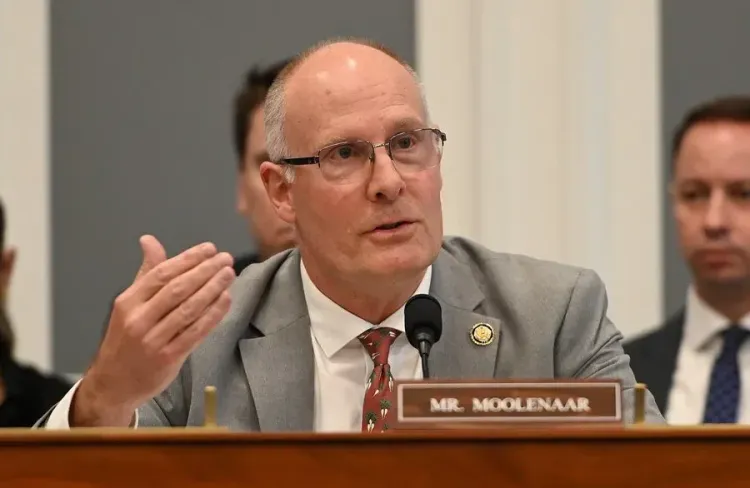
Republican Congressman John Moolenaar, chairman of the House Select Committee on the Chinese Communist Party, has formally urged Treasury Secretary Scott Bessent to designate biotechnology as a 'prohibited technology' under the Comprehensive Outbound Investment National Security (COINS) Act of 2025, seeking to cut off American capital flowing into Chinese biotechnology companies. The letter, dated 21 May 2025, warns that US investment is actively accelerating Beijing's ambitions to dominate the global pharmaceutical sector.
What Moolenaar Is Asking For
The Michigan Republican is calling on the Treasury Department to invoke the COINS Act at the earliest opportunity, arguing that biotechnology must be treated with the same national-security urgency as semiconductors and rare earth minerals. In his letter, Moolenaar wrote: 'The United States is engaged in a fierce biotechnology competition with the PRC, with crucial implications for our national and economic security as well as for the future of healthcare and the security of American medical data.'
He contends that China has pursued a 'deliberate, state-directed strategy' to dominate pharmaceutical development, biologics manufacturing, and clinical research — and that American money is helping fund that strategy through licensing agreements, joint ventures, equity investments, and intellectual property transfers.
The Numbers Behind the Warning
The letter cites striking data: cross-border out-licensing transactions between multinational pharmaceutical companies and Chinese biotech firms totalled approximately $136 billion in 2025. More notably, 48 per cent of all global pharmaceutical licensing deals worth $50 million or more last year involved Chinese companies — compared to none in 2020. That five-year shift, critics argue, reflects how rapidly Chinese firms have climbed the global pharmaceutical value chain with foreign capital and know-how.
Moolenaar specifically flagged recent agreements involving major American drugmakers. According to the letter, Bristol Myers Squibb announced a partnership worth up to $15.2 billion with China's Hengrui Pharma, involving co-development of drug molecules and transfer of intellectual property and technical know-how. Eli Lilly was also cited among companies with significant Chinese biotech exposure.
Clinical Trial Concerns and Data Security
Beyond investment flows, the letter raises pointed concerns about China's clinical trial ecosystem, describing it as 'the cheapest and fastest human clinical trial system in the world.' Moolenaar alleges ethical problems involving informed consent and what he characterises as involuntary participation — though these claims were not independently verified in the letter itself.
Notably, the letter claims that some trials are conducted at hospitals in Xinjiang and at Chinese military hospitals, raising the prospect that sensitive American biotechnology data and intellectual property could be exposed to the Chinese military. These are serious allegations that the letter attributes to available intelligence and open-source reporting, without providing a named independent source.
The Broader Strategic Context
Moolenaar's push comes amid a broader US effort to limit technology transfer to China across sectors ranging from advanced chips to artificial intelligence. His warning draws a direct parallel to existing vulnerabilities in rare earth minerals and semiconductor supply chains — areas where US dependence on China has already prompted legislative action.
The COINS Act of 2025, if applied to biotechnology, would give the Treasury Department authority to prohibit or review outbound investments in the sector. Whether Bessent acts on the recommendation remains to be seen, but the letter signals growing bipartisan unease on Capitol Hill over the pace of US-China pharmaceutical entanglement. All eyes will now be on the Treasury Department's response and any forthcoming regulatory guidance.
Frequently Asked Questions
What is the COINS Act and how does it relate to China biotech?
The Comprehensive Outbound Investment National Security (COINS) Act of 2025 gives the US Treasury Department authority to prohibit or review American investments in technologies deemed a national security risk. Congressman Moolenaar is asking Treasury to designate biotechnology as a 'prohibited technology' under this law, which would block US firms from investing in Chinese biotech companies.
Why is John Moolenaar concerned about US investment in Chinese biotech?
Moolenaar argues that American capital, licensing agreements, and intellectual property transfers are accelerating China's ability to dominate global pharmaceutical development. He cites data showing Chinese companies went from zero to 48 per cent of major global pharma licensing deals between 2020 and 2024, and warns of national security risks from data exposure through Chinese clinical trials.
Which US companies were named in the letter?
Eli Lilly and Bristol Myers Squibb were specifically highlighted. Bristol Myers Squibb's partnership with China's Hengrui Pharma — worth up to $15.2 billion and involving co-development and IP transfer — was cited as a key example of the investment flows Moolenaar wants restricted.
What are the concerns about Chinese clinical trials raised in the letter?
The letter alleges that China operates the 'cheapest and fastest human clinical trial system in the world' and raises ethical concerns about informed consent. It further claims some trials are conducted at hospitals in Xinjiang and Chinese military hospitals, potentially exposing sensitive American biotech data and IP to the Chinese military.
How does this compare to existing US restrictions on China in other sectors?
The US has already imposed sweeping restrictions on semiconductor exports and outbound investment in advanced chips and AI. Moolenaar's letter explicitly draws a parallel, warning that without similar action in biotech, the US risks creating pharmaceutical supply-chain dependence on China — comparable to existing vulnerabilities in rare earth minerals and semiconductors.