US must de-risk China trade, says Treasury Secretary Scott Bessent
Synopsis
Treasury Secretary Scott Bessent drew a sharp line in Asheville: the US won’t decouple from China, but it will de-risk — targeting 35% of advanced semiconductor production back home by end of Trump’s term. His invocation of amoxicillin shortages and Second World War industrial capacity signals that Washington now treats supply chain control as a national security imperative, not just an economic preference.
Key Takeaways
Treasury Secretary Scott Bessent said the US must ‘de-risk’ — not decouple — from China across critical supply chains.
Priority sectors identified: advanced semiconductors , critical minerals , and pharmaceutical ingredients including amoxicillin .
The Trump administration is targeting 35 per cent of advanced semiconductor production returned to the US by end of the current presidential term.
Bessent argued that ‘maximal efficiency is not maximally secure,’ rejecting market-forces-only solutions to supply chain risk.
The US strategy includes both onshoring (domestic production) and nearshoring (trusted allied nations) for strategic goods.
Bessent stressed preserving industrial craftsmanship and workforce skills as essential to long-term supply chain resilience.
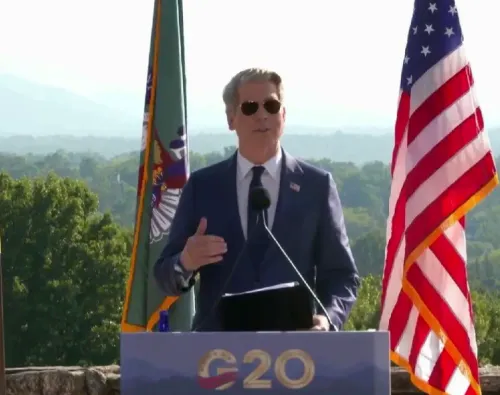
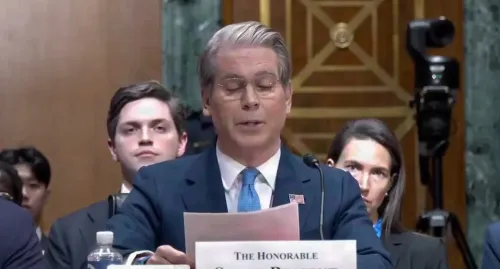
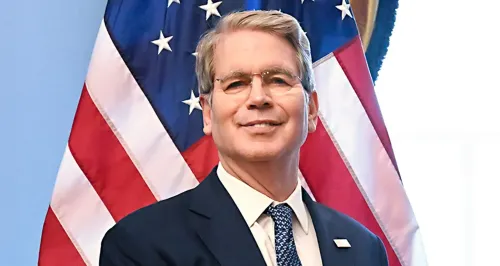
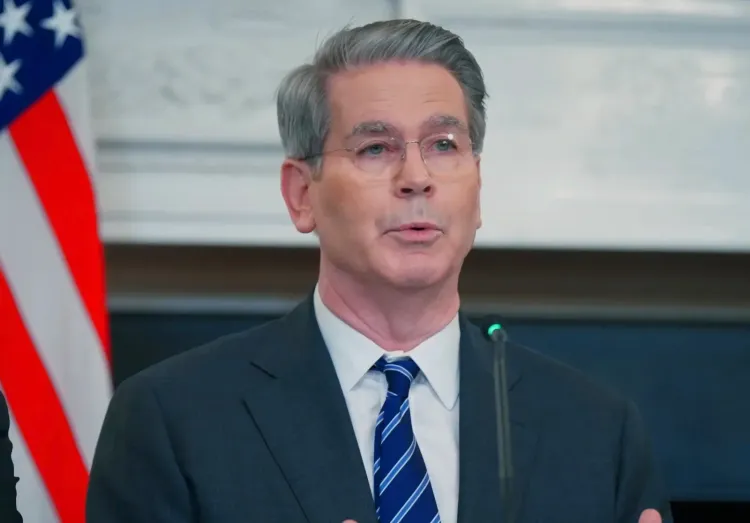
Treasury Secretary Scott Bessent on Tuesday said the United States does not seek to decouple from China but must reduce its dependence on foreign-controlled supply chains across semiconductors, critical minerals, and medicines. Speaking at a fireside conversation with Larry Kudlow in Asheville, North Carolina, Bessent framed supply chain resilience as a matter of both economic and national security.
The De-Risking Argument
“I often say in our trade discussions with China that we don’t want to pull apart from them, but we have to de-risk,” Bessent said. “We have to de-risk everywhere in the world.” He argued that the Covid-19 pandemic had exposed the dangers of concentrating critical goods production in a limited number of countries, leaving the US vulnerable to disruptions during crises.
Bessent rejected the notion that market forces alone could correct these vulnerabilities. “There are market failures,” he said. “And I think what we’ve learned is that maximal efficiency is not maximally secure.” Supply chains optimised purely for cost and efficiency, he argued, become liabilities during wars, pandemics, or other global disruptions.
Sectors in the Crosshairs
The Treasury Secretary specifically identified advanced semiconductors, critical minerals, and pharmaceutical ingredients as priority areas. He pointed to the absence of domestic amoxicillin production as a concrete example of strategic exposure. “We do not produce amoxicillin here in the US. So we have to do that,” he said.
On semiconductors, Bessent set a clear target: the Trump administration aims to bring 35 per cent of advanced semiconductor production back to the United States by the end of President Donald Trump’s current term. He said administration officials are actively working under the President’s direction to secure critical supply chain nodes.
Onshoring and the Craftsmanship Case
Beyond factories and tariffs, Bessent stressed the importance of preserving industrial skills. He invoked the example of American private industry’s rapid pivot to military production during the Second World War — made possible, he said, because the country already had the workers, factories, and technical expertise. “It is important to have the tradition of craftsmanship,” he said. “We need to make sure that we still have that in the US.”
Bessent also argued that the US economy cannot rest on consumer products and financial services alone. Certain strategically vital goods must be produced domestically or in “nearby and trusted countries” — a reference to the broader friend-shoring strategy Washington has been pursuing with allies.
Trade Policy Meets National Security
The remarks reflect Washington’s increasingly integrated view of trade policy and strategic security. Control over advanced technologies and essential industrial inputs is now seen as a source of geopolitical leverage, not merely an economic consideration. This comes amid ongoing US-China tensions over technology exports, rare earth access, and semiconductor supply chains — areas where both governments have taken escalating countermeasures in recent years.
Bessent’s comments signal that the US Treasury views supply chain restructuring as a long-term structural project, not a short-term tariff play. How far that restructuring proceeds — and at what cost to consumers and trade relationships — will be a defining question for American economic policy through the rest of this decade.
Point of View
Not decouple’ is a political softener for what is, in practice, a structural shift in US trade doctrine. The 35% semiconductor target is ambitious given that TSMC’s Arizona fabs are already running years behind schedule and billions over budget. The amoxicillin example is rhetorically powerful but underscores a deeper problem — the US has been aware of pharmaceutical supply chain exposure since at least the early 2000s and has made limited structural progress. Friend-shoring sounds elegant, but it requires allies to absorb costs they may not willingly accept. The harder question Bessent did not answer: who pays for the inefficiency of security, and for how long?
NationPress
17 Oct 2026
Frequently Asked Questions
What did Treasury Secretary Scott Bessent say about US-China trade?
Bessent said the US does not want to decouple from China but must reduce dependence on foreign-controlled supply chains for semiconductors, critical minerals, and medicines. He made the remarks at a fireside conversation in Asheville, North Carolina, stressing that de-risking is necessary ‘everywhere in the world.’
What is the US semiconductor onshoring target under the Trump administration?
The Trump administration is aiming to bring 35 per cent of advanced semiconductor production back to the United States by the end of President Trump’s current term, according to Bessent. He said administration officials are actively working under the President’s direction to achieve this goal.
Why did Bessent mention amoxicillin in his supply chain remarks?
Bessent cited the absence of domestic amoxicillin production as a concrete example of US supply chain vulnerability. He used it to argue that even widely used medicines are at risk when production is concentrated overseas, making the case for onshoring or nearshoring essential pharmaceutical ingredients.
What does ‘de-risk’ mean in the context of US-China trade policy?
De-risking means reducing US dependence on Chinese or foreign-controlled supply chains for strategically critical goods, without fully severing trade and economic ties. It contrasts with decoupling, which implies a more complete economic separation. Bessent’s position is that the US can maintain trade relations with China while building resilient domestic and allied-nation supply chains.
Which sectors has the US identified as supply chain vulnerabilities?
The Treasury Secretary identified advanced semiconductors, critical minerals, and pharmaceutical ingredients as the primary sectors requiring supply chain resilience. These are areas where, according to Bessent, foreign government or overseas supplier control poses unacceptable risk to US economic and national security.