China blocks G20 consensus on trade imbalances, 19 members back chair's statement
Synopsis
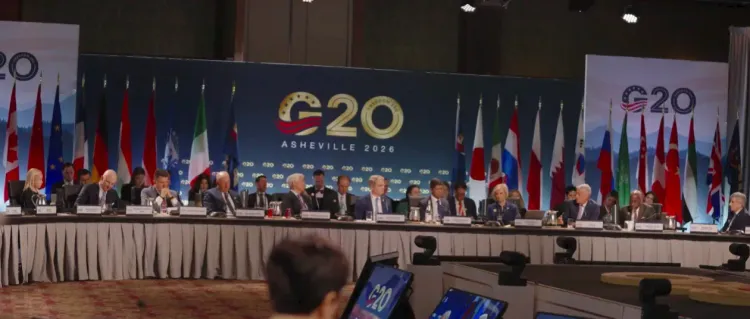
China stood alone at the Asheville G20 finance meeting as 19 members — including India — backed a chair's statement directly targeting Beijing's export-driven growth model. US Treasury Secretary Scott Bessent named China explicitly as 'the dissenter,' marking one of the sharpest multilateral rebukes of Chinese trade practices in recent G20 history.
Key Takeaways
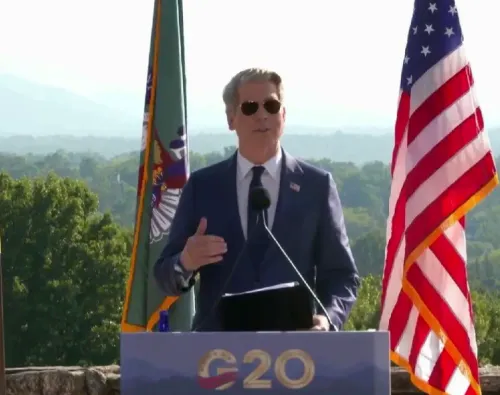
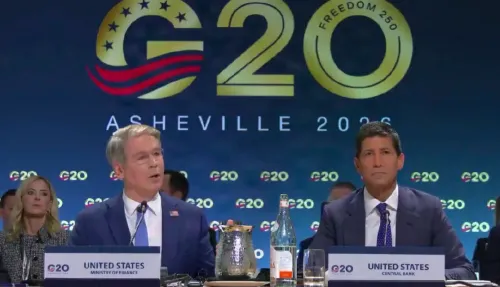
China blocked consensus at the G20 finance ministers meeting in Asheville, North Carolina on 2 September .
The remaining 19 members , including India , backed a chair's statement targeting excessive trade surpluses and non-market export practices.
US Treasury Secretary Scott Bessent publicly identified China as 'the country with the world's largest and unsustainable current account surplus.' China objected to 4 sections covering energy trade, the Strait of Hormuz , global imbalances, IMF surveillance, and sovereign debt restructuring.
For the first time in G20 Finance track history , business leaders joined ministers and central bank governors at the meeting.
The United States holds the G20 presidency in 2026 , with global imbalances a top Finance track priority.
China blocked consensus at the G20 finance ministers and central bank governors meeting in Asheville, North Carolina, after objecting to proposals targeting persistent trade imbalances and non-market economic practices, US Treasury Secretary Scott Bessent said on Tuesday. The remaining 19 members — including India — backed a chair's statement calling on countries with excessive external surpluses to remove policies that suppress domestic consumption and fuel overreliance on exports.
What China Objected To
Beijing's objections spanned four sections of the proposed joint statement, covering energy trade and the Strait of Hormuz, global economic imbalances, International Monetary Fund (IMF) surveillance, and sovereign debt restructuring. The breadth of China's dissent effectively prevented the G20 from issuing a unified communiqué — a significant diplomatic outcome given that G20 members normally reach decisions by consensus, even if those decisions are not legally binding.
What the Chair's Statement Said
The chair's statement, backed by the 19 other members, warned that excessive and persistent trade imbalances could distort markets, weaken global supply chains, and generate adverse spillover effects in other economies. It called on countries with outsized external surpluses to eliminate non-market policies and practices that deepen such imbalances, while urging deficit nations to bolster domestic savings and pursue fiscal consolidation. Members also asked the IMF to strengthen its examination of the root causes of global imbalances, including distortive economic policies, and to produce more detailed scenario analysis on the costs of inaction.
Bessent's Remarks on China
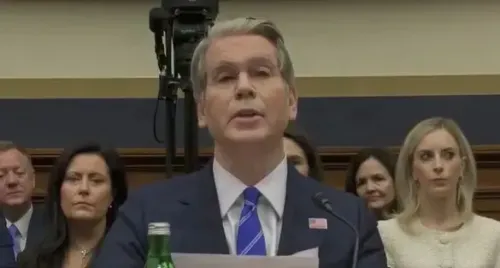
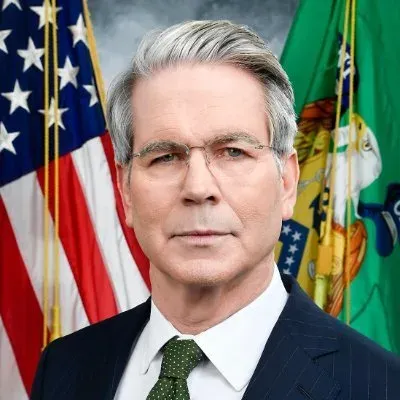
'It is clear that the country with the world's largest and unsustainable current account surplus, the People's Republic of China, was the dissenter,' Bessent told reporters after the two-day meeting. He framed the near-unanimous alignment of the other members as a measure of the problem's scale: 'Around the globe, we believe that non-market-based economies pushing out a never-ending stream of cheap exports is not sustainable.' When asked whether individual G20 members might respond with tariffs or other trade protections, Bessent stopped short of a direct answer, saying, 'I'm not going to presume to say what the other countries would do.'
India's Position and Broader Context
India was among the 19 members that supported the chair's statement — a notable alignment with the US-led position on trade imbalances. This comes as India held the G20 presidency in 2023 and secured a leaders' declaration in New Delhi despite deep divisions over the war in Ukraine. The United States currently holds the 2026 G20 presidency, with economic growth, global imbalances, sovereign debt, and financial innovation as its Finance track priorities. Notably, for the first time in G20 Finance track history, business leaders joined finance ministers and central bank governors at the Asheville meeting — a structural change Bessent highlighted as significant for surfacing practical barriers to investment and innovation.
What Comes Next
Bessent acknowledged that the absence of unanimity did not nullify the outcome, saying, 'I do think it is incredible to get 19 countries to agree to anything.' The meeting also covered private sector-led growth, artificial intelligence, financial regulation, and financial literacy. With the US presidency steering the G20 Finance track through 2026, pressure on economies running large structural surpluses is likely to intensify ahead of the leaders' summit later in the year.
Point of View
But a chair's statement without consensus carries no enforcement mechanism, and China knows it. The real significance lies in the signal: the US is using its 2026 G20 presidency to build a multilateral coalition against surplus-driven growth models, a strategy that could harden into coordinated tariff action if the summit-level talks later this year also stall. India's quiet alignment with the US position on trade imbalances is worth watching — it reflects a broader strategic convergence that extends well beyond this single meeting.
NationPress
17 Oct 2026
Frequently Asked Questions
Why did China block G20 consensus at the Asheville meeting?
China objected to four sections of the proposed joint statement covering energy trade and the Strait of Hormuz, global economic imbalances, IMF surveillance, and sovereign debt restructuring. Its dissent prevented the G20 from issuing a unified communiqué, with the remaining 19 members instead backing a chair's statement.
What did the G20 chair's statement say about trade imbalances?
The chair's statement, backed by 19 G20 members, warned that excessive and persistent trade imbalances distort markets and weaken supply chains. It called on surplus countries to remove policies that suppress domestic consumption and on deficit countries to support domestic savings and fiscal consolidation.
What did US Treasury Secretary Scott Bessent say about China?
Bessent publicly identified China as 'the country with the world's largest and unsustainable current account surplus' and 'the dissenter.' He said the alignment of 19 other members reflected growing international concern about non-market economies driving exports through subsidised production.
What was India's position at the G20 Asheville meeting?
India was among the 19 members that supported the chair's statement targeting trade imbalances and non-market economic practices. India held the G20 presidency in 2023, when it secured a leaders' declaration in New Delhi despite divisions over the Ukraine war.
Will G20 members impose tariffs on China following the meeting?
Bessent stopped short of saying whether individual members would introduce tariffs or other trade protections, stating, 'I'm not going to presume to say what the other countries would do.' G20 decisions are not legally binding, leaving the response to individual member governments.