Scott Bessent at G20: US pushes to remove global growth barriers
Synopsis
At the G20 finance meeting in Asheville, US Treasury Secretary Scott Bessent declared that global underperformance is a self-inflicted wound — and pointed to America's 129-to-one deregulation ratio as proof that the cure is political will, not economic luck. Fed Chair Kevin Warsh doubled down: growth, like inflation, is a choice — and the US appears to be making it.
Key Takeaways
Scott Bessent opened the G20 finance meeting in Asheville, North Carolina on 31 August , calling for the removal of regulatory, tax, and investment barriers to global growth.
Bessent said US agencies achieved a deregulation ratio of 129 to one — far exceeding President Trump's benchmark of 10 to one .
Federal Reserve Chairman Kevin Warsh said stronger growth is 'a choice,' echoing remarks made at Jackson Hole .
Warsh cited Congressional Budget Office projections of US growth at approximately 1.8% annually over the next decade — below the prior decade's actual performance.
Bessent welcomed G20 members' own reform efforts and invited input on building shared growth momentum going forward.
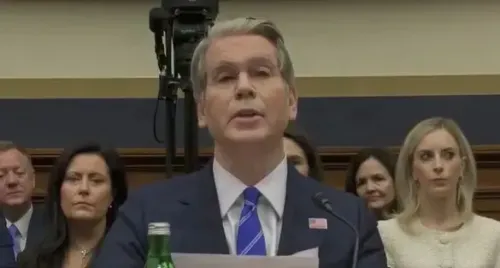
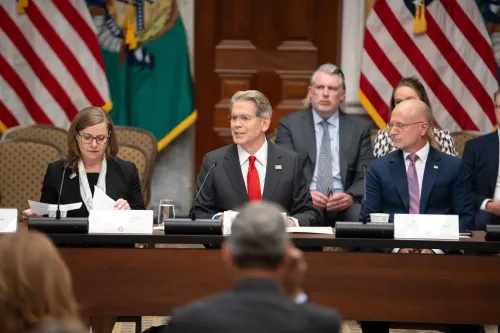
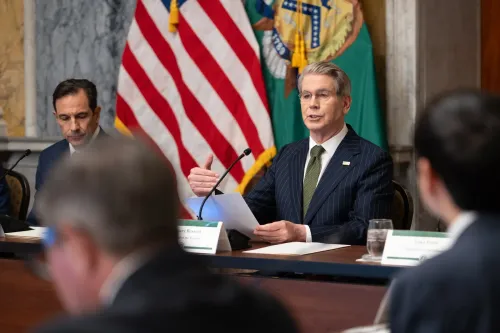
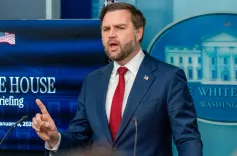
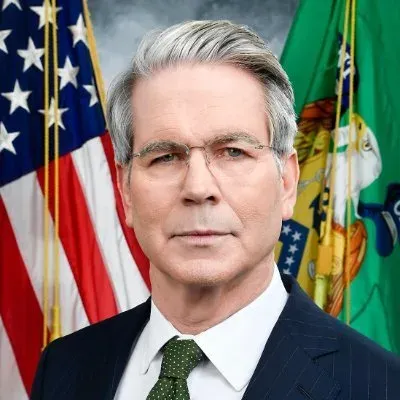
US Treasury Secretary Scott Bessent on 31 August opened a G20 financial meeting in Asheville, North Carolina, calling on member nations to dismantle regulatory, tax, and investment obstacles that have suppressed global economic growth. Speaking alongside Federal Reserve Chairman Kevin Warsh, Bessent argued that policy failures — not structural inevitability — were the primary drag on the world economy.
Bessent's Core Argument
Bessent told G20 finance ministers and central bank governors that global growth had remained below its potential 'for too long, both within the grouping and beyond it.' He identified a specific set of impediments flagged by the G20 finance track: excessive regulatory and administrative burdens, poorly designed financial incentives and tax systems, insufficient public and private investment, internal market fragmentation, and gaps in workforce skills and mobility.
'Policy failures of our own making must no longer be one of them,' Bessent said, framing the issue as a matter of political will rather than economic fate.
What the US Is Doing Differently
Bessent pointed to a series of domestic reforms under President Donald Trump as a model. He said the administration had launched what he called 'a great regulatory reset' aimed at accelerating growth, stimulating investment, increasing employment, and boosting wages.
He cited a striking metric: while President Trump had set a benchmark of eliminating 10 existing regulations for every new one issued, federal agencies reportedly exceeded that target dramatically — achieving a ratio of 129 to one in the previous year, according to Bessent. He also said the US had recorded what he described as 'record business investment' and had re-established itself as both the world's leading destination for capital and an energy superpower.
'These achievements are shaping the next era of growth, and we are just getting started,' he said.
Warsh: Growth Is a Policy Choice
Federal Reserve Chairman Kevin Warsh, echoing remarks he had delivered days earlier at Jackson Hole, told the gathering that stronger growth was not an accident but a deliberate outcome. 'I've said previously that inflation is a choice,' Warsh said. 'What I'll add to the discussion today is growth is a choice too.'
Warsh argued that central bankers must look beyond consumer spending and near-term demand signals to assess structural changes on the supply side — particularly shifts in productivity. He cited Congressional Budget Office projections showing US economic growth running at approximately 1.8% annually over the next decade, a figure he noted was lower than actual growth recorded over the prior ten years and included 'a rather muted expectation for productivity growth.'
Warsh also raised a forward-looking question for the group: whether the surge in capital expenditure being discussed at the meeting would translate into sustained productivity gains — and whether those gains could hold over a decade. He described those answers as essential for future monetary and fiscal policy decisions.
The G20 Finance Track: What It Is
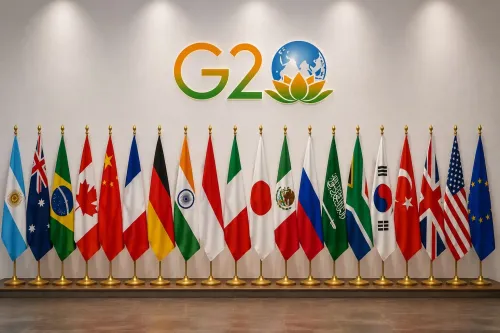
The Group of 20 brings together the world's major advanced and emerging economies for international economic coordination. Its finance track specifically convenes finance ministers and central bank governors to address growth, financial stability, taxation, debt, and other systemic global economic challenges. The Asheville meeting focused on identifying shared policy levers to lift growth across member economies.
What Comes Next
Bessent welcomed reforms that other G20 members were considering or adopting to raise growth and involve the private sector more directly in policymaking. He invited member nations to contribute their own ideas on how to build on what he described as 'great progress' made collectively during the year. Whether the G20 coalesces around a unified growth framework — or whether diverging national interests fragment the agenda — will be closely watched in the sessions ahead.
Point of View
Not an economic fate — is a pointed message aimed as much at Europe and China as at the G20 communiqué. But the 129-to-one deregulation ratio is a self-reported figure, and the harder question is whether regulatory rollback translates into durable productivity gains or simply near-term investment sentiment. Warsh's own caution is telling: the CBO projects US growth at 1.8% over the next decade, lower than the past ten years — even as the administration claims a growth renaissance. The gap between the political narrative and the institutional forecast is where the real story lives.
NationPress
16 Oct 2026
Frequently Asked Questions
What did Scott Bessent say at the G20 meeting in Asheville?
US Treasury Secretary Scott Bessent called on G20 nations to dismantle regulatory, tax, and investment barriers he said were suppressing global economic growth. Speaking on 31 August in Asheville, North Carolina, he argued that policy failures — not structural constraints — were the primary obstacle, and pointed to US deregulation efforts under President Trump as a model.
What did Federal Reserve Chairman Kevin Warsh say about growth?
Warsh said at the Asheville G20 meeting that stronger growth is a deliberate policy choice, extending remarks he had made at Jackson Hole. He also cautioned that the Congressional Budget Office projects US growth at roughly 1.8% annually over the next decade — below actual growth over the prior ten years — and raised questions about whether rising capital expenditure would translate into sustained productivity gains.
What is the G20 finance track?
The G20 finance track is a forum within the Group of 20 that brings together finance ministers and central bank governors to address global economic challenges including growth, financial stability, taxation, and debt. The Asheville meeting focused specifically on identifying policy measures to lift growth across member economies.
What deregulation milestone did Bessent highlight?
Bessent said US federal agencies had achieved a deregulation ratio of 129 existing regulations removed for every one new regulation issued — far exceeding President Trump's stated benchmark of 10 to one. He described this as part of what he called 'a great regulatory reset' to accelerate growth and investment.
What happens next after the G20 Asheville meeting?
Bessent invited G20 members to share ideas on sustaining the growth momentum he said was built during the year, and welcomed reforms other nations were considering. Whether the group converges on a unified growth framework will depend on how diverging national priorities — particularly between the US, Europe, and major emerging economies — are reconciled in subsequent sessions.