China alone blocked G20 trade consensus, says US Treasury Secretary Bessent
Synopsis
China stood alone at the G20 finance track in Asheville, blocking a consensus statement on excess industrial capacity and rare earth trade — and US Treasury Secretary Scott Bessent is using that lone dissent to build a broader G7+ coalition against Beijing's trade practices. With 40% of Munich Auto Show cars now Chinese and Volkswagen cutting jobs, Bessent's warning to Europe carries concrete weight.
Key Takeaways
China was the sole G20 member to block a consensus communiqué on excess industrial capacity and rare earth trade at the Asheville, North Carolina finance track meeting.
US Treasury Secretary Scott Bessent confirmed a chair's statement was issued in place of the communiqué, carrying identical language.
Bessent said the US seeks a G7+ coalition — including European nations and Canada — to jointly address China's trade practices.
President Donald Trump imposed a 100 per cent tariff on Chinese electric vehicles during his first term; a connected-car data rule adds further restrictions.
Bessent noted that 40 per cent of cars at the Munich Auto Show were Chinese, citing Volkswagen job cuts as evidence of European industry pressure.
China dominates global rare earth and critical-mineral supply chains — materials vital to EVs, electronics, and defence systems.
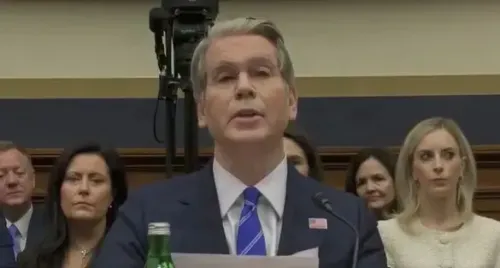
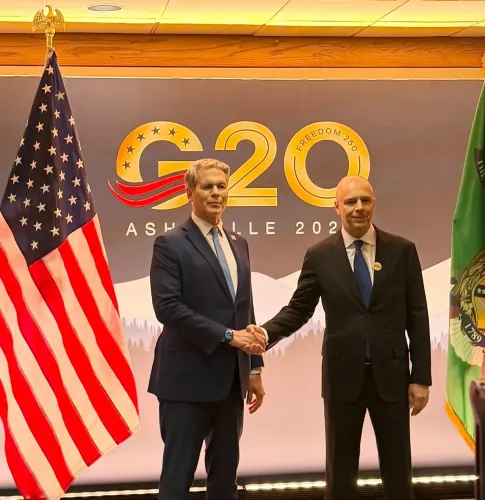
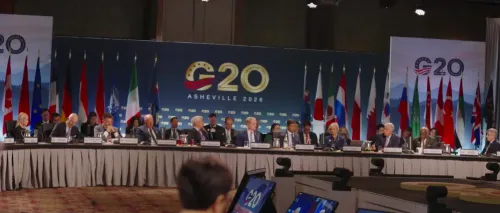
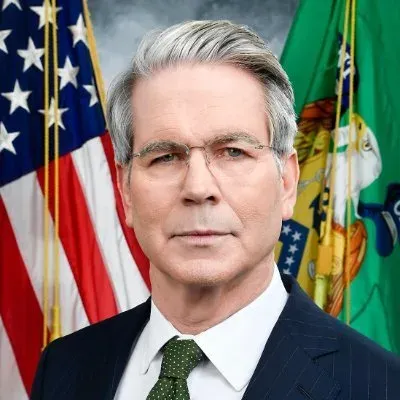
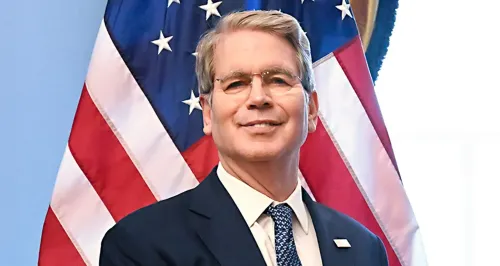
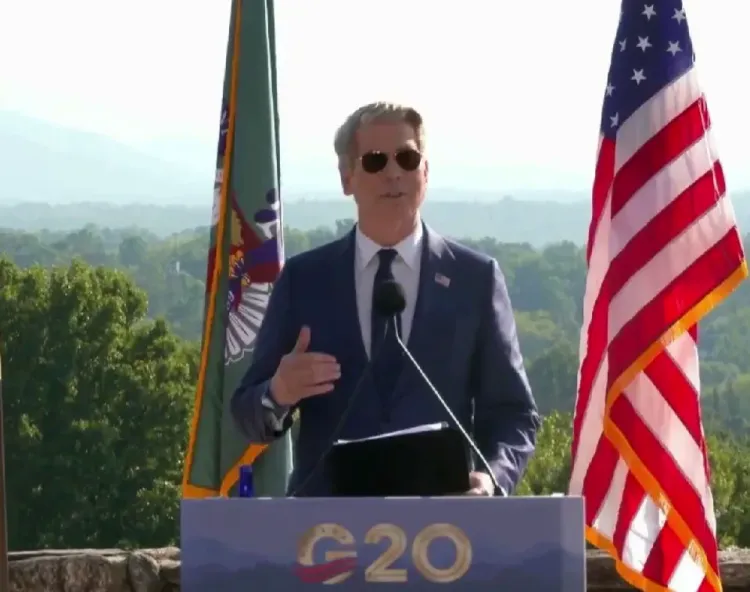
US Treasury Secretary Scott Bessent said on 9 September that China was the sole G20 member to block a consensus statement addressing excess industrial capacity and restrictions on the trade of rare earths, preventing the adoption of a joint communiqué at the recently concluded G20 finance track meeting in Asheville, North Carolina. The United States, which held the G20 presidency, hosted the gathering.
What Happened at Asheville
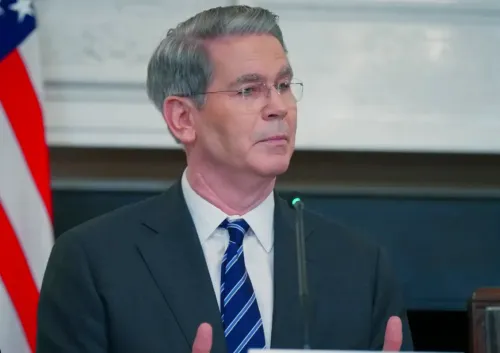
Bessent, speaking during a discussion on the state of the US economy, described the finance track meeting as broadly successful, noting that all but one member supported the proposed language. However, G20 communiqués require unanimous agreement to be adopted.
'To issue a communique, it has to be unanimous,' Bessent said. 'I can issue a President statement, and the President's statement said exactly what the communique was gonna say, but there was one holdout in the communique, and it was China.'
He confirmed that a chair's statement — reflecting the presidency's conclusions — was issued in place of the communiqué, carrying identical language on the contested issues.
What the Blocked Statement Addressed
According to Bessent, the proposed document covered two core issues: excess capacity in non-market economies, and the need to keep rare earths freely traded globally. China dominates several stages of the global critical-minerals and rare-earth supply chain — materials essential for electric vehicles, consumer electronics, renewable-energy systems, and advanced defence equipment. India, the United States, and other major economies have actively sought to diversify supplies and reduce dependence on Chinese-controlled supply chains.
'And the rest of the world is waking up,' Bessent said, framing China's lone dissent as a signal to other G20 nations.
US Strategy: Broadening the Coalition
Bessent said Washington intended to deepen cooperation with European countries, Canada, and an expanded group of advanced economies — described as the G7+ — to collectively respond to China's trade practices. 'We wanna work with the Europeans. We wanna work with the Canadians. We wanna work with the G7+,' he said.
He argued that US trade measures had effectively redirected China's subsidised exports away from American markets and toward other economies. 'They are coming back because we're seeing manufacturing jobs in China go down,' Bessent said. 'They're exporting their subsidised goods to the rest of the world, not the US anymore.'
Electric Vehicles and the European Warning
Bessent cited the 100 per cent tariff on Chinese electric vehicles — imposed by President Donald Trump during his first term — as a concrete example of Washington's protective approach. He also pointed to the connected-car rule, which restricts the transfer of vehicle data to China, as a complementary measure. 'That has kept these Chinese vehicles off our streets,' he said.
He contrasted this with Europe's experience, noting that 40 per cent of the vehicles displayed at the Munich Auto Show were Chinese-made. He referenced Volkswagen's plans for large-scale job reductions as evidence of the economic pressure that subsidised Chinese competition was placing on the German automobile industry — a sector that represents a significant share of Germany's broader economy.
Broader Context and What Comes Next
This is not the first time China's trade practices have stalled multilateral consensus. G20 communiqués on trade-related language have faced friction in previous cycles, but Bessent's explicit identification of China as the sole holdout — and his call for a broader coalition — marks a notably direct escalation in US diplomatic framing. Notably, this comes amid intensifying global scrutiny of Chinese industrial subsidies across steel, solar, and electric vehicle sectors.
High-end precision manufacturing jobs, Bessent said, were returning to the United States, which he attributed to the Trump administration's tax, trade, energy, and deregulation policies. 'At the end of the day, it's the private sector that drives jobs,' he said. How the G7+ coalition takes shape — and whether European nations align more formally with the US position — will be a key indicator of whether Washington's strategy gains traction ahead of the next G20 summit.
Point of View
And it is designed to accelerate European alignment with Washington's position. The Munich Auto Show statistic and the Volkswagen reference are not incidental; they are a direct pitch to Berlin and Brussels. The harder question is whether Europe, which still runs significant trade through China and has its own subsidy regimes, will join a formal G7+ front or hedge as it has done before. On rare earths, the structural vulnerability is real and widely acknowledged — but diversification timelines remain long, and China's leverage in that supply chain will not erode quickly regardless of how many G20 statements are issued or blocked.
NationPress
24 Oct 2026
Frequently Asked Questions
Why did China block the G20 communiqué at Asheville?
China objected to proposed language addressing excess industrial capacity in non-market economies and the need to keep rare earths freely traded, making it the sole G20 member to withhold consent. Because G20 communiqués require unanimous agreement, China's refusal prevented adoption of the joint statement, and a chair's statement was issued instead.
What is a G20 chair's statement and how does it differ from a communiqué?
A G20 communiqué is a jointly negotiated document that requires unanimous consent from all member nations. A chair's statement, by contrast, records the conclusions of the presiding country without requiring full agreement, meaning it carries less collective political weight than a consensus communiqué.
What are rare earths and why do they matter in US-China trade tensions?
Rare earths are a group of critical minerals essential for electric vehicles, consumer electronics, renewable energy systems, and advanced defence equipment. China dominates multiple stages of the global rare earth supply chain, giving it significant leverage; the US, India, and other economies have been working to diversify sourcing and reduce dependence on Chinese-controlled supply.
What is the G7+ coalition that Bessent referred to?
Bessent used the term 'G7+' to describe an expanded grouping of advanced economies — beyond the existing G7 — that the United States wants to work with, including European nations and Canada, to coordinate a collective response to China's trade and industrial subsidy practices.
How has the US restricted Chinese electric vehicles from its market?
The United States imposed a 100 per cent tariff on Chinese electric vehicles during President Donald Trump's first term, and separately introduced a connected-car rule that restricts the transfer of vehicle data to China. Bessent credited these measures with keeping Chinese EVs off American roads, contrasting the outcome with Europe, where Chinese vehicles now account for 40 per cent of displays at the Munich Auto Show.