Russian national extradited to US over tech smuggling network targeting Russian military
Synopsis
A Russian national accused of masterminding a sanctions-busting network that funnelled American military-grade electronics to Russia through Hong Kong shell companies has been extradited from Sweden to face US federal charges. The alleged scheme ran for over a year after Russia's invasion of Ukraine, targeting components usable in radar, communications, and precision location systems — and now carries a potential sentence of decades in prison.
Key Takeaways
Alexander Suvorov , a 52-year-old Russian national , was extradited from Sweden to the United States on Thursday, 16 October .
He faces three conspiracy charges : international money laundering, outbound smuggling, and violations of the Export Control Reform Act .
Two charges each carry a maximum sentence of 20 years ; combined financial penalties could reach $1.75 million .
The alleged network operated from March 2022 to April 2023 , routing US-made components through Hong Kong front companies including GS Group Limited .
Targeted components could be used in military communications , radar , and precision location systems , according to prosecutors.
The Justice Department signalled ongoing investigations into the broader network.
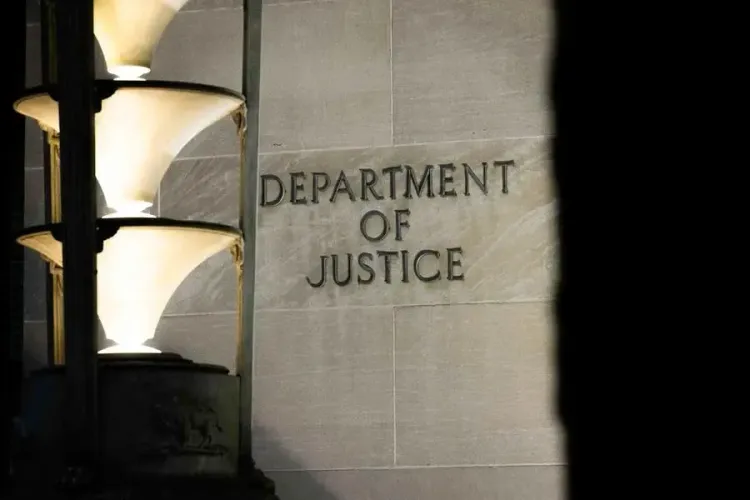
A 52-year-old Russian national, Alexander Suvorov, has been extradited from Sweden to the United States to face federal charges of orchestrating an international procurement network that allegedly funnelled American-made electronic components with military applications to Russia, the US Department of Justice announced. Suvorov arrived in the Northern District of New York on Thursday, 16 October 2025, and is expected to make his initial appearance before a federal court in Albany on Friday, 17 October.
Key Charges and Potential Penalties
Suvorov faces three federal conspiracy charges: international promotional money laundering, outbound smuggling, and violations of the Export Control Reform Act. Two of the three charges each carry a maximum prison sentence of 20 years. Specifically, the money laundering count is punishable by up to 20 years and a fine of $500,000; the smuggling charge carries a maximum of five years and a $250,000 fine; and the export control violation could result in up to 20 years imprisonment and a $1 million penalty.
How the Alleged Network Operated
According to the criminal complaint, the alleged procurement scheme ran from March 2022 to April 2023 — a period that overlapped directly with sweeping Western sanctions imposed on Russia following its invasion of Ukraine. Prosecutors allege Suvorov used several Hong Kong-based front companies, including GS Group Limited, to purchase sensitive dual-use electronic components from US suppliers. The goods were then routed through Hong Kong before reaching their ultimate end users in Russia, concealing their true destination from American exporters and authorities.
The components allegedly targeted by the network were capable of serving both civilian and military purposes. Some, according to the complaint, could be incorporated into military communications systems, radar equipment, and precision location systems — raising serious concerns about their potential to bolster Russian defence capabilities. Suvorov and his companies also allegedly transferred funds electronically to American businesses to pay for the components, underpinning the money laundering count.
What Investigators and Prosecutors Said
Roman Rozhavsky, assistant director of the FBI's Counterintelligence and Espionage Division, described Suvorov as 'the alleged mastermind behind an international procurement network that illegally supplied buyers in Russia with American-made electronic components that have military applications.' Rozhavsky added that the extradition demonstrated Washington's determination to prevent sensitive American technology from reaching the Russian military.
John A. Sarcone III, first assistant US attorney for the Northern District of New York, warned that those who 'seek to enrich themselves by evading economic sanctions on Russia... must understand that their actions carry serious consequences and will not be tolerated.' Sarcone indicated that American authorities would continue pursuing individuals suspected of undermining national security through illicit procurement operations.
Broader Context: Technology Smuggling and Russia Sanctions
The case is part of a wider pattern of US law enforcement actions targeting sanctions evasion since February 2022. Western governments have repeatedly identified Hong Kong-registered shell companies as conduits for circumventing export controls, particularly in dual-use electronics. Notably, US authorities have brought several similar prosecutions involving Russian nationals since the sanctions regime was tightened, reflecting a concerted effort to close gaps in the technology supply chain that Russia's defence industry has sought to exploit. This case adds to growing scrutiny of third-country intermediaries used to launder the origin of restricted goods.
What Happens Next
Following his court appearance in Albany, Suvorov is expected to enter a plea. If convicted on all three counts, he could face a cumulative sentence of several decades in prison alongside substantial financial penalties. The Justice Department has signalled that investigations into the broader network — including other individuals and entities potentially linked to the front companies — are continuing.
Point of View
Yet prosecutions remain the exception rather than the norm. The window between sanctions imposition and effective enforcement has cost Ukraine tangible battlefield disadvantage — these components were allegedly flowing as recently as April 2023. The real question is not whether Suvorov will be convicted, but how many parallel networks remain operational and whether the US and its allies are moving fast enough to shut them down before the next conflict cycle begins.
NationPress
16 Oct 2026
Frequently Asked Questions
Who is Alexander Suvorov and what is he accused of?
Alexander Suvorov is a 52-year-old Russian national accused of leading an international procurement network that allegedly smuggled American-made electronic components with military applications to Russia via Hong Kong front companies. He faces three federal conspiracy charges in the United States, including money laundering, smuggling, and export control violations.
How did the alleged smuggling network operate?
According to the criminal complaint, Suvorov used Hong Kong-registered shell companies, including GS Group Limited, to purchase dual-use electronics from US suppliers and route them through Hong Kong before delivering them to end users in Russia. Electronic fund transfers were allegedly used to pay American businesses, obscuring the Russian destination of the goods.
What penalties does Suvorov face if convicted?
Suvorov faces up to 20 years in prison and a $500,000 fine on the money laundering count, up to five years and $250,000 on the smuggling charge, and up to 20 years and $1 million for the export control violation. A conviction on all counts could result in decades of imprisonment and combined fines of up to $1.75 million.
Why are these electronic components considered sensitive?
The components are classified as dual-use, meaning they have both civilian and military applications. Some could allegedly be integrated into military communications systems, radar equipment, and precision location systems — technologies directly relevant to Russian defence and battlefield operations.
Why does this case matter beyond the individual charges?
The case is part of a broader US enforcement push against sanctions evasion networks that have supplied Russia's military-industrial complex despite Western restrictions imposed after the 2022 Ukraine invasion. Authorities say third-country intermediaries, particularly in Hong Kong, have been widely used to circumvent export controls, and this prosecution signals continued pressure on such networks.