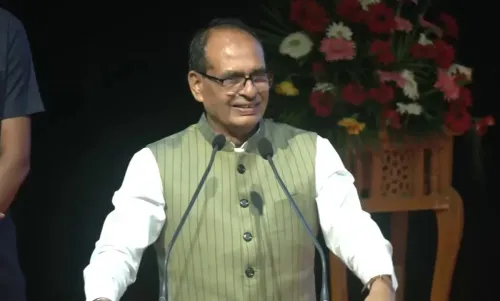
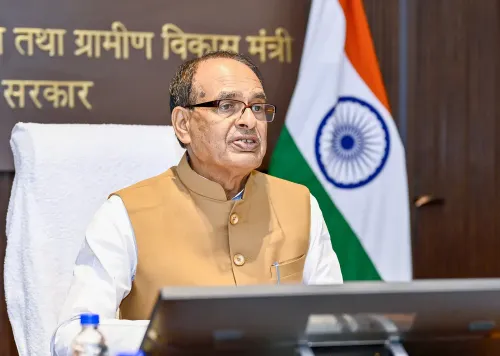
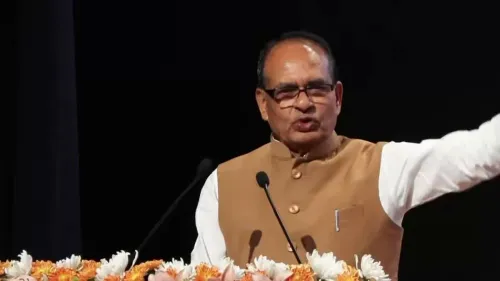
Shivraj Singh Chouhan marks World Food Day with pledge against hunger
Synopsis
On World Food Day 2026, Union Agriculture Minister Shivraj Singh Chouhan invoked Indian cultural reverence for grain to call on citizens to minimise food waste, cook and serve only what is needed, and pledge that no one nearby goes hungry.
Key Takeaways
World Food Day is observed on 16 October every year, coordinated by the Food and Agriculture Organization (FAO) , focusing on ending global hunger.
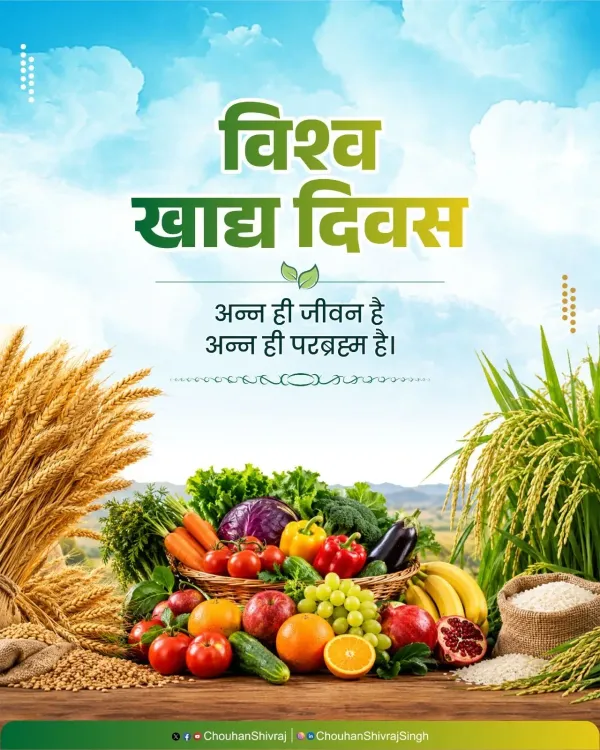
Union Agriculture Minister Shivraj Singh Chouhan posted a message framing food as divine — 'Annam hi jeevan hai, annam hi Parabrahm hai' — and urging citizens to save grain.
His practical appeal: cook only what is needed, take only what one can eat, and ensure no one in one's surroundings stays hungry.
Chouhan oversees the agriculture and rural development portfolios, directly governing the supply chain underpinned by the National Food Security Act, 2013 .
The message continues a pattern of Indian leaders blending cultural tradition with welfare goals on food-related observances.
Food is life, food is the Supreme Being — and on World Food Day, 16 October 2026, Union Agriculture Minister Shivraj Singh Chouhan invoked India's deepest cultural reverence for the grain on the plate to drive home an urgent, practical message: cook only what you need, take only what you can eat, and make sure no one around you goes to bed hungry tonight.
Writing in Hindi on X, the minister framed the occasion in the language of Indian philosophy: 'Annam hi jeevan hai, annam hi Parabrahm hai' ('Food is life; food is the Supreme Divine'). Every single grain, he wrote, is not merely priceless — it is life-giving. The call to action was direct and domestic: reduce what goes into the pot, reduce what lands on the plate, and take a collective pledge that no neighbour, no stranger, goes without a meal.
Why World Food Day lands differently from New Delhi
World Food Day, observed every 16 October and coordinated by the Food and Agriculture Organization (FAO), focuses on food security and the global fight against hunger. For India — simultaneously one of the world's largest food producers and home to a substantial food-insecure population — the day carries particular weight. The National Food Security Act, 2013, entitles a large share of the population to subsidised grain through the public distribution system, making food policy both a welfare mandate and a political touchstone.
Chouhan's portfolio sits at the exact intersection of those realities. As Union Minister of Agriculture and Farmers Welfare and Rural Development, he oversees the very supply chain — from the farm to the godown to the subsidised ration — that the NFSA underwrites. His World Food Day message is therefore more than ceremonial: it arrives from the minister who directly governs what gets grown, procured, and distributed.
Cultural reverence as a policy lever
Indian leaders have long fused tradition-based appeals with welfare goals on days like this, and Chouhan — a four-term former Chief Minister of Madhya Pradesh and one of the BJP's most experienced mass communicators — is well-practised in that idiom. The framing of grain as divine ('Parabrahm') draws on a thread running through Sanskrit scripture and everyday household practice alike: the idea that wasting food is not merely inefficient but morally wrong.
That cultural framing is also a shrewd policy nudge. Anti-waste messaging that taps into existing moral intuitions tends to travel further than purely technocratic appeals — reaching households that may never read a policy circular but do remember what their grandmother said about leaving rice on the plate.
The pledge Chouhan is asking for
The minister's ask on this World Food Day is simple and scalable: cook in proportion to need, serve in proportion to hunger, save food, save lives — 'Ann bachayein, jeevan bachayein.' And then the hardest part: ensure that at least in your immediate surroundings, no one remains hungry. It is a call that begins at the kitchen counter and ripples outward to community, neighbourhood, and nation.
Whether the message is followed by a formal government campaign on food-waste reduction or updates to existing food security schemes will be worth watching in the weeks ahead — but the political and moral intent, on this particular morning, could not be clearer.
Point of View
He simultaneously speaks to rural traditionalism and urban middle-class guilt about waste. For a minister who governs both farm procurement and rural development, the day is also a quiet reminder of his institutional role in the food security chain. Watch whether this messaging seeds a formal anti-wastage campaign or remains a seasonal appeal.
NationPress
16 Oct 2026
Frequently Asked Questions
What is World Food Day and when is it celebrated?
World Food Day is observed every year on 16 October . It is coordinated by the Food and Agriculture Organization (FAO) of the United Nations and focuses on raising awareness about global food security and the fight against hunger.
What did Shivraj Singh Chouhan say on World Food Day 2026?
Chouhan posted in Hindi on X, declaring that food is life and divine, urging people to cook and serve only what they need, save grain, and pledge that no one in their surroundings goes hungry — summarised in the phrase 'Ann bachayein, jeevan bachayein' (Save food, save lives).
What is Shivraj Singh Chouhan's current role?
Shivraj Singh Chouhan is the Union Minister of Agriculture and Farmers Welfare and Rural Development in the Government of India. He is a senior BJP leader and a former four-term Chief Minister of Madhya Pradesh.
What is the National Food Security Act and how does it relate to World Food Day?
The National Food Security Act, 2013 entitles a large share of India's population to subsidised food grains through the public distribution system. On World Food Day, it provides the policy backdrop against which ministerial appeals on hunger and food waste are made.
Why do Indian leaders invoke cultural or religious references when talking about food?
Indian culture, rooted in Sanskrit tradition, treats food as sacred — a concept captured in the phrase 'Annam Brahm' (food is the divine). Leaders use this framework because it resonates across religious and socioeconomic lines, making anti-waste and food-sharing messages more effective than purely technocratic appeals.