World Bank's Ajay Banga flags 800 million jobs gap over next 15 years
Synopsis
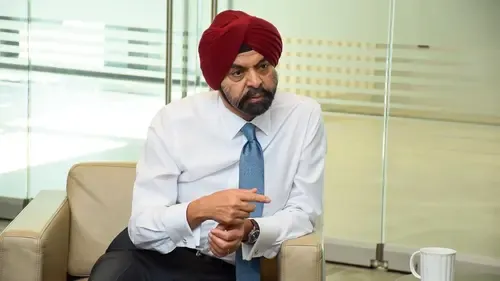
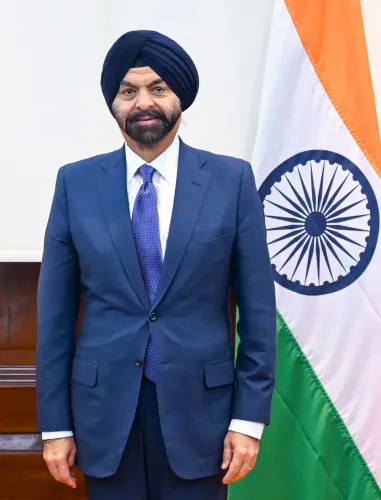
World Bank President Ajay Banga has put a stark number on a looming global crisis: 800 million missing jobs over the next 15 years, with 1.2 billion young people entering a labour market that can only absorb 400 million. Speaking in Bangkok, he framed it as a projection — not a destiny — and laid out a sweeping reform agenda that has already tripled private capital mobilisation to $112 billion, with India among the top three investor sources.
Key Takeaways
World Bank President Ajay Banga warned of an 800 million jobs gap over the next 10–15 years at the 2026 Annual Meeting in Bangkok .
An estimated 1.2 billion young people will enter the global workforce, but only 400 million jobs are projected to be available.
Private capital mobilisation by the World Bank rose from $35 billion in fiscal 2022 to $112 billion last year; combined total financing exceeded $230 billion .
India , the United States , and the United Kingdom led private investment mobilised by the institution across 110 countries .
Project preparation time at the World Bank was cut from 19 months to nine months , and performance indicators reduced from 153 to 22 since Banga took charge in June 2023 .
The World Bank plans to grow its critical minerals business fivefold in five years and has connected 59 million Africans to electricity under Mission 300 .
World Bank President Ajay Banga has warned that the world faces a shortfall of nearly 800 million jobs over the next 10 to 15 years, calling for a fundamental overhaul of global development financing to absorb a surge in young workers entering the labour market. The warning was delivered at the World Bank Group's 2026 Annual Meeting plenary in Bangkok on 16 October 2026.
The Scale of the Jobs Crisis
Banga said approximately 1.2 billion young people are projected to enter the global workforce over the next decade and a half, yet only 400 million jobs are expected to materialise — leaving an 800 million gap. He was careful to frame this as a warning rather than a verdict. “The jobs gap is a projection. It does not have to be our future,” Banga said, outlining a multi-pronged strategy combining public finance, private investment, philanthropy and technology to close the divide.
He identified persistent conflicts, mounting sovereign debt, shrinking fiscal space, and high energy and fertiliser costs as compounding factors that were making the challenge especially acute for developing economies.
World Bank Reforms Under Banga
Since assuming office in June 2023, Banga said the World Bank had undertaken sweeping institutional reforms to sharpen its impact. Project preparation time has been cut from 19 months to nine months, and the institution's performance indicators were reduced from 153 to 22. These changes have reportedly created more than $100 billion in additional lending capacity for the International Bank for Reconstruction and Development (IBRD) over a decade.
Private capital mobilisation rose sharply — from approximately $35 billion in fiscal year 2022 to $112 billion last year, a roughly threefold increase. Combined with the World Bank Group's own financing, total financing exceeded $230 billion.
India Among Top Sources of Private Investment
India emerged as one of the leading sources of private capital mobilised by the institution. “Last year, we mobilised capital from investors in 110 countries. The United States, United Kingdom, and India led the way,” Banga said. Notably, despite this global momentum, private capital mobilisation in low-income economies has remained stuck at around $3 billion — a figure that underscores the structural difficulty of channelling commercial capital to the world's most fragile states.
Banga said the institution was increasing its emphasis on micro, small and medium enterprises, particularly in fragile and conflict-affected economies where large corporations tend to have limited operational footprints.
Energy, AI and Critical Minerals
The World Bank committed $40 billion last year to infrastructure, healthcare, education and skills development, with 30 per cent of its public-sector financing directed at policy and institutional reforms. On energy access, Banga noted that 59 million Africans had gained electricity access under Mission 300, an initiative targeting 300 million new connections by 2030.
Artificial intelligence also featured prominently in his remarks. While advanced AI systems require expensive computing infrastructure, Banga argued that smaller applications could help farmers improve productivity, support teachers in personalising instruction, and assist entrepreneurs in reaching new markets. He added that the World Bank plans to increase its critical minerals business fivefold within five years, supporting local industries and job creation.
Multilateral Push to Free Up Capital
Banga announced a coordinated effort by six multilateral development banks to standardise the packaging and transfer of investments, enabling institutional investors to step in and finance existing projects — thereby freeing development bank capital for new initiatives. This 'portfolio recycling' approach is seen as a structural lever to scale development finance without requiring fresh public commitments at the same pace. How quickly it gains traction among private institutional investors will be a key test of the strategy going forward.
Point of View
But Banga's framing — a projection, not a prophecy — is doing important rhetorical work: it positions the World Bank as the institution that can bend the curve if given capital and mandate. Yet the deeper tension in his remarks is the $3 billion ceiling on private capital flows to low-income economies, even as the headline mobilisation number hit $112 billion. The countries that need capital most are still largely locked out of commercial finance, and no amount of portfolio standardisation fixes the underlying risk-return calculus that keeps institutional investors away from fragile states. India's emergence as a top-three source of mobilised private capital is a meaningful signal of its growing financial weight, but the jobs gap itself is sharpest precisely in the markets India does not yet invest in at scale.
NationPress
16 Oct 2026
Frequently Asked Questions
What is the 800 million jobs gap that Ajay Banga warned about?
World Bank President Ajay Banga warned that about 1.2 billion young people will enter the global workforce over the next 10 to 15 years, but only 400 million jobs are projected to become available — leaving a gap of roughly 800 million. He made the warning at the World Bank Group's 2026 Annual Meeting plenary in Bangkok on 16 October 2026.
What reforms has Ajay Banga introduced at the World Bank?
Since joining as President in June 2023, Banga has cut project preparation time from 19 months to nine months and reduced performance indicators from 153 to 22. The reforms have reportedly created over $100 billion in additional IBRD lending capacity over a decade and helped triple private capital mobilisation to $112 billion.
What role does India play in World Bank financing?
India is among the top three sources of private investment mobilised by the World Bank, alongside the United States and United Kingdom. Banga highlighted this at the Bangkok plenary, noting that capital was raised from investors across 110 countries last year.
What is Mission 300 and how far has it progressed?
Mission 300 is a World Bank initiative aimed at connecting 300 million people in Africa to electricity by 2030. According to Banga's address, 59 million Africans have already gained electricity access under the programme.
How does the World Bank plan to attract more private capital to poor countries?
The World Bank, alongside five other multilateral development banks, is working to standardise the packaging and transfer of investments, enabling institutional investors to finance existing projects and freeing development bank capital for new ones. However, private capital mobilisation in low-income economies has remained around $3 billion, underscoring the difficulty of the challenge.