Ajay Banga to pitch World Bank's jobs-first agenda at IMF-World Bank Annual Meetings
Synopsis
At the IMF-World Bank Annual Meetings in Bangkok, World Bank President Ajay Banga is making a blunt case: with 1.2 billion young people turning 18 in the next 15 years, the Bank has no option but to make job creation its singular obsession — and it is betting on private capital, 'small AI', and a new Philanthropy Hub to get there, as fiscal space tightens globally.
Key Takeaways
World Bank President Ajay Banga will deliver the closing plenary address at the IMF-World Bank Annual Meetings in Bangkok on 17 October .
Banga has made job creation his presidency's organising theme, citing 1.2 billion young people who will reach adulthood in the next 15 years .
He argues the private sector generates 75–85% of jobs globally and must lead employment growth.
The World Bank's 'small AI' approach targets practical applications for schools, health systems, and small farmers in emerging markets.
A new Philanthropy Hub was launched on 12 October in Bangkok to attract additional capital as aid budgets face pressure.
India is among the World Bank's largest borrowers and a major shareholder, giving it a significant stake in the bank's strategic direction.
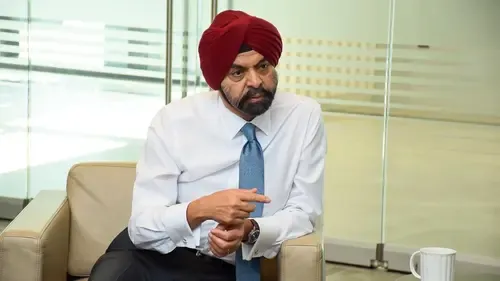
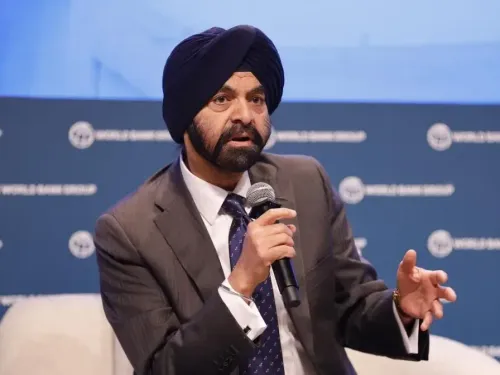
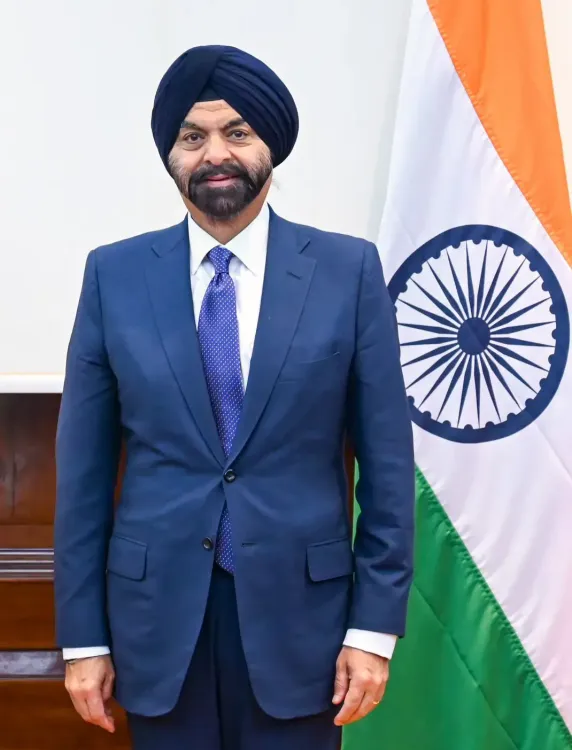
World Bank Group President Ajay Banga is set to address finance ministers and central bank governors at the closing plenary of the IMF-World Bank Annual Meetings in Bangkok, Thailand, on Friday, 17 October 2025, with job creation for a rapidly expanding young global workforce expected to be the centrepiece of his remarks. Banga will speak alongside International Monetary Fund (IMF) Managing Director Kristalina Georgieva at the plenary chaired by Carlos Carvallo Spalding, President of the Central Bank of Paraguay.
The Jobs-First Vision
Banga has made employment generation the defining theme of his presidency since taking charge of the World Bank in June 2023. At a panel on artificial intelligence and jobs earlier during the meetings, he framed the urgency in demographic terms: 'I believe that the Bank's entire focus has to be on jobs for a very simple reason: 1.2 billion young people in the coming 15 years are going to become 18 years of age.'
He also drew a sharp line between the roles of government and the private sector. 'Governments enable, and the private sector generates between 75% and 85% of jobs in any country,' Banga said, signalling that the bank's strategy would increasingly hinge on mobilising private capital rather than relying solely on public finance.
Annual Meetings Theme and Context
The Annual Meetings, running from 12 to 18 October in Bangkok, are organised around the theme of 'jobs, investment, growth, and practical solutions for development,' according to the World Bank. This is only the second time in the meetings' history that they are being held in Asia, underscoring the region's growing centrality to global development discussions. The gathering comes as the IMF this week flagged slowing global growth driven by energy-price shocks and elevated public debt levels.
AI for Emerging Markets: The 'Small AI' Approach
On artificial intelligence, Banga has staked out a distinctive position for emerging economies. Rather than the large language model debate dominating discourse in advanced nations, he argues that developing countries need 'small AI' — practical applications targeted at schools, health systems, and small farmers. This framing positions the World Bank as a pragmatic development partner rather than a technology idealist, and reflects an effort to make AI-driven growth accessible to economies with limited digital infrastructure.
Fiscal Strain and the Philanthropy Hub
At a civil society town hall during the meetings, Banga issued a candid warning about the pressures on development finance. 'Fiscal space is tighter, debt is higher, aid budgets are under pressure, and as we all know, the cost of energy and the cost of fertiliser is much higher than what it was 6 to 8 months ago,' he said. 'We've got to make these limited public resources go much further,' he added.
To address the funding gap, Banga pointed to the bank's newly launched Philanthropy Hub, unveiled in Bangkok on 12 October, as a mechanism to channel additional private and philanthropic capital into development priorities.
India's Stake and Banga's Background
India is among the World Bank's largest borrowers and a significant shareholder, giving New Delhi a direct interest in the direction Banga sets. Born in Pune and educated in India, Banga was nominated by the United States before assuming the presidency. His Indian roots and long career in global finance — most recently as Mastercard CEO — have shaped a leadership style that bridges the priorities of developed-nation donors and emerging-market borrowers. With the IMF simultaneously sounding alarms on global growth, Banga's closing plenary remarks will be closely tracked by policymakers from both blocs.
Point of View
But the harder question is whether the World Bank's instruments are actually calibrated to deliver at that scale. Historically, the Bank has been better at infrastructure lending than at the messy, country-specific work of labour market reform. The pivot toward private capital mobilisation is the right instinct, but it has been promised before — notably under the Maximising Finance for Development agenda — with mixed results. The 'small AI' concept is a genuinely differentiated position, yet without a concrete disbursement framework it risks becoming a branding exercise. India, as both a major borrower and a shareholder with Banga as a symbolic link, should be pressing for accountability metrics, not just applauding the vision.
NationPress
15 Oct 2026
Frequently Asked Questions
What will Ajay Banga say at the IMF-World Bank Annual Meetings closing plenary?
Banga is expected to centre his remarks on job creation, arguing that the World Bank must focus entirely on employment given that 1.2 billion young people will reach working age in the next 15 years. He will speak alongside IMF Managing Director Kristalina Georgieva at the Bangkok plenary on 17 October.
Where and when are the IMF-World Bank Annual Meetings 2025 being held?
The Annual Meetings are being held in Bangkok, Thailand, from 12 to 18 October 2025. The closing plenary, where Banga will speak, is scheduled for 17 October.
What is the World Bank's 'small AI' approach?
'Small AI' refers to the World Bank's strategy of promoting practical artificial intelligence applications — such as tools for schools, health systems, and small farmers — in developing countries, rather than focusing on large language models or frontier AI research. Banga has argued this is the relevant AI debate for emerging markets.
What is the World Bank Philanthropy Hub launched in Bangkok?
The Philanthropy Hub is a new initiative unveiled by the World Bank on 12 October in Bangkok, designed to attract private and philanthropic capital into development projects. Banga introduced it as a way to stretch limited public resources further amid tightening fiscal conditions globally.
Why does India have a stake in Ajay Banga's World Bank agenda?
India is one of the World Bank's largest borrowers and a significant shareholder, meaning the bank's strategic direction on jobs, private capital mobilisation, and development finance directly affects how resources flow to Indian projects. Banga was also born in Pune and educated in India, making his tenure a matter of close attention in New Delhi.