World Bank's Ajay Banga: India can grow beyond 8% with right reforms
Synopsis
World Bank President Ajay Banga says India's 7–8% growth is 'pretty good' — but the real opportunity lies beyond that ceiling. Speaking at the G20 Finance Ministers' meeting in Asheville, he pinpointed skilling, state-level labour reform, and private capital mobilisation as the levers India must pull to turn headline growth into jobs for its youth.
Key Takeaways
World Bank President Ajay Banga said India can grow beyond its current 7–8 per cent trajectory, calling recent performance 'pretty robust.' He cited strong growth in services, exports, and investment as evidence of a broad-based economic expansion.
Banga flagged India's skilling and education ecosystem as needing closer alignment with future private-sector demand.
He described three pillars for job creation: physical and human infrastructure, regulatory reform, and private capital mobilisation.
The World Bank extended over $3 billion in trade finance to India's MSME sector during the disruption caused by the war in Iran.
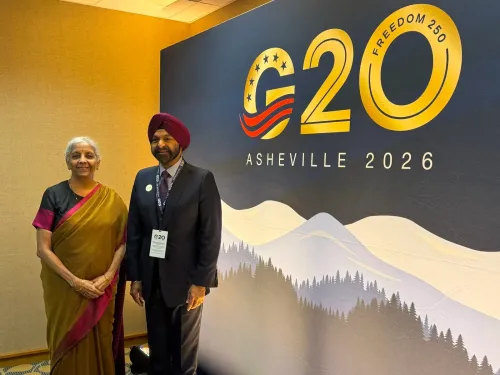
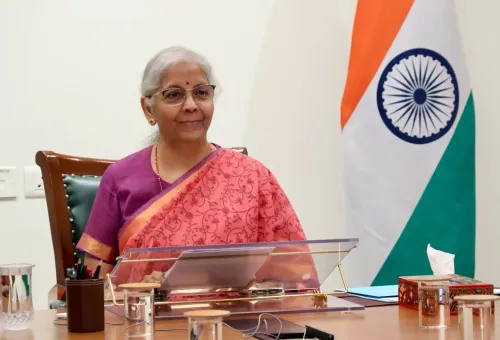
Banga held talks with Finance Minister Nirmala Sitharaman on tourism and MSME opportunities.
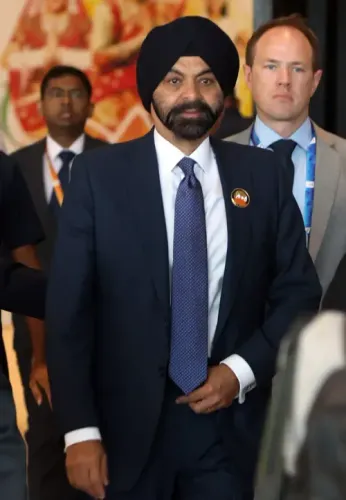
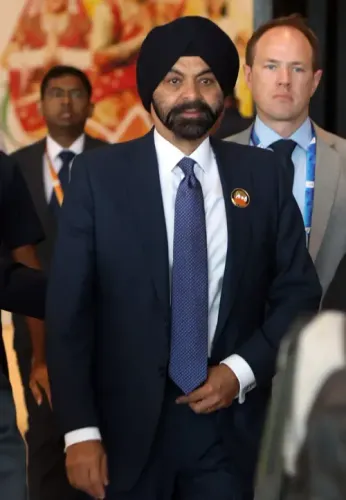
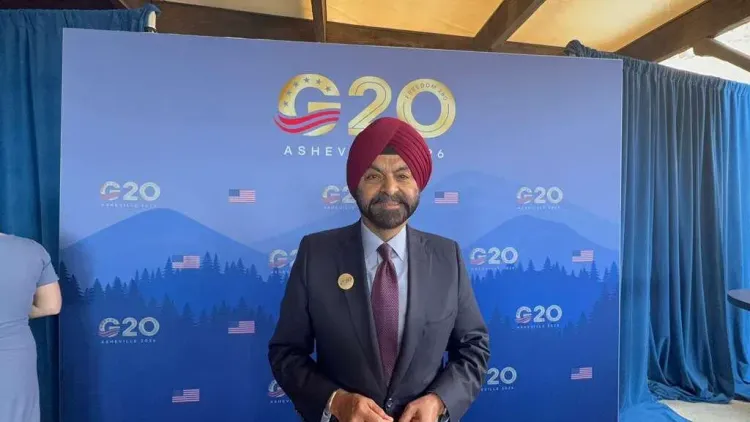
World Bank President Ajay Banga has said India holds the potential to grow beyond its current 7–8 per cent trajectory, calling the country's recent economic performance robust even as global headwinds — including energy pressures, trade uncertainty, and the effects of El Niño — weigh on emerging markets. Banga made the remarks on the sidelines of the G20 Finance Ministers' meeting in Asheville on 2 September.
India's Growth Performance
Banga described India's current output as a sign of underlying economic strength. 'India is now delivering regularly seven to 8 per cent growth, that's pretty good. And I think there's opportunity to go even beyond that,' he said. He noted that the composition of growth was equally encouraging — services, exports, and investment had all held up within the headline figure. 'This is a pretty robust performance that India has shown,' he added.
The Jobs Imperative
The World Bank chief stressed that sustaining high growth rates would not be sufficient on its own. The more pressing challenge, he argued, is converting economic momentum into employment and opportunity for India's large youth population. 'You need to convert all this into the opportunity and hopes and aspirations of young people,' Banga said. He outlined three pillars he considers essential for job creation: physical and human infrastructure, regulatory reform, and the mobilisation of private capital.
Infrastructure and Skills Gap
On infrastructure, Banga acknowledged India's substantial ongoing work in roads, bridges, airports, power, water, and digitisation. However, he flagged that the education and skilling ecosystem requires closer alignment with future labour market demands. 'The whole skilling and education ecosystem in India needs to be tuned even closer to where the jobs are going to come from in the future and what the private sector would want to do with you,' he said. He identified infrastructure, agriculture, primary healthcare, tourism, and value-added manufacturing as sectors with the highest job-creation potential, noting India's particular strengths in minerals, metals, and fashion.
Regulatory Reform and Private Capital
Banga cited recent central government changes to labour laws as meaningful progress, while noting that their real-world impact would depend on state-level implementation. 'It needs to get implemented state by state for the change to be seen at the ground level, but it's great progress over where we were a few years ago,' he said. He was unambiguous on the role of the private sector: 'Jobs are created in the private sector. Government enables and the private sector creates.' Micro, small, and medium-sized enterprises (MSMEs) would be central to that effort, he added.
World Bank's India Engagement
Banga said he had discussed tourism and MSME opportunities directly with Finance Minister Nirmala Sitharaman. He also disclosed that the World Bank had moved swiftly to support Indian businesses during the disruption caused by the war in Iran, pumping 'almost three billion plus of financing into the MSME sector in India for trade finance.' He further noted that India was increasingly emerging as a source of development knowledge for other nations — particularly through its digital public infrastructure and agricultural innovations — as it advances toward its 2047 development goals.
Point of View
Not unconditional — and that distinction matters. He is effectively telling India that the growth ceiling is self-imposed: fix skilling, implement labour reforms at the state level, and unlock private capital, and the 8% floor becomes a launchpad. What mainstream coverage underplays is his pointed remark on state-level implementation — a quiet acknowledgement that Centre-level reform announcements have routinely stalled in execution. The MSME trade finance disclosure is also notable: a $3 billion-plus emergency injection during the Iran war crisis suggests India's external trade exposure is more fragile than the headline growth numbers imply. The 2047 framing, meanwhile, signals that the World Bank sees India's trajectory as a decade-long structural story, not a quarterly data point.
NationPress
17 Oct 2026
Frequently Asked Questions
What did World Bank President Ajay Banga say about India's growth?
Ajay Banga said India is 'regularly delivering seven to 8 per cent growth' and has the potential to grow even beyond that. Speaking at the G20 Finance Ministers' meeting in Asheville on 2 September, he described India's economic performance as robust despite global headwinds including energy pressures and El Niño.
What are the three pillars Banga identified for job creation in India?
Banga outlined physical and human infrastructure, regulatory reform, and the mobilisation of private capital as the three pillars needed to generate employment in India. He stressed that while government enables, jobs are ultimately created by the private sector.
Why did Banga flag India's skilling ecosystem as a concern?
Banga said India's education and skilling ecosystem needs to be more closely aligned with where future jobs will come from and what the private sector requires. He acknowledged progress in physical infrastructure but said human capital development — education, skilling, and healthcare — needed more work.
What did the World Bank do to support India during the Iran war crisis?
The World Bank pumped 'almost three billion plus' in financing into India's MSME sector for trade finance to support businesses disrupted by the war in Iran, according to Banga. This was described as an immediate response to the crisis.
Which sectors does Banga see as India's biggest job creators?
Banga identified infrastructure, agriculture, primary healthcare, tourism, and value-added manufacturing as sectors capable of generating large numbers of jobs. He also noted India's particular strengths in minerals, metals, and fashion as areas of competitive advantage.