CM Sai Reviews Helpline 1076, Orders Zero Tolerance on Delays
Synopsis
Chief Minister Vishnu Deo Sai reviewed CM Helpline 1076 on 17 October 2026, directing officials to ensure transparent, time-bound grievance resolution — with special focus on reaching citizens in Chhattisgarh's remote forested tribal regions.
Key Takeaways
CM Vishnu Deo Sai conducted a formal review of CM Helpline 1076 on 17 October 2026 .
Officials were instructed that negligence and unnecessary delay in resolving public complaints will not be tolerated.
Every complaint must receive transparent, quality-driven, and time-bound resolution.
The Chief Minister specifically highlighted the need to extend grievance redressal to citizens in Chhattisgarh's remote vananchal (forested tribal) regions .
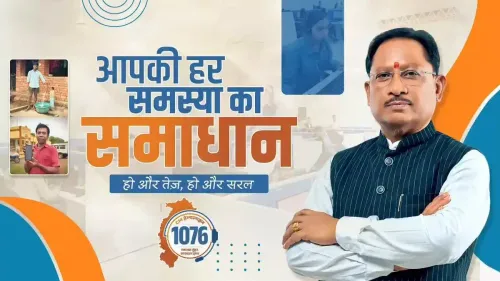
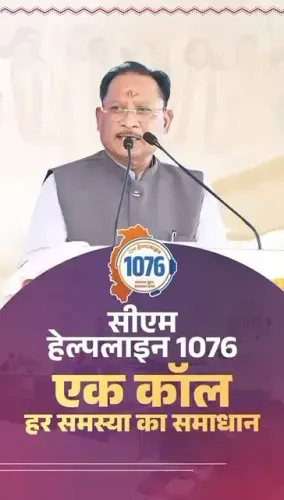
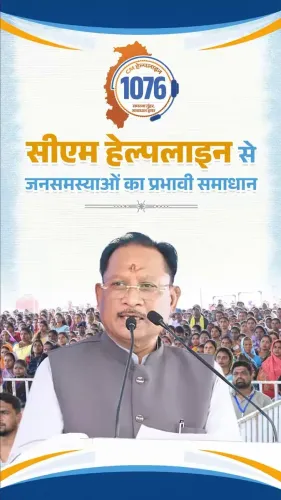
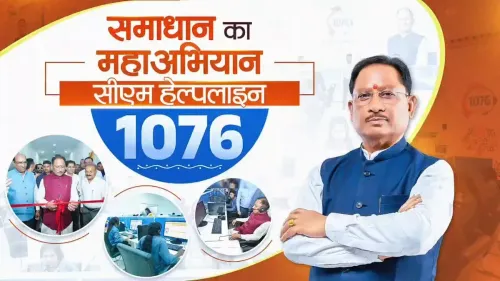
CM Helpline 1076 routes citizen complaints directly through the Chief Minister's office for resolution.
Sai, who took office in December 2023 , framed accessible governance for tribal communities as a core commitment of his administration.
In a state where dense forests and tribal hamlets still sit hours from the nearest government office, Chhattisgarh Chief Minister Vishnu Deo Sai has drawn a hard line: no negligence, no unnecessary delay, no grievance left unresolved. On Saturday, 17 October 2026, the Chief Minister conducted a formal review of the CM Helpline 1076 — the state's direct-to-government grievance channel — and issued clear instructions to officials that transparent, quality-driven, time-bound resolution is now non-negotiable.
What CM Sai told his officers
The Chief Minister's message was unambiguous. Posting in Hindi on X, Sai declared: 'न लापरवाही स्वीकार होगी, न अनावश्यक देरी' — 'neither negligence will be accepted, nor unnecessary delay.' He specifically directed that every complaint filed on the 1076 helpline must receive a transparent and quality response within a fixed timeframe. The language was not aspirational; it was a direct order to the bureaucracy.
He also foregrounded a geographic imperative: the voices of people in the suduर vananchal — Chhattisgarh's remote forested tribal regions — must reach the government and receive relief on time. That is, he said, the true commitment of good governance (sushasan ka sankalp).
CM Helpline 1076 and the governance gap it targets
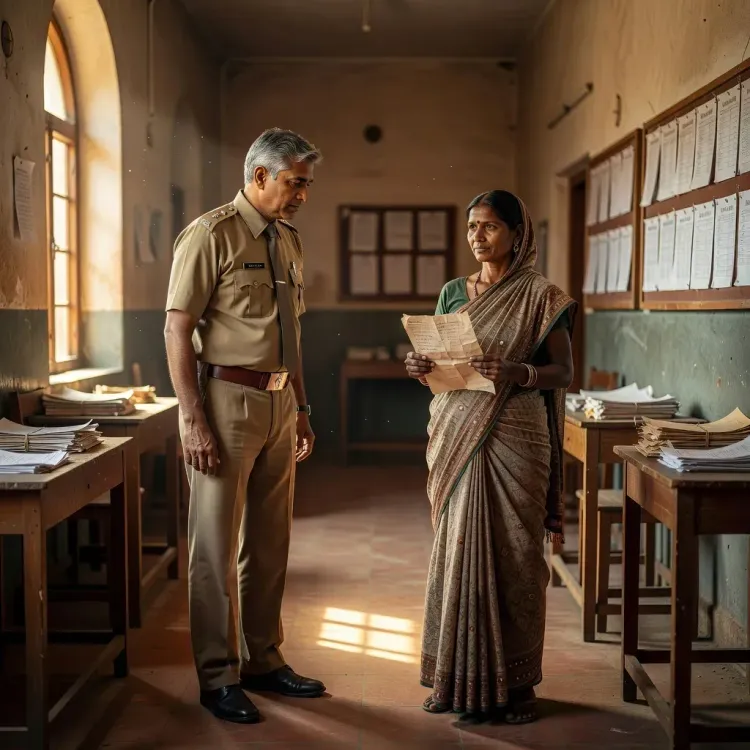
CM Helpline 1076 is Chhattisgarh's centralised public grievance redressal platform, designed to let any citizen — wherever they live — lodge a complaint that routes directly through the Chief Minister's office for resolution. The mechanism matters most in a state like Chhattisgarh, where large swathes of tribal and forest communities have historically faced the steepest barriers in accessing state services.
Indian states have operated similar CM helplines and grievance portals since the early 2000s, part of successive waves of administrative reform and e-governance. What distinguishes periodic reviews like today's is the accountability signal they send downward: district officers and departmental heads are put on notice that disposal rates and response quality are being actively monitored at the highest level.
Why the vananchal emphasis matters
Chhattisgarh is one of India's most heavily forested states, with significant scheduled-tribe populations concentrated in districts far from state administrative centres. For these communities, a functioning helpline is not a convenience — it can be the only viable pathway to government relief, whether for land rights, welfare entitlements, or infrastructure complaints. By naming the vananchal explicitly, Chief Minister Sai signalled that inclusion of remote regions is a performance benchmark, not an afterthought.
Sai, a BJP leader who took office in December 2023 following the party's assembly election victory, has consistently framed tribal welfare and transparent governance as central to his administration's identity. Today's review adds institutional muscle to that framing.
The test, as always, will be in the disposal numbers — and whether the zero-tolerance directive translates into measurable improvements in complaint closure rates across the state's most underserved districts.
Point of View
Explicitly naming the vananchal as a target population is politically astute: it ties service delivery reform to a constituency that has historically felt the governance deficit most acutely. The real measure will come in complaint disposal data — whether the directive produces structural improvement or remains a periodic exhortation. Across BJP-governed states, CM helpline reviews have become a recurring tool to project executive accountability; Chhattisgarh's iteration follows that pattern while adding geographic specificity that raises the bar for measurable outcomes.
NationPress
17 Oct 2026
Frequently Asked Questions
What is CM Helpline 1076 in Chhattisgarh?
CM Helpline 1076 is Chhattisgarh's centralised public grievance redressal platform that allows any citizen to lodge complaints directly routed through the Chief Minister's office for time-bound resolution.
What did CM Vishnu Deo Sai say about CM Helpline 1076?
On 17 October 2026, CM Sai reviewed the helpline and directed officials that no negligence or unnecessary delay in resolving complaints would be accepted, and that every grievance must be resolved transparently and within a fixed timeframe.
What is vananchal in Chhattisgarh?
Vananchal refers to Chhattisgarh's remote, densely forested tribal regions where large scheduled-tribe populations live with historically limited access to government services.
When did Vishnu Deo Sai become Chief Minister of Chhattisgarh?
Vishnu Deo Sai took office as Chief Minister of Chhattisgarh in December 2023, following the BJP's victory in the state assembly elections.
How can citizens file complaints on CM Helpline 1076?
Citizens in Chhattisgarh can dial 1076 to register grievances directly with the state's CM Helpline, which is designed to connect even residents of remote areas with the government for resolution.