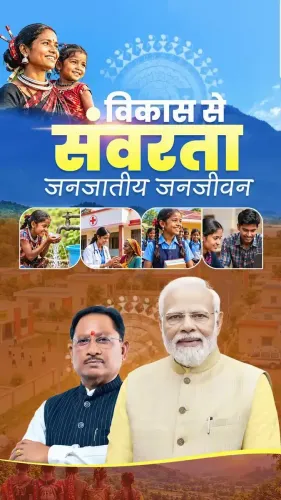
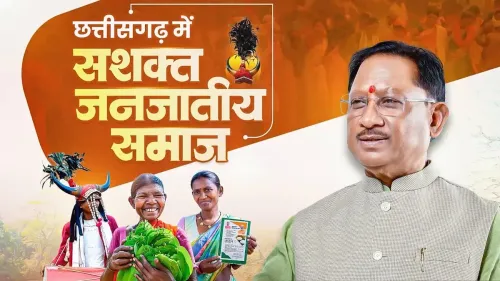
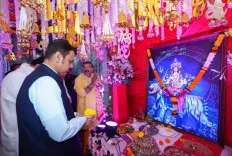
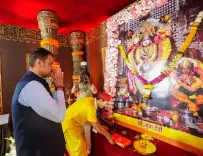
CM Sai: Double Engine Govt Uplifting Chhattisgarh Tribals
Synopsis
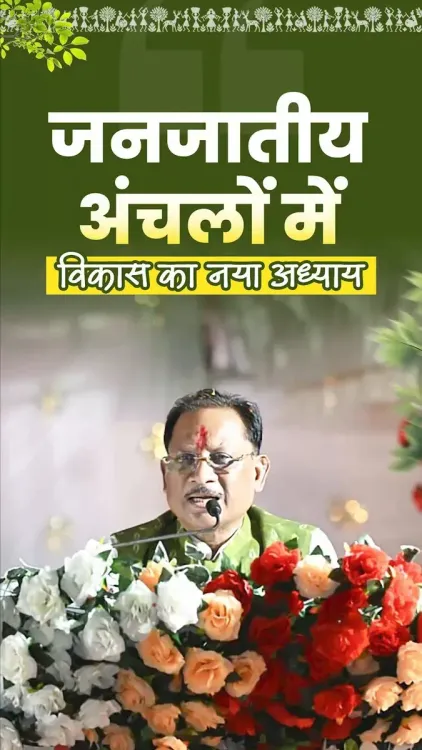
Chhattisgarh CM Vishnu Deo Sai highlights the Dharti Aaba Gram Utkarsh Yojana as a vehicle for converging central and state schemes in tribal areas, framing it within the BJP's double-engine governance model under PM Modi.
Key Takeaways
Chhattisgarh CM Vishnu Deo Sai posted on October 15, 2026 crediting the Dharti Aaba Gram Utkarsh Yojana with improving tribal village welfare.
The scheme routes multiple existing central and state welfare programmes into scheduled tribal areas through a convergence model.
Sai invoked the BJP's ' double engine ' governance framework, citing PM Narendra Modi's leadership as the driver.
The initiative builds on the policy lineage of the Vanbandhu Kalyan Yojana , launched in 2014 for integrated tribal development.
Chhattisgarh has one of India's largest tribal populations, making it a critical test case for any national tribal welfare programme.
The scheme's name honours Birsa Munda , the tribal icon celebrated on Janjatiya Gaurav Diwas, November 15 .
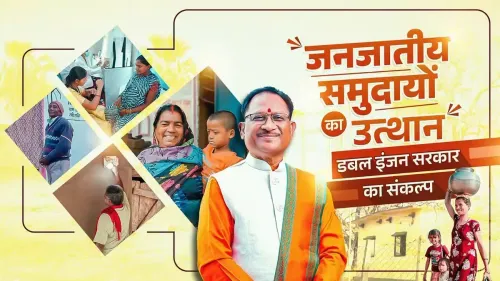
In India's tribal heartland, where access to basic services has long been a political promise more than a lived reality, Chhattisgarh Chief Minister Vishnu Deo Sai says the gap is finally closing — and he is pointing to a specific scheme as proof. On Thursday, October 15, 2026, Sai took to X to credit the Dharti Aaba Gram Utkarsh Yojana with delivering a convergence of central and state welfare programmes directly to tribal villages across Chhattisgarh.
Writing in Hindi, Sai stated: 'Dharti Aaba Gram Utkarsh Yojana ke madhyam se janjatiya samaj tak kendra aur rajya sarkar ki vibhinn yojanaon ka labh pahunchaya ja raha hai' — ('Through the Dharti Aaba Gram Utkarsh Yojana, the benefits of various central and state government schemes are being delivered to tribal communities') — adding that the initiative is expanding basic infrastructure in villages and bringing 'positive change' to people's lives.
What the Dharti Aaba scheme actually does
The Dharti Aaba Gram Utkarsh Yojana is a central government initiative designed around a convergence model: rather than launching new standalone programmes, it routes existing welfare schemes from multiple ministries into scheduled tribal areas, targeting gaps in roads, housing, drinking water, electricity, health, and livelihood support. The name itself carries symbolic weight — 'Dharti Aaba' (Father of the Earth) is a revered title for the Birsa Munda, the tribal icon whose birth anniversary the central government observes as Janjatiya Gaurav Diwas on November 15.
The convergence approach builds on a policy lineage stretching back to the Vanbandhu Kalyan Yojana, launched in 2014, which similarly sought integrated development in tribal regions through infrastructure and livelihood support. The new scheme represents the BJP government's latest iteration of that model — this time with greater emphasis on last-mile delivery and inter-departmental coordination.
Why Chhattisgarh is the test case
Chhattisgarh is home to one of the largest tribal populations in India, with communities concentrated across its central and southern districts — many of them falling under the Fifth Schedule of the Constitution, which provides special protections and governance arrangements. For any tribal welfare initiative, the state is both a critical implementation theatre and a political bellwether.
Chief Minister Sai — himself a member of the Oraon tribal community and a Rajya Sabha and Lok Sabha veteran — frames the programme within the BJP's 'double engine' governance pitch: the argument that a BJP government at both the Centre and in the state enables faster, friction-free delivery of welfare because political alignment removes bureaucratic bottlenecks. His post directly invokes Prime Minister Narendra Modi's leadership as the driving force behind this model.
What the ground-level rollout will determine
Political messaging and scheme design are only the opening act. The real measure of the Dharti Aaba Gram Utkarsh Yojana will come from village-level coverage data, the pace at which tribal blocks gain connectivity and sanitation infrastructure, and whether state-level review mechanisms catch delivery failures early. The scheme's success in Chhattisgarh's most remote scheduled areas — where geography and historical neglect compound each other — will be the sharpest test of the convergence model's real-world limits.
For tribal communities that have heard successive governments announce transformative welfare programmes, the question is not what is promised but what is built, installed, and actually running.
Point of View
Which carries Birsa Munda's legacy, is a deliberate signal to tribal constituencies in a state where the BJP has invested heavily in identity politics. The convergence model the scheme embodies is a policy bet: that administrative alignment between Centre and state is itself a delivery mechanism. Whether that bet pays off will depend far less on political messaging and far more on whether the scheme's infrastructure targets actually reach the most remote scheduled-area blocks before the next electoral cycle.
NationPress
15 Oct 2026
Frequently Asked Questions
What is the Dharti Aaba Gram Utkarsh Yojana?
The Dharti Aaba Gram Utkarsh Yojana is a central government initiative that converges multiple existing central and state welfare schemes to deliver basic infrastructure and services to tribal villages in scheduled areas, rather than launching standalone programmes.
Who is Vishnu Deo Sai and what community does he belong to?
Vishnu Deo Sai is the Chief Minister of Chhattisgarh and a senior BJP leader. He belongs to the Oraon tribal community, making him one of the few tribal politicians to hold the state's top executive office.
What does 'double engine government' mean in BJP's context?
'Double engine government' is the BJP's phrase for states where both the central government and the state government are BJP-led, arguing that political alignment enables faster and more effective delivery of welfare schemes.
What is Janjatiya Gaurav Diwas and how is it related to this scheme?
Janjatiya Gaurav Divas is observed on November 15, the birth anniversary of tribal icon Birsa Munda, whom the scheme honours through its name 'Dharti Aaba' — a revered title meaning 'Father of the Earth' in tribal tradition.
What was the Vanbandhu Kalyan Yojana?
The Vanbandhu Kalyan Yojana was launched in 2014 to provide integrated development in tribal areas through infrastructure and livelihood support. The Dharti Aaba Gram Utkarsh Yojana is seen as the next evolution of that convergence-based policy approach.