CM Himanta Launches Nijut Moina & Nijut Babu for 5.42 Lakh Students
Synopsis
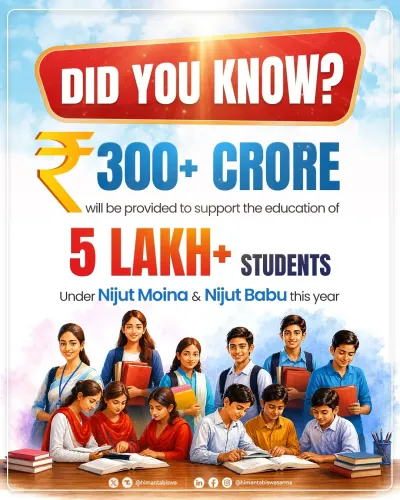
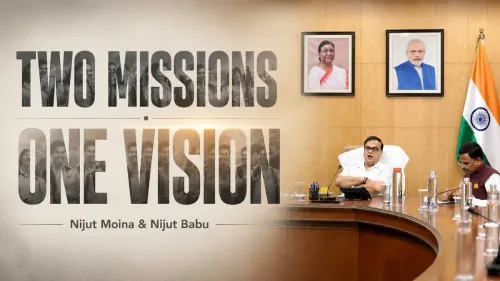
Assam CM Himanta Biswa Sarma oversaw constituency-wide distribution of Nijut Moina and Nijut Babu student welfare schemes on 15 October 2026, with 5.42 lakh students across the state set to benefit from the twin educational support initiative.
Key Takeaways
5.42 lakh students in Assam are set to benefit from the Nijut Moina and Nijut Babu welfare schemes.
Nijut Moina supports girl students; Nijut Babu supports boy students — both aimed at reducing educational barriers.
Distribution was conducted across constituencies , using a local delivery model characteristic of Northeast India welfare rollouts.
CM Himanta Biswa Sarma called 15 October 2026 'a landmark day for Assam.' The initiative continues Sarma's pattern of high-visibility, student-focused governance since taking office in 2021 .
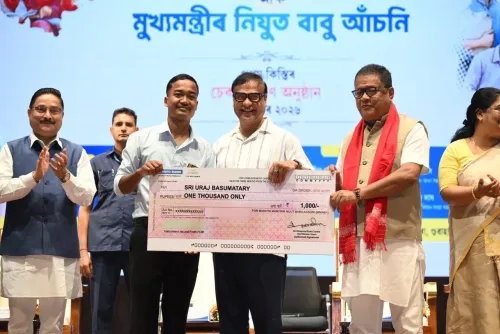
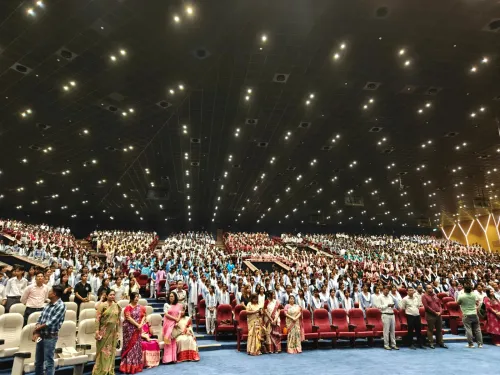
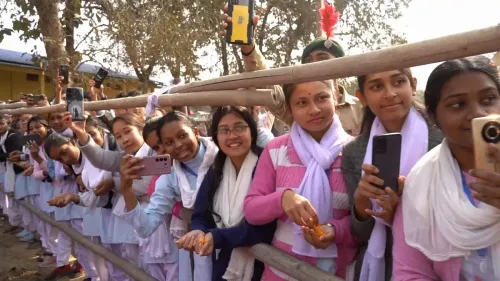
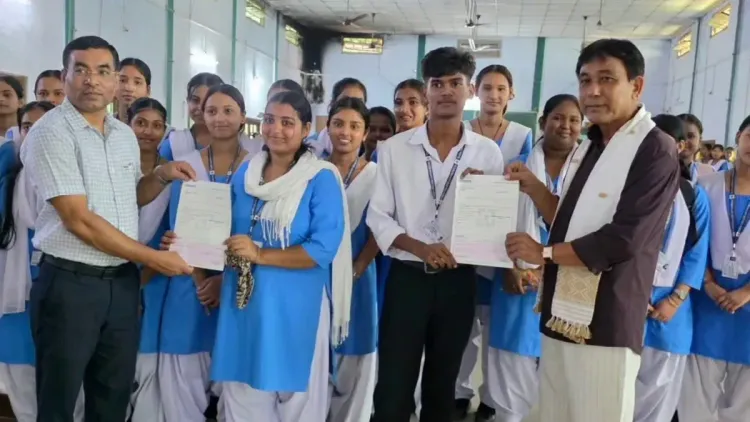
Across every constituency in Assam, students lined up on Thursday, 15 October 2026, as the state government rolled out a landmark ceremonial distribution under two parallel welfare schemes — Nijut Moina for girl students and Nijut Babu for boy students — with Assam Chief Minister Himanta Biswa Sarma announcing that 5.42 lakh students stand to benefit from the initiative.
Twin schemes, one constituency-wide push
Nijut Moina and Nijut Babu are the Assam government's targeted student support programmes designed to ease the financial burden on families and keep children — girls and boys alike — on an uninterrupted educational path. By routing distributions through individual constituencies rather than a central venue, the state is leaning on a delivery model that has become characteristic of welfare rollouts in northeastern India: local, visible, and accountable to elected representatives on the ground.
CM Sarma shared glimpses of the distribution ceremonies on social media, calling it 'a landmark day for Assam.' The scale — 5.42 lakh beneficiaries spread across the state's legislative constituencies — signals that this is not a pilot but a full-spectrum deployment.
Why student welfare schemes matter in Assam's education landscape
Indian states have increasingly turned to direct support mechanisms — financial stipends, material aid, or fee waivers — to tackle two stubborn problems: low enrolment in remote areas and high dropout rates, particularly among girls once they reach secondary school. Assam, with large rural and tea-garden communities spread across difficult terrain, is no exception. A constituency-level distribution model addresses the last-mile problem head-on: the support reaches a student's nearest administrative touchpoint, not a distant district headquarters.
The gendered pairing of Nijut Moina (girl students) and Nijut Babu (boy students) reflects an acknowledgement that barriers to schooling are not uniform — economic pressure pushes boys into early labour while social norms can pull girls out of classrooms. Addressing both simultaneously is a deliberate design choice.
Sarma's pattern of student-first governance in Assam
Himanta Biswa Sarma, who has served as Chief Minister since 2021 and leads the North-East Democratic Alliance (NEDA) as its convenor, has made visible student welfare a recurring signature of his administration. Constituency-level events give the schemes political visibility while also ensuring that local MLAs are seen as delivery agents — a dual function that keeps both governance and ground-level political capital in motion.
The hashtag #NijutBabuMoina trended alongside the distribution, underscoring the government's intent to make the rollout a statewide moment rather than a quiet bureaucratic exercise.
More than half a million young Assamese now carry a government-backed promise toward their classrooms. Whether that promise translates into measurable gains in enrolment and retention will be the real measure of this landmark day.
Point of View
Constituency-level rollout of Nijut Moina and Nijut Babu is a textbook example of welfare-as-politics in the Northeast — visible, locally anchored, and designed to make MLAs co-owners of delivery. For CM Sarma, student welfare schemes serve double duty: they advance a genuine social agenda around enrolment and retention while cementing BJP's grassroots presence ahead of electoral cycles in Assam. The gendered pairing also signals a more nuanced policy framing than earlier one-size-fits-all approaches. The real test, however, is whether the 5.42 lakh beneficiary figure translates into sustained improvements in dropout rates and learning outcomes — metrics that outlast any single distribution ceremony.
NationPress
16 Oct 2026
Frequently Asked Questions
What is the Nijut Moina scheme in Assam?
Nijut Moina is an Assam government welfare scheme providing support to girl students to help them continue their education and reduce dropout rates.
What is the Nijut Babu scheme?
Nijut Babu is an Assam government welfare scheme that provides similar educational support to boy students across the state.
How many students benefit from Nijut Moina and Nijut Babu?
Assam CM Himanta Biswa Sarma announced that 5.42 lakh students are benefiting from the combined distribution of Nijut Moina and Nijut Babu in 2026.
How are the Nijut Moina and Nijut Babu schemes distributed?
The schemes are distributed through constituency-level ceremonies across Assam, ensuring that the support reaches students at a local level through their elected representatives.
Who launched Nijut Moina and Nijut Babu in Assam?
The schemes were rolled out under the Assam government led by Chief Minister Himanta Biswa Sarma , who has been in office since 2021.