India's food grain output hits record 376.56 mn tonnes: Shivraj Singh Chouhan
Synopsis
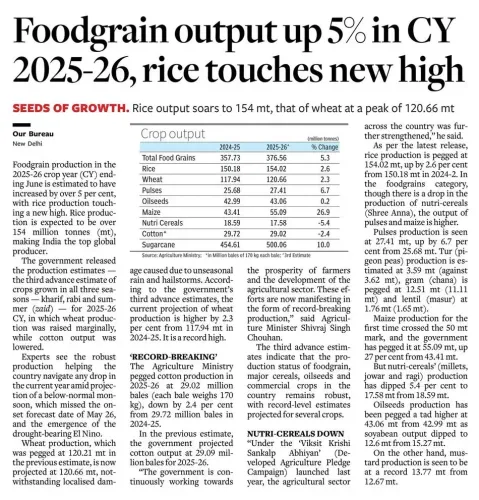
India has logged its highest-ever food grain output at 376.563 million tonnes, with the country now leading global rice production. Agriculture Minister Shivraj Singh Chouhan used the Kharif 2026 conference to push states past the celebratory headline — demanding field-level accountability, mission reviews, and farmer-first governance reform.
Key Takeaways
India's food grain production has reached a record 376.563 million tonnes as per advance estimates — the highest in the country's history.
India is now the world leader in rice production, with gains also recorded in wheat , maize , pulses , and oilseeds .
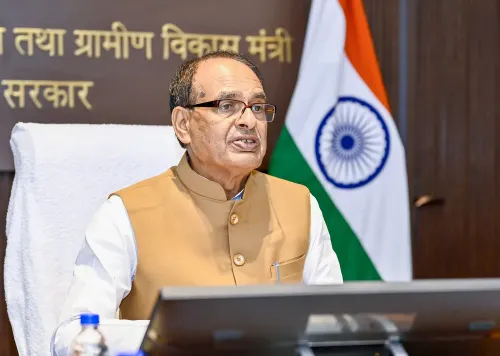
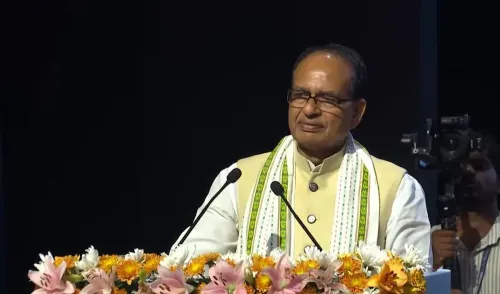
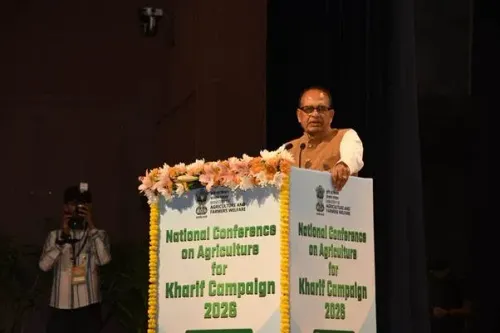
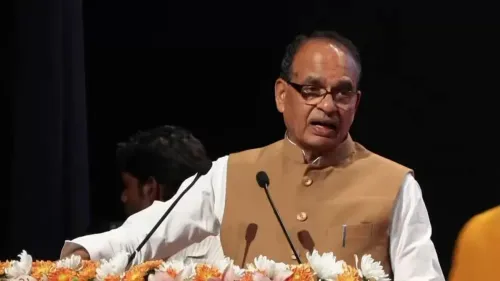
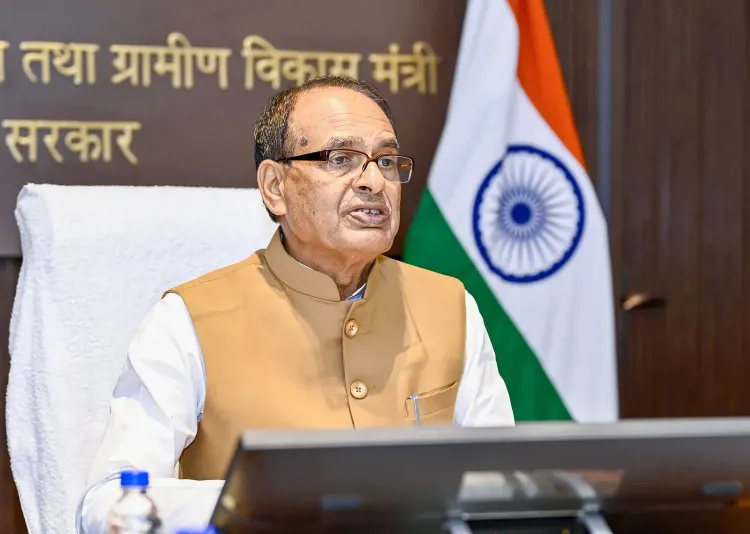
Union Minister Shivraj Singh Chouhan addressed the National Agriculture Conference — Kharif Campaign 2026 in New Delhi on 29 May 2026 .
States were urged to personally review the Pulses Mission , Oilseeds Mission , and Cotton Mission .
Soil Health Cards must be actively used at field level, not treated as administrative paperwork, the minister said.
The minister called for short-duration crop varieties, especially for tur , soybean , and oilseed crops.
India's total food grain production has reached approximately 376.563 million tonnes as per advance estimates — the highest ever recorded — Union Minister for Agriculture and Farmers Welfare Shivraj Singh Chouhan announced on Friday, 29 May at the National Agriculture Conference — Kharif Campaign 2026 in New Delhi. The minister attributed the milestone to concerted efforts across crop categories and called for deeper state-level engagement to sustain the momentum.
Record Output Across Crop Categories
Chouhan noted that India has emerged as the world leader in rice production, with significant gains also recorded in wheat, maize, pulses, and oilseeds. The 376.563 million tonne figure, drawn from advance estimates by the Ministry of Agriculture and Farmers Welfare, surpasses all previous annual records. This comes amid sustained government investment in mission-mode agricultural programmes spanning multiple crop seasons.
What the Government Said
Speaking on the second day of the conference, Chouhan urged states to dismantle unnecessary procedural barriers, stressing that 'rules and procedures exist for the convenience of farmers — farmers do not exist for rules.' He called for time-bound, result-oriented and farmer-centric action driven by policy, innovation, and commitment, asking state ministers to personally lead initiatives for faster, tangible outcomes.
The minister also emphasised that the impact of governance must be visible 'not merely in files, but in people's lives' — a pointed message directed at implementation gaps at the district and field level.
Key Missions Under Review
Chouhan urged states to personally oversee the implementation of the Pulses Mission, Oilseeds Mission, Cotton Mission, and other major agricultural campaigns. Special emphasis was placed on developing short-duration and more suitable crop varieties, particularly for tur, soybean, and oilseed crops. Scientists were called upon to pursue faster, practical, and demand-driven research aligned with farmers' actual needs.
On soil health, the minister said Soil Health Cards should not remain mere documents but must be actively used at the field level to help farmers understand nutrient deficiencies and make informed fertiliser decisions.
Broader Goals: Income, Nutrition, Food Security
The conference, which brought together state agriculture ministers, senior officials, scientists, and progressive farmers, was framed as a 'Team India' platform for agricultural advancement. Chouhan underlined that India must simultaneously strengthen food security, raise farmers' incomes, make agriculture more profitable, and accord equal importance to nutritional security — signalling that output records alone are not the finish line.
With the Kharif 2026 sowing season approaching, the policy direction set at the conference is expected to shape state-level crop planning and resource allocation in the coming weeks.
Point of View
But the minister's own remarks at the conference reveal the harder problem: implementation drag at the state level. Soil Health Cards being unused, missions requiring personal ministerial review, and a call for 'visible' governance impact all point to a persistent gap between central scheme design and ground-level delivery. India's food grain output has grown, but farmer income — the metric that actually determines rural welfare — has not kept pace with production milestones. The real test of Kharif 2026 policy will be whether the urgency displayed at the conference translates into measurable field outcomes before the next election cycle resets the agenda.
NationPress
13 Oct 2026
Frequently Asked Questions
What is India's total food grain production in 2026?
India's total food grain production has reached approximately 376.563 million tonnes as per advance estimates, the highest ever recorded. The figure was cited by Agriculture Minister Shivraj Singh Chouhan at the National Agriculture Conference on 29 May 2026.
Which crops contributed to India's record food grain output?
India recorded gains across rice, wheat, maize, pulses, and oilseeds. The country has also emerged as the world's leading producer of rice, according to the minister.
What is the Kharif Campaign 2026 conference?
The National Agriculture Conference — Kharif Campaign 2026 is a two-day meeting held in New Delhi that brings together state agriculture ministers, senior officials, scientists, and farmers to align policy and planning for the upcoming kharif sowing season.
What did Shivraj Singh Chouhan ask states to do?
Chouhan urged states to remove unnecessary procedural complexities, personally oversee the Pulses, Oilseeds, and Cotton Missions, and ensure Soil Health Cards are actively used at the field level rather than treated as paperwork.
Why does India's record food grain output matter?
The record output strengthens India's food security position and signals the effectiveness of mission-mode agricultural programmes. However, the minister also stressed that nutritional security and farmers' income must rise alongside production figures for the gains to be meaningful.