India's foodgrain output hits record 376.563 mn tonnes in 2025-26
Synopsis
India's farms delivered their biggest-ever harvest in 2025-26, with total foodgrain output crossing 376.563 million tonnes — a 5.3 per cent jump in a single year. The real headline is maize, which leapt by nearly 12 million tonnes to a record 55 million tonnes, with implications stretching from ethanol blending to animal feed. Sugarcane also surged past 500 million tonnes for the first time.
Key Takeaways
India's foodgrain production hit an all-time high of 376.563 million tonnes in 2025-26 , up 5.3 per cent from 357.732 million tonnes in 2024-25.
Maize set a new record at 55.093 million tonnes , rising by 11.684 million tonnes year-on-year.
Wheat output reached 120.657 million tonnes and rice climbed to 154.024 million tonnes .
Sugarcane production surged to 500.063 million tonnes , up 45.452 million tonnes over the previous year.
ICAR released 339 new crop varieties in 2025-26 across cereals, oilseeds, pulses, and commercial crops.
Total oilseed production estimated at 43.059 million tonnes ; groundnut up by 1.132 million tonnes year-on-year.
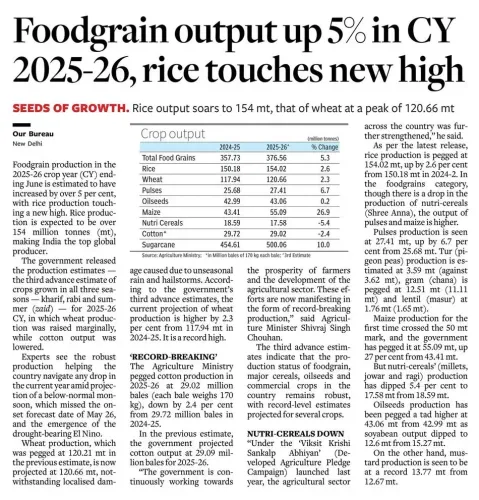
India's total foodgrain production surged 5.3 per cent to an all-time high of 376.563 million tonnes in 2025-26, up from 357.732 million tonnes in the previous year, according to the third advance estimates of major agricultural crops released on Wednesday, 27 May 2025. The figure marks the highest foodgrain output ever recorded in the country's history.
Key Crop-Wise Figures
Rice production climbed to 154.024 million tonnes from 150.184 million tonnes in 2024-25, an increase of 3.84 million tonnes. Wheat output rose to 120.657 million tonnes, up 2.712 million tonnes over last year's 117.945 million tonnes. The standout performer was maize, which hit a record 55.093 million tonnes — a jump of 11.684 million tonnes over the previous year's 43.409 million tonnes. Millets production stood at 17.584 million tonnes, while total coarse and nutritious cereals output reached 74.472 million tonnes.
In pulses, gram production rose to 12.514 million tonnes, up 1.4 million tonnes from last year's 11.114 million tonnes. Tur output was estimated at 3.592 million tonnes, nearly on par with last year's 3.624 million tonnes. Lentil production came in at 1.762 million tonnes.
Oilseeds and Commercial Crops
Total oilseed production is estimated at 43.059 million tonnes. Groundnut output reached 13.074 million tonnes, up 1.132 million tonnes over the previous year. Soybean stood at 12.596 million tonnes, and rapeseed and mustard climbed to 13.768 million tonnes, an increase of 1.101 million tonnes year-on-year.
Among commercial crops, sugarcane production surged to 500.063 million tonnes, a sharp rise of 45.452 million tonnes over last year's 454.611 million tonnes. Cotton output is estimated at 29.024 million bales (each bale weighing 170 kg), and jute at 9.176 million bales (each bale weighing 180 kg).
What the Government Said
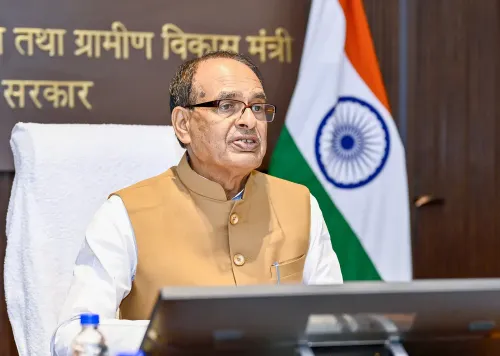
Union Minister for Agriculture and Farmers Welfare Shivraj Singh Chouhan called the figures a landmark. 'This marks the highest-ever foodgrain production in the country's history. The estimates reflect a strong and encouraging picture of India's agricultural progress,' he said. Chouhan attributed the gains to consistent policy focus under Prime Minister Narendra Modi, including direct farmer outreach and research-backed interventions.
Role of Agricultural Research
The Indian Council of Agricultural Research (ICAR) released 339 crop varieties in 2025-26 suited to diverse agro-climatic regions, covering cereals, oilseeds, pulses, commercial crops, and fodder. The Viksit Krishi Sankalp Abhiyan, conducted last year, deployed scientists directly to farmers to disseminate climate-resilient technologies, improved production techniques, and rainfed farming practices.
Why This Record Matters
India's food security calculus is directly tied to domestic production — a buffer stock-driven system that relies on wheat and rice procurement, and increasingly on coarse cereals as nutritional policy shifts. The maize surge, in particular, has implications for the feed and ethanol blending sectors. This is the third consecutive year of production growth, reinforcing the trend of structural agricultural expansion even as climate variability poses persistent risks to rainfed farming.
With the kharif sowing season approaching and the India Meteorological Department projecting a normal monsoon, the government will be watching whether the momentum from 2025-26 can be sustained into the next crop year.
Point of View
But the more consequential number is maize — up nearly 12 million tonnes in a single year. That kind of step-change suggests structural shifts in acreage and variety adoption, not just a favourable monsoon. The government will rightly claim credit for ICAR's 339 new varieties and the Viksit Krishi Sankalp Abhiyan, but the durability of these gains depends on whether climate-resilient technology has genuinely reached rainfed farmers or remains concentrated in irrigated belts. India's food inflation record over the past two years also raises a pointed question: if production is at an all-time high, why have retail pulse and vegetable prices remained elevated? The disconnect between farm-gate output and consumer prices is the story that record-harvest press releases rarely address.
NationPress
21 Sept 2026
Frequently Asked Questions
What is India's total foodgrain production in 2025-26?
India's total foodgrain production in 2025-26 is estimated at 376.563 million tonnes, according to the third advance estimates released on 27 May 2025. This is the highest figure ever recorded and represents a 5.3 per cent increase over the previous year's 357.732 million tonnes.
Which crop saw the biggest production jump in 2025-26?
Maize recorded the largest single-year increase, rising by 11.684 million tonnes to a record 55.093 million tonnes in 2025-26, up from 43.409 million tonnes in 2024-25. Sugarcane also saw a major surge, climbing 45.452 million tonnes to cross 500 million tonnes for the first time.
What were India's wheat and rice production figures for 2025-26?
Wheat production is estimated at 120.657 million tonnes, up 2.712 million tonnes from last year's 117.945 million tonnes. Rice output rose to 154.024 million tonnes from 150.184 million tonnes in 2024-25.
What role did ICAR play in the record harvest?
The Indian Council of Agricultural Research released 339 new crop varieties in 2025-26 suited to different agro-climatic zones. ICAR also developed climate-resilient varieties and rainfed production technologies, which were disseminated to farmers through the Viksit Krishi Sankalp Abhiyan.
What is India's oilseed and pulse output for 2025-26?
Total oilseed production is estimated at 43.059 million tonnes, with groundnut at 13.074 million tonnes and rapeseed-mustard at 13.768 million tonnes. In pulses, gram output rose to 12.514 million tonnes while tur production stood at 3.592 million tonnes.